 13 Apr 2026
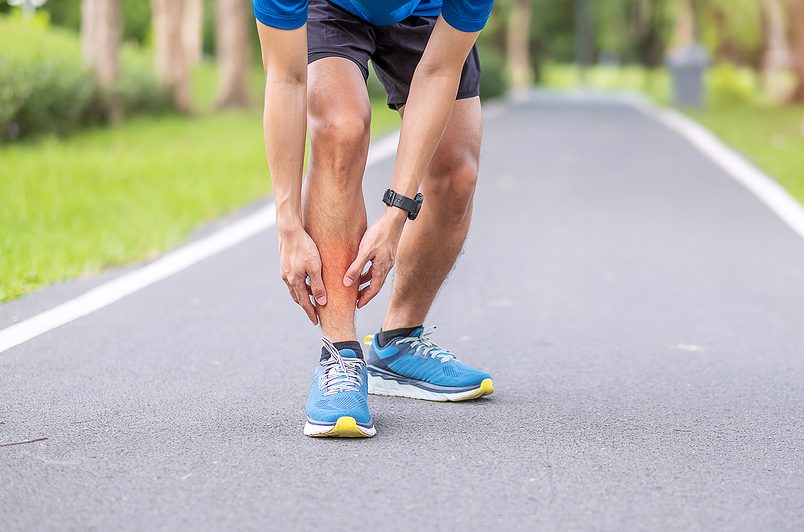
You’re taking a long walk when you notice your lower leg starting to ache. Maybe you’re jogging and find your shin bone is sore, even to the touch. It’s very likely you’re dealing with one of the common leg injuries people experience.
Medial tibial stress syndrome (MTSS, or shin splints for short) accounts for half of all lower-leg injuries and about 16% of running injuries. It’s frequently diagnosed in athletes, dancers, and military recruits.
Knowing what causes shin splints, the common symptoms, and how they’re treated is important. Even better, taking steps to prevent them keeps you from experiencing discomfort that limits your usual activities.
What Are Shin Splints?
Your tibial muscles run from just above the front of your ankle to the opposite side of the knee. If one of those muscles or the adjacent tendons or tissue covering the shin bones becomes inflamed due to strain, it’s known as a shin splint.
Shin splints cause a non-stop throb in your lower leg. That pain is usually worse along the inner edge of the shinbone, where the muscles attach.
Shin splits are an overuse injury, typically caused by one of the following:
- Biomechanical problems – Conditions like flat feet or overpronation, where the foot rolls inward, put extra strain on tibial muscles.
- Hard surfaces – You’re running or jumping on a hard surface, like pavement, which increases the force of impact with each landing.
- Improper footwear – Shoes are worn out or lack adequate arch support.
- Sudden or increased leg use – Walking or running faster, going farther, going up inclines your legs aren’t used to, or excessive workouts without proper rest periods, all put extra strain on the tibial muscles.
What Are the Symptoms of Shin Splints?
Symptoms and pain intensity vary from one person to the next, but the most common symptoms are:
- Pain begins as a dull ache and often intensifies into sharper pain during exercise.
- Pain is present along the front and outer side of the shin.
- Pain occurs when the heel hits the ground and continues after that.
- Pain starts in the lower leg near the ankle.
- Pain worsens when rolling the ankle inward or standing on tiptoes.
- Shin is painful to the touch.
Shin splint pain increases as the condition worsens. Don’t write this off as something to tolerate. Make an appointment with Premium Sports & Orthopedics for a proper diagnosis, as you might have chronic exertional compartment syndrome (CECS), a condition that’s often mistaken for shin splints, stress fractures, or tendonitis.
How They’re Diagnosed and Treated
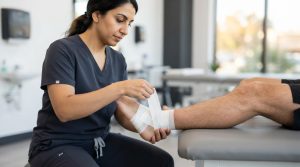
When you feel lower-leg pain, contact your doctor and start the gold-standard treatment for injuries. (RICE: Rest, Ice, Compression, Elevation).
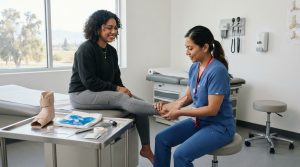
At your appointment, be prepared to share your medical history, activities that you engage in, what you were doing when the pain occurred, and what you did to treat it so far. Consider bringing your footwear to show the doctor the level of support and how the shoe fits on your foot.
X-rays are often used to look for injuries to the shin bone or muscles, which can help rule out stress fractures. Once it’s determined you have shin splints, you’ll develop a treatment plan that you must follow.
The treatment plan takes several factors into consideration, including:
- How long do you need to heal
- Prescription medications you take
- The level of injury
- Your age
- Your health and medical history
- Your tolerance for therapeutic options or medications
- Your weight
Some of the common treatments include using over-the-counter anti-inflammatory medications or ice packs to ease the pain and inflammation while you:
- Engage in gentle stretching exercises
- Perform strengthening exercises
- Get fitted for supportive running shoes that provide the arch support you need
- Massage the muscles around the shin to ease tension.
Avoid activities that cause shin splints until your muscles and joints are fully prepared for the required use. You cannot rush your recovery. Instead of performing the same activity every time, switch things up. If you love jogging, jog a couple of times a week and then add in weight training, swimming, and Yoga on other days.
Tips for Preventing Shin Splints
How do you keep shin splints from happening? It’s not as hard as you might imagine.
1. Warm Up Before a Workout
Before you do serious damage to your leg muscles, make sure you work out or engage in activities properly. Warm-ups are essential for helping prepare the muscles for activity. Proper footwear is equally important.
If it’s been a while since you’ve been active, ease back into it. After a winter of inactivity, don’t dive in expecting your muscles to handle it. Start small and gradually increase your activity over time.
2. Eat Foods That Support Muscle and Cellular Recovery
Eat foods that support cellular health. Takeout may be convenient, but it’s often high in sodium, unhealthy fats, and added sugar. Eat a balanced diet that prioritizes protein, antioxidants, fiber, and calcium.
3. Maintain a Healthy Weight
If you’re overweight, as hard as it is, you can ease the strain on your leg muscles by shedding extra pounds. Success comes from working as a team, which is why you should consider doctor-guided weight-loss programs.
Instead of trying to fight those pounds on your own, you work with a medical expert who can help you maximize workouts, overcome plateaus, and find activities you enjoy, which helps you stay active.
4. Stay Hydrated
Water plays an important role in muscle health. While your skin contains 64% water, your muscles contain 79%. If you’re not restoring water as you exercise or enjoy a favorite activity, you risk dehydration.
When you’re properly hydrated, proteins and carbohydrates are transported and metabolized more efficiently, ensuring that muscles get the nutritional support they need to recover. Waste products are carried to the kidneys and bladder, then out of the body.
Ideally, women should drink about 2 liters of water a day, and men need 3 liters. About 20% of the water you consume comes from the foods you eat. Berries, citrus fruits, grapes, melons, and tomatoes all have high water content.
Work With an Orthopedic Specialist
Make an appointment with Premium Sports & Orthopedics if you experience shin splints or are not in the best condition and want to train responsibly.
When you work with an expert in bones, ligaments, muscles, and tendons, you gain maximum results without causing new injuries. Our doctor also provides doctor-guided weight loss and FDA-approved treatments that help maximize tissue recovery.