 12 Oct 2026
What if recovery is less about doing more and more about matching each step to your needs? After surgery, it’s natural to wonder when movement should begin, how to manage discomfort, and when everyday routines may feel within reach again. The timing and type of activity depend on your procedure and your clinician’s guidance, so a clear, coordinated approach matters. For post-surgery rehabilitation Fresno patients can use to support functional goals, start with those instructions.
Choosing post-surgery rehabilitation in Fresno starts with understanding how clinician-guided physical therapy may support mobility and daily function. This guide explains what rehabilitation can involve, what to consider when comparing care options, and how to track progress without relying on a one-size-fits-all timeline.
Premium Sports & Orthopedic Center serves Fresno- and Clovis-area patients with physical therapy and orthopedic care. Led by Dr. Green and a team of licensed medical practitioners, the center supports patients working toward everyday function and mobility. The steps below can help you prepare for a useful conversation about recovery support.
Key Takeaways
- Post-surgery rehabilitation Fresno options can support movement and daily function, with timing and activity guided by your procedure and clinician’s instructions.
- Rehabilitation may progress in phases, but clinicians adapt activities to your symptoms and medical guidance rather than follow one universal schedule.
- Outpatient physical therapy, home exercises, and surgical follow-up serve different purposes and may complement one another.
- Prepare for appointments by organizing post-operative instructions, noting your recovery goals, and bringing a current medication list.
- Premium Sports & Orthopedic Center offers outpatient physical therapy and orthopedic care for patients working toward functional goals.
Why Post-Surgery Rehabilitation Matters for Your Recovery in Fresno
Surgery addresses a medical problem, but returning to the movements and routines that matter to you can take a separate, supported effort. Post-surgery rehabilitation is clinician-guided care that helps patients work toward improved movement and everyday function after an operation. The right approach depends on the procedure, your health, and your treating clinician’s instructions.
Post-surgery rehabilitation is individualized, medically guided support for rebuilding movement and function after an operation, with activities and goals shaped by the procedure and your care team’s instructions. In Fresno, physical therapy can be part of a broader recovery plan focused on your functional goals. Rehabilitation doesn’t replace routine post-operative follow-up: your surgical team assesses healing and guides medical care, while rehabilitation focuses on function within the limits of that guidance. It is not a substitute for emergency care. For urgent or alarming symptoms, follow your discharge instructions and seek appropriate urgent or emergency care.
What rehabilitation can help patients work toward after surgery
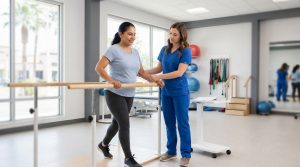
Depending on the operation and medical guidance, rehabilitation may help you work toward comfortable mobility, strength, balance, and greater confidence with everyday tasks. These might include getting dressed, moving around the home, or returning to activities your clinician has cleared. The aim isn’t simply to do more. It’s to build function while respecting your recovery and the limits set by your care team.
There’s no universal exercise list or timetable. A movement that suits one person may be inappropriate for another, even after a similar procedure. Progress can vary with the operation, your health, starting level of function, symptoms, and clinical protocol. Tell your care team what feels difficult and what you hope to do again so your goals reflect your daily needs.
Why recovery needs differ from one patient to another
The type of procedure is one factor, but it isn’t the only one. Your baseline mobility, strength, balance, other health considerations, and post-operative instructions can all influence rehabilitation goals. A patient recovering from an operation affecting a joint may need to work toward different daily tasks than someone recovering from a procedure involving another part of the body. Even people who have the same type of surgery may have different starting points and guidance.
Discuss post-surgery rehabilitation in Fresno in the context of your own medical instructions, not a friend’s experience or a generic online routine. Physical Medicine and Rehabilitation (PM&R) broadly focuses on restoring functional ability and quality of life, a useful lens for setting recovery goals. If knee surgery is relevant to your care, this Fresno knee pain treatment guide offers related orthopedic context. Keep your treating clinician’s guidance central as you plan your next steps.
What to Expect from Post-Surgery Rehabilitation and Physical Therapy
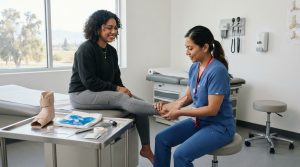
Rehabilitation starts with understanding your current abilities and what your medical team has cleared you to do. A clinician may discuss your symptoms, movement, daily activities, and priorities, then use your post-operative instructions to guide goal-setting. Bring any written restrictions or guidance so the conversation reflects your situation.
How an initial rehabilitation assessment can shape goals
Think about the tasks you want to manage more comfortably, such as getting up from a chair, moving around your home, or returning to a familiar activity when cleared. Share what feels difficult, what changes your symptoms, and how your function compares with your usual baseline. This information helps make goals practical rather than generic. Your clinician can consider it alongside your medical instructions; your treating team remains the authority on procedure-specific restrictions and clearance.
Rehabilitation may be described in broad phases, but these are a guide to how care can evolve, not a universal schedule. Early work may focus on activities permitted by your treating team. Later, goals may shift toward greater independence with daily movement and other cleared tasks. The MedlinePlus Guide to Surgery and Rehabilitation offers general background on surgery and rehabilitation, but it can’t replace your own care instructions.
How rehabilitation may progress over time
As symptoms and function change, a clinician may reassess how you manage relevant movements and whether your goals still fit. Progression should follow procedure-specific guidance and your response, not a fixed calendar. For example, becoming more comfortable with a daily task can inform a discussion about next steps, but it doesn’t automatically mean you’re cleared for more demanding activity.
Keep communication open if pain or other symptoms change, a task becomes harder, or you’re unsure whether an activity is allowed. Don’t push through a new or concerning symptom or change restrictions on your own. Contact your treating team for direction, especially before resuming activities that require explicit clearance. A plan can adapt as your needs evolve while staying within the boundaries set for your recovery.
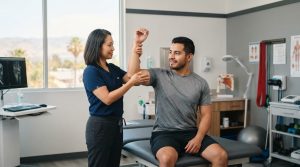
For post-surgery rehabilitation in Fresno, physical therapy can be part of a broader outpatient recovery plan alongside orthopedic care. Premium Sports & Orthopedic Center offers outpatient physical therapy and orthopedic care to support patients’ functional goals. Your treating team’s instructions remain central as you decide what support fits your care.
How to Compare Post-Surgery Rehabilitation Options in Fresno
Different types of support serve different purposes. Outpatient physical therapy can provide clinician-guided rehabilitation; a home exercise plan supports activity between visits when prescribed; routine surgical follow-up addresses medical recovery and post-operative instructions. These options aren’t interchangeable, and they may work together. The right mix depends on your procedure, your treating clinician’s guidance, and the practical support you need.
| Support option | Main role | Practical considerations |
|---|---|---|
| Outpatient physical therapy | Clinician-guided support focused on movement and functional goals. | Consider travel, appointment logistics, and how the sessions fit your instructions and daily routine. |
| Home exercises | Activities prescribed for practice at home within medical guidance. | Make sure you understand which movements are permitted and how to follow the plan safely. |
| Routine surgical follow-up | Medical review of recovery, restrictions, and procedure-specific questions. | Keep scheduled follow-up and share changes in symptoms or function with your treating team. |
Which rehabilitation setting may fit your recovery needs?
Outpatient physical therapy involves working with a clinician on rehabilitation goals, while a home exercise plan is for practice outside a clinic. Surgical follow-up serves a different purpose: your treating team reviews medical recovery and provides guidance on restrictions or clearance. One option doesn’t automatically replace another. Align every activity with your instructions, and rely on your treating team to clarify what’s appropriate after your operation.
When comparing post-surgery rehabilitation options in Fresno, consider the purpose of each type of support, how it fits your routine, and how you’ll communicate concerns or changing symptoms. A home plan may suit some activities, while clinician-guided sessions provide a setting to work on functional goals. Let your procedure and medical guidance lead the decision rather than a universal ranking of care settings.
What to consider when assessing a Fresno rehabilitation clinic
Focus on fit rather than broad claims of being “best.” Consider whether care addresses your functional goals, whether you can discuss instructions and questions clearly, and whether the location and visit logistics are manageable. It can also help to understand how physical therapy relates to your broader orthopedic care. Premium Sports & Orthopedic Center provides outpatient physical therapy, orthopedic care, and sports medicine consultations for Fresno- and Clovis-area patients.
If returning to a sport or other active routine is one of your goals, sports medicine care in Fresno can be part of that discussion. Whichever support you use, keep your treating clinician’s restrictions central, share changes in symptoms, and make sure your rehabilitation goals align with your medical instructions.
How to Prepare for Post-Surgery Rehabilitation in Fresno
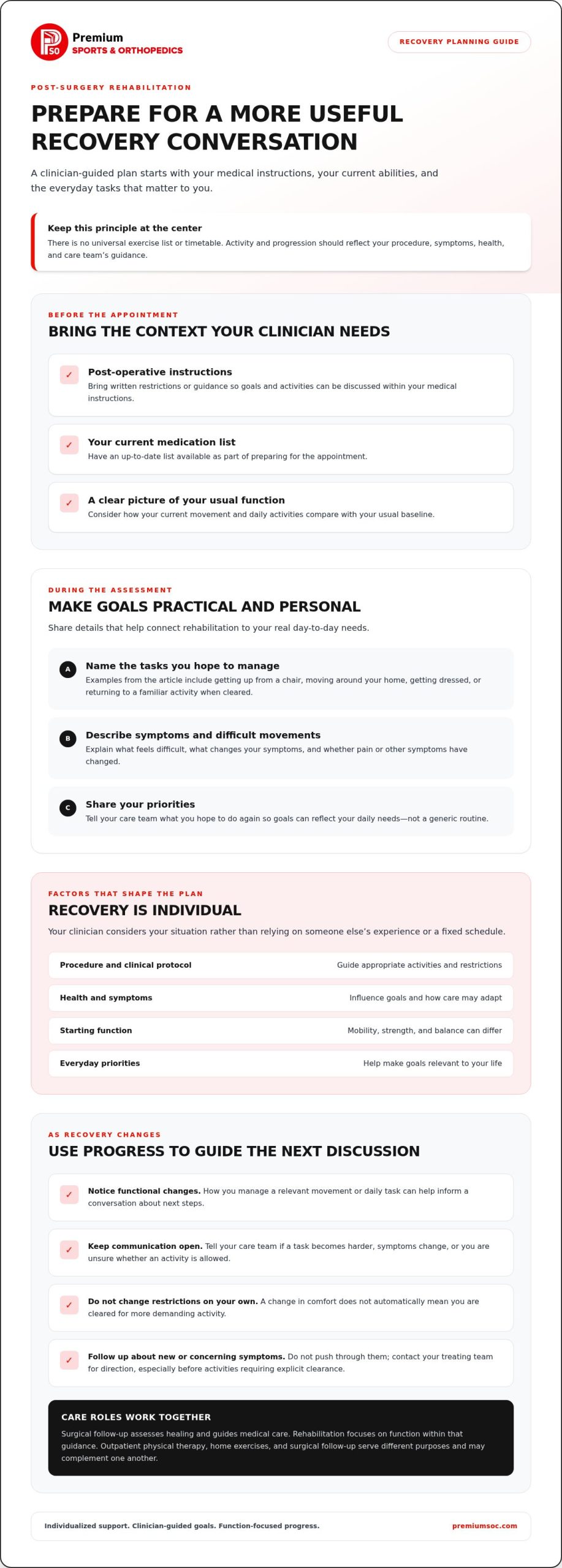
Preparation can make your first rehabilitation visit more focused and help your clinician understand what matters to you. Gather the information you already have, note the challenges you’re facing, and keep your surgeon’s restrictions at the center of every decision. Don’t begin exercises or increase activity on your own simply because a movement seems manageable.
A simple checklist before your first therapy visit
Use this checklist to organize details for a useful conversation:
- Gather your post-operative guidance. Bring written instructions, relevant records, and details about activities or movements your surgeon has restricted or cleared.
- Prepare a current medication list. Include the medications you’re taking so your care team has an up-to-date reference.
- Write down your questions. Note anything you’re unsure about, such as which instructions apply to a daily task or how to report a change in symptoms. Your treating team can clarify procedure-specific guidance.
- Describe your current challenges. Make a short note of movements or routine activities that feel difficult, without testing your limits beforehand.
- Choose meaningful goals. Identify practical activities you hope to manage more comfortably, such as getting around your home or completing a familiar daily task. Share these as goals, not assumptions about what you’re ready to do.
- Plan the visit logistics. Consider transportation and any help you may need to get to an appointment, following your current medical guidance when making arrangements.
These notes help you communicate clearly and make the visit more useful. They also give your clinician context for discussing how physical therapy may fit into your broader recovery, with your treating team’s instructions guiding permitted activity.
When to pause activity and seek medical guidance
If symptoms worsen, change in a concerning way, or make a planned activity feel unsafe, pause that activity and contact your surgical team for direction. Don’t diagnose the cause yourself or try to work around a restriction. For urgent or severe symptoms, seek appropriate emergency medical care. Follow any specific instructions you received about whom to contact and how to respond to changes after your procedure.
Preparation isn’t about predicting every step of recovery. It’s about bringing clear information, practical goals, and questions into the conversation so your care stays grounded in your needs and medical guidance. Premium Sports & Orthopedic Center provides outpatient physical therapy and orthopedic care for Fresno-area patients working toward functional goals.
To discuss outpatient physical therapy and orthopedic care, explore services at Premium Sports & Orthopedic Center.
Explore Outpatient Rehabilitation Support at Premium Sports & Orthopedic Center
Choosing support after surgery starts with your recovery goals and the instructions from your treating team. Premium Sports & Orthopedic Center serves Fresno- and Clovis-area patients with orthopedic care, physical therapy, and sports medicine consultations. These outpatient services support conversations about movement, comfort, and everyday function, while your treating clinician’s guidance remains central to decisions about post-operative activity.
How the center’s services relate to recovery goals
Physical therapy can support mobility and functional goals through clinician-guided care. The approach depends on your needs and relevant medical instructions. The center’s orthopedic care provides a setting to discuss orthopedic concerns, while sports medicine consultations can relate to goals involving active lifestyles. These services do not replace procedure-specific direction from your surgical team.
Care is provided by Dr. Green and a team of licensed medical practitioners. Start by identifying what you hope to manage more comfortably, whether that’s moving through daily routines or, once cleared, returning to an activity that matters to you. Sharing those priorities helps focus a discussion about how outpatient physical therapy or orthopedic care relates to your goals. Recovery needs and timelines differ, so one approach won’t fit everyone.
When exploring post-surgery rehabilitation options in Fresno, distinguish general outpatient support from your surgeon’s specific post-operative plan. Bring your instructions and questions into any conversation about rehabilitation. If a restriction is unclear, seek direction from the clinician responsible for your surgical care before starting or changing an activity.
Choose a practical next step for your recovery
Before discussing support, review your post-operative guidance and write down the daily movements or tasks you want to address. Note any questions about which activities are permitted, what symptoms you should report, or how physical therapy might fit with your medical care. This keeps the conversation grounded in your needs rather than a generic recovery schedule.
Premium Sports & Orthopedic Center offers outpatient orthopedic support for Fresno- and Clovis-area patients. Physical therapy, orthopedic care, and sports medicine consultations can help you discuss options in light of your goals, while your treating team’s restrictions and clearance guide your activity. The focus is practical support for function, without assuming a particular protocol or recovery timeline.
Bring your questions and recovery goals to a conversation about outpatient care. Explore Premium Sports & Orthopedic Center.
Make Your Next Recovery Step Count
Recovery can feel more manageable when you define progress in terms that matter in your life. Instead of measuring it only by how much activity you can do, consider what you hope to handle more easily and discuss that goal with your treating clinician. Keep the conversation open as your needs change, and let medical guidance shape what comes next.
Choosing post-surgery rehabilitation in Fresno is a personal decision, not a race or a promise of a particular timeline. Bring your recovery priorities and questions into a conversation about outpatient support, while keeping your surgical team’s instructions at the center of your plan.
Explore post-surgery rehabilitation support in Fresno by learning about outpatient physical therapy and orthopedic care at Premium Sports & Orthopedic Center. A clear plan can help you focus on practical milestones that matter to you.
Frequently Asked Questions
Can I start physical therapy before my surgeon clears me?
Only if your surgical team’s instructions permit it. Some movement may be encouraged soon after an operation, while other activities need to wait. Don’t start a new exercise routine or increase your activity based on general advice online. If you’re unsure whether a movement is allowed, ask your surgical team and share its guidance with your rehabilitation clinician before proceeding.
Is soreness normal during post-surgery rehabilitation?
Mild, temporary effort or discomfort can happen during activity, but what’s appropriate depends on your procedure and recovery instructions. Don’t assume increasing pain means rehabilitation is working. Notice when symptoms occur, what activity you were doing, and whether they continue afterward, then tell your rehabilitation clinician. Contact your surgical team if pain worsens or concerns you, rather than pushing through it.
How often will I need post-surgery rehabilitation appointments?
There isn’t one appointment schedule that fits every patient. Frequency depends on your operation, clinical plan, progress, and practical needs. Ask what each visit is intended to address and how it relates to activities at home. For post-surgery rehabilitation in Fresno, the plan should reflect individual medical guidance rather than another person’s schedule. Keep your surgical team informed if appointments or activities raise concerns.
Can I do rehabilitation exercises at home instead of attending therapy?
Home exercises may be included in your plan, but they don’t automatically replace an assessment or supervised care. The appropriate balance depends on your procedure, restrictions, goals, and clinician’s guidance. Before practicing an activity, make sure you understand how to do it and what to do if symptoms change. Ask your care team which movements are appropriate and when to pause and seek advice.
What should I bring to my first post-surgery rehabilitation appointment?
Bring your post-operative instructions, relevant medical information, and a current medication list. A short note about which everyday activities feel challenging can make the discussion more specific. Write down questions as they occur, such as whether a particular movement is allowed or how to handle a change in symptoms. Follow any preparation directions from your care team and share the information you have as accurately as possible.
Does insurance cover post-surgery physical therapy?
Coverage varies according to your insurance plan, benefits, and circumstances of care, so general information can’t determine your individual costs. Review your plan documents for coverage details and any referral or authorization requirements that may apply. Keep financial questions separate from clinical decisions. Your treating team’s guidance should determine which activities are suitable for your recovery.
What if my recovery seems slower than expected?
Recovery varies, and comparing your progress with someone else’s may not give you a useful answer. Share changes in mobility, symptoms, or daily function with your rehabilitation clinician and surgical team so they can consider them in light of your procedure. Don’t try to make up for perceived slow progress by doing more than instructed. Seek timely medical guidance if symptoms worsen or concern you.