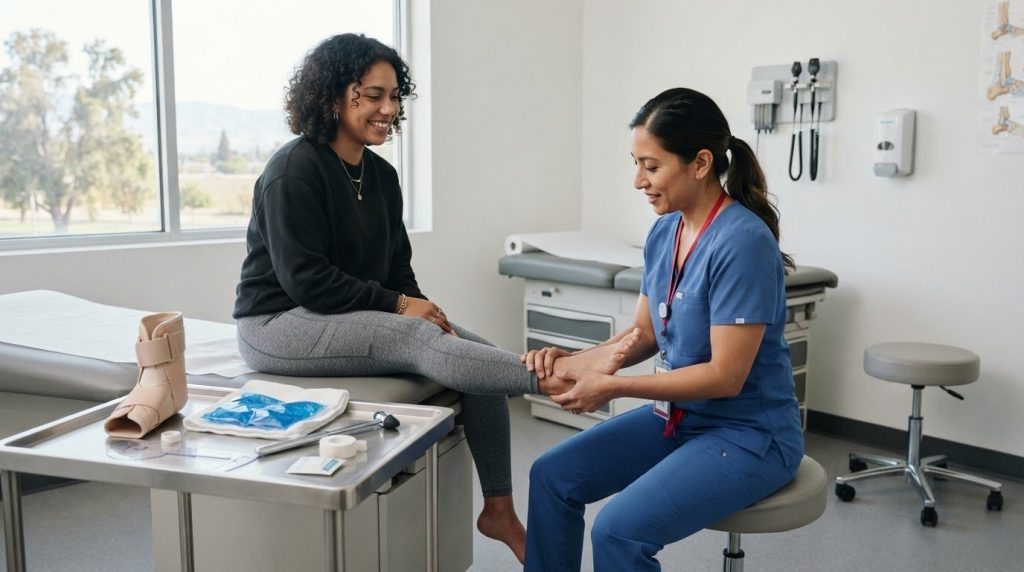
 13 Oct 2026
Could an ankle you can still stand on need more than a few days of rest? Being able to walk doesn’t reveal how serious an injury is. Pain and swelling can make it difficult to know what to do next. Choosing ankle injury treatment Fresno residents can trust starts with recognizing warning signs and understanding what may be injured.
It’s reasonable to want to protect your ankle without overreacting, while avoiding a setback that affects daily activities or sport. This checklist explains which symptoms need prompt attention, how to protect the ankle, and when a professional evaluation can clarify your next steps.
Recovery depends on the injury, so one plan or timeline won’t fit everyone. At Premium Sports & Orthopedic Center, orthopedic care and physical therapy support an individualized approach when clinically appropriate. Use this guide to think through early care, assessment, and a considered return to movement.
Key Takeaways
- Pain, swelling, and bruising can follow different ankle injuries. Symptoms alone can’t confirm whether you have a sprain or fracture.
- Limit painful activity and protect the ankle from further strain while deciding on appropriate care.
- Use this ankle injury treatment Fresno checklist to recognize warning signs and understand when professional assessment may help.
- Prepare for an evaluation by noting how the injury happened, when symptoms began, and how they affect movement.
- A recovery plan can reflect the assessment, your symptoms, and your activity goals, with physical therapy considered when appropriate.
Ankle Injury Treatment in Fresno: Start With This Symptom Checklist
A twist stepping off a curb, a fall during a game, or a direct impact can leave your ankle painful, swollen, or bruised. You may wonder whether it’s a sprain, a fracture, or another injury, particularly if putting weight on your foot hurts. Symptoms offer clues, but they can’t identify the injury on their own. If you’re considering ankle injury treatment Fresno, note what changed and watch for warning signs.
A sprain affects the ligaments that support the ankle, while a fracture involves a bone. The symptoms can overlap, so don’t rely on appearance or pain level alone to diagnose the problem. The overview of Ankle Sprain explains common sprain types and features, but an individual injury needs clinical assessment.
What symptoms should you note after an ankle injury?
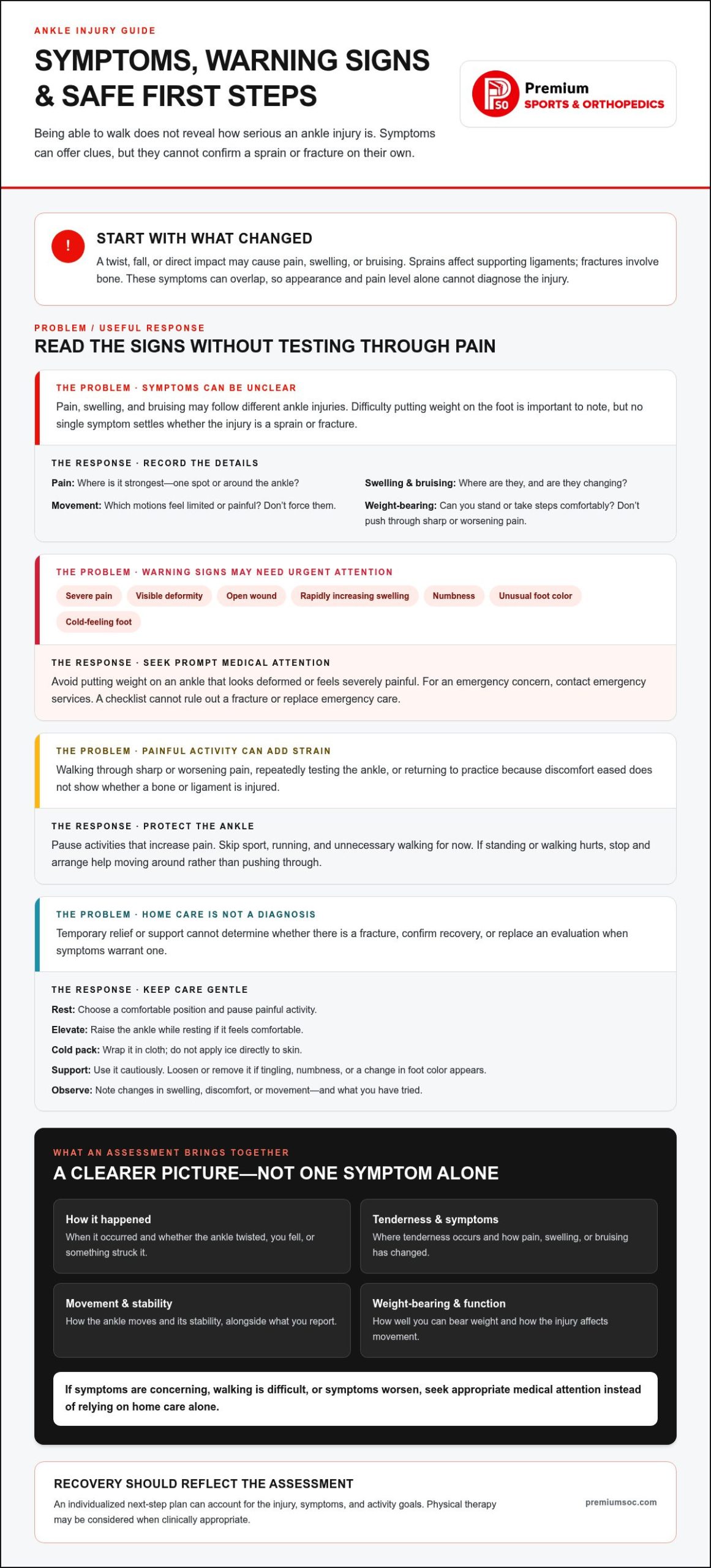
Write down when the injury happened and what you were doing. Note whether your ankle twisted, you fell, or something struck it. Then observe where the pain is strongest, whether swelling or bruising is changing, and how standing, walking, or moving the ankle feels. These details help make an evaluation more focused.
- Pain location: Identify the most tender area and whether discomfort is focused in one spot or spread around the ankle.
- Swelling and bruising: Note where they appear and whether they are increasing or changing.
- Movement: Describe which motions feel limited or painful. Don’t force a movement to test it.
- Weight-bearing: Record whether you can stand or take steps comfortably. Don’t push through sharp or worsening pain.
An injury assessment brings together how symptoms began, where tenderness occurs, how the ankle moves, its stability, and how well you can bear weight. No single symptom settles the question. Clinical findings and function matter alongside what you report.
What ankle symptoms need urgent attention?
Some signs call for urgent medical evaluation rather than watchful waiting. Seek prompt help for severe pain, a visibly deformed ankle, an open wound, or swelling that’s increasing rapidly. Numbness, an unusual change in foot color, or a foot that feels cold can also signal a serious concern. Avoid putting weight on an ankle that looks deformed or feels severely painful.
If you have an emergency concern, contact emergency services. When emergency signs aren’t present, an orthopedic assessment can help clarify next steps for ankle pain, but it isn’t a substitute for emergency care. If symptoms are concerning or walking is difficult, don’t use this checklist to rule out a fracture. Use it to describe what’s happening and guide appropriate care.
What to Do First: A Safe Ankle Injury Care Checklist
After an ankle injury, the first goal is to avoid making it worse while you decide what care you need. Home measures may offer temporary comfort and protection, but they can’t determine whether there’s a fracture or replace an evaluation when symptoms warrant one. Keep your response gentle. Don’t try to “walk it off” or test how much the ankle can tolerate.
How can you protect an injured ankle at home?
Pause activities that increase pain, and avoid forcing weight onto the foot. If standing or walking hurts, stop and arrange help moving around rather than pushing through. While resting, elevate the ankle if that feels comfortable. A cold pack wrapped in cloth may help ease discomfort. Don’t apply ice directly to your skin.
- Reduce strain: Skip sport, running, and unnecessary walking for now. Choose a position that keeps the ankle comfortable.
- Elevate and observe: Raise the ankle while resting if it feels helpful. Notice whether swelling changes or discomfort worsens.
- Use support cautiously: A comfortable support may help protect the ankle, but it shouldn’t cause tingling, numbness, or a change in foot color. Loosen or remove it if those symptoms appear.
- Keep track: Note what you’ve tried and whether it affected pain, swelling, or movement. That information can guide an assessment.
These are temporary measures, not a recovery plan or a way to rule out a more serious injury. If walking remains difficult, symptoms worsen, or you have serious warning signs, seek medical attention rather than relying on home care alone. For emergency concerns, contact emergency services.
Which self-care mistakes should you avoid?
It’s tempting to test the ankle repeatedly or return to practice as soon as discomfort eases. Resist that urge. Sharp pain is a reason to stop, not a challenge to push through. Forcing movement or weight-bearing won’t tell you whether a bone or ligament is injured and may add strain.
Wrapping too tightly is another avoidable risk. If a wrap brings on tingling, numbness, or unusual foot color, loosen or remove it. Don’t use support to mask pain so you can continue an activity, and don’t treat temporary relief as proof that the ankle is ready for normal demands.
Use home care as a bridge to appropriate assessment when symptoms call for it. For ankle injury treatment Fresno patients can receive an individualized next-step plan through orthopedic care, including physical therapy when clinically appropriate. Ankle orthopedic care can help clarify the injury and what to do next.
Safety reminder: Worsening symptoms or serious warning signs call for prompt medical attention.
Sprain or Possible Fracture? Know When Fresno Patients Need Assessment
A sprain is an injury to the ligaments that support the ankle; a fracture is a break in a bone. Both can cause pain, swelling, bruising, and difficulty walking. Even an ankle that looks only mildly injured may need assessment, so use symptoms to guide your next step, not to make a diagnosis at home.
Can symptoms alone tell you whether the ankle is broken?
No. Pain, bruising, and swelling can occur with different injuries, and the way symptoms look doesn’t reliably rule out a fracture. Marked tenderness over a bone, inability to bear weight, limited function, or lingering uncertainty are reasons to seek clinical guidance. Don’t repeatedly press the sore area or force yourself to walk as a test.
Use this comparison to consider what to do next, not as a diagnostic tool:
| What you notice | What it may indicate | Practical next step |
|---|---|---|
| Pain, swelling, or bruising after a twist | These can occur with a sprain, fracture, or another injury. | Limit painful activity; seek assessment if symptoms are significant or function is limited. |
| Marked tenderness, especially over bone, or difficulty bearing weight | A more significant injury, including a possible fracture, needs consideration. | Arrange prompt clinical guidance rather than trying to diagnose it yourself. |
| Symptoms that persist or worsen | The injury may need further assessment, even if it first seemed manageable. | Seek evaluation, particularly if walking remains difficult. |
A clinician considers how the injury happened, your symptoms, and examination findings. They may check areas of tenderness, movement, stability, and weight-bearing function. Imaging decisions depend on the injury and clinical findings; an X-ray or other imaging may be considered when appropriate. Not every ankle injury needs the same evaluation.
When should you seek care in Fresno?
Distinguish an emergency from an injury that still deserves timely assessment. If emergency warning signs described above are present, contact emergency services. For ankle symptoms without those signs, seek clinical guidance promptly if pain is worsening, walking remains difficult, there is marked tenderness, or symptoms aren’t improving. Don’t wait for a suspected fracture to become obvious.
For ankle injury treatment Fresno patients can receive an orthopedic assessment to clarify the injury and guide appropriate next steps. Bring a clear account of when and how it happened, which movements are difficult, and whether symptoms have changed. That context helps the clinician interpret examination findings and decide whether further evaluation, including imaging, may be useful. If you’re unsure whether your ankle needs attention, limited function or persistent symptoms are good reasons to seek guidance rather than rely on guesswork.
Preparing for an Ankle Injury Evaluation: A Fresno Patient Checklist
A little preparation can make an ankle evaluation more useful. You don’t need to arrive with a diagnosis. A clear account of what happened and how the injury affects you gives the clinician practical context. For ankle injury treatment Fresno patients can expect an assessment of symptoms, function, and clinical findings to guide appropriate next steps rather than assume every injury needs the same approach.
What information helps the clinician understand the injury?
Before your visit, jot down when symptoms began and what you were doing. Include whether the ankle twisted, you fell, or it took a direct impact. Note what has changed since then, such as swelling, pain, or walking ability. A short timeline is often easier to share than trying to recall every detail during the appointment.
- Injury details: Record how and when it happened, and whether symptoms appeared immediately or developed later.
- Changes and symptoms: Note where discomfort is strongest, what makes it worse, and whether symptoms have improved, stayed the same, or progressed.
- Health history: Bring a list of current medicines and mention previous ankle injuries or relevant health conditions.
- Daily demands: Identify activities the injury limits, including work tasks, walking around home, exercise, or sport.
Be specific about what you can and can’t do. For example, explain whether you can walk on level ground but struggle with stairs, or whether a sport movement such as changing direction is painful. If athletic activity is affected, the Fresno sports medicine care guide offers related information for active patients.
What may happen during an orthopedic assessment?
The evaluation is tailored to your history and current symptoms. A clinician may ask you to describe the injury, check areas for tenderness, and observe how the ankle moves. They may also assess stability and walking function within your comfort and ability. Tell them if a movement hurts. You don’t need to push through pain to complete a check.
These findings help the clinician understand how the ankle is functioning and whether more evaluation is appropriate. Imaging isn’t automatic for every injury. The decision to use an X-ray or other imaging depends on the clinical findings and the injury being assessed. If imaging is recommended, the clinician can explain how it may help clarify the next steps.
Assessment also connects the immediate concern to your goals. Returning to work, walking comfortably, and resuming athletic activity can place different demands on the ankle. An individualized plan may include non-surgical or outpatient care, with physical therapy as a possible component when clinically appropriate. Learn about orthopedic evaluation for your ankle symptoms and possible next steps.
Ankle Injury Treatment in Fresno: Build a Recovery Plan Around Your Needs
An ankle recovery plan should reflect the injury, your symptoms, clinical assessment, and what you need to get back to doing. Someone who wants to walk comfortably through a workday may have different functional goals from an athlete preparing to return to cutting or jumping movements. An evaluation connects those goals with appropriate next steps instead of applying the same approach to every ankle injury.
Depending on the findings, care may involve non-surgical and outpatient options. The right plan depends on the nature of the injury and how it affects your movement. Physical therapy may be included when clinically appropriate, with exercises and guidance tailored to mobility, strength, balance, and everyday function. The aim is to make progress thoughtfully, not to rush recovery or promise a particular result.
How can treatment support a gradual return to activity?
Returning to activity involves more than waiting for pain to ease. A clinician may consider how the ankle moves, how it handles daily demands, and what abilities your routine or sport requires. A plan may address comfortable movement first, then build toward strength, balance, and more challenging tasks as appropriate. Follow your clinician’s guidance before resuming strenuous activity or sport, especially if specific movements still cause pain or instability.
Care plans are individualized across orthopedic concerns. The same principle applies to knee pain treatment, where assessment and personal goals help inform suitable next steps. For an ankle injury, share what you hope to return to, whether that’s walking, work, exercise, or a particular sport. Those details help keep recovery planning relevant to your life.
When should you schedule an orthopedic consultation?
Consider an evaluation if ankle pain persists, mobility remains limited, or you’re having difficulty returning to routine activities. A consultation brings together your symptoms, injury history, and clinical findings to clarify what may be contributing to the problem and which options are appropriate. If symptoms worsen or serious warning signs appear, seek prompt medical attention rather than waiting for a routine consultation.
At Premium Sports & Orthopedic Center, orthopedic care and physical therapy support patients in Fresno and Clovis, with a focus on mobility and active lifestyles. For ankle injury treatment Fresno patients can explore an assessment that considers their individual needs and activity goals. The next step can start with understanding the injury and discussing a suitable plan, without committing to a particular treatment in advance.
If ankle pain is making it harder to move through your day or return to an activity you value, read about orthopedic care in Fresno and learn about your options.
Take the Next Step Toward Confident Movement
An ankle injury can interrupt more than a workout. It may change how you handle work, errands, or the activities that help you feel like yourself. Your next step can be a conversation about what you want to regain and what your ankle needs now. A suitable plan accounts for both the clinical assessment and the movements that matter in your daily life.
For ankle injury treatment Fresno patients can access orthopedic and sports medicine consultations, outpatient care, and physical therapy when appropriate. The aim is to support a considered path toward mobility and activity, with recommendations tailored to your situation rather than a one-size-fits-all promise.
If ankle symptoms are holding you back, explore orthopedic care and recovery support in Fresno to discuss an assessment and next steps.
Frequently Asked Questions
Can I walk on a sprained ankle?
You may be able to walk with an ankle injury, but that alone doesn’t show how serious it is. If each step increases pain, stop the activity and protect the ankle rather than testing it repeatedly. Seek assessment if bearing weight is difficult, symptoms are significant, or the injury is getting worse. This general guidance can’t diagnose a sprain or rule out a fracture.
How do I know if my ankle injury is serious?
Deformity, an open wound, severe pain, numbness, unusual foot color or temperature, and inability to bear weight are warning signs. Seek emergency evaluation for severe warning signs, especially a cold or numb foot or visible deformity. Persistent or worsening pain, swelling, or difficulty walking also deserves timely clinical assessment. A checklist can help you describe what’s happening, but it can’t confirm whether the injury is a sprain, fracture, or something else.
Should I use ice or heat on an injured ankle?
A cold pack wrapped in cloth may provide comfort after an acute ankle injury. Don’t place ice directly on your skin, and stop if cold or any other measure makes symptoms worse. Neither cold nor heat cures an injury or replaces an evaluation when one is needed. If pain is substantial, function is limited, or the ankle changes in a concerning way, seek clinical guidance instead of relying on temperature-based care.
How long does an ankle injury take to heal?
Recovery time varies with the type and severity of injury, your individual health, and the demands of your daily activities or sport. A sprain and a fracture don’t follow one shared schedule, and people with similar injuries may progress differently. If symptoms persist, worsen, or keep you from normal function, seek assessment. A clinician can use your examination and goals to discuss appropriate expectations and guide your next steps.
When should I see a doctor for ankle pain in Fresno?
Seek prompt evaluation if you’re having trouble bearing weight, swelling or bruising is significant, pain is worsening, or symptoms aren’t improving. For ankle injury treatment Fresno residents can receive an orthopedic assessment to clarify appropriate next steps. Deformity, an open wound, or a cold or numb foot calls for emergency services, not a routine orthopedic visit. Don’t use an online checklist to decide that a concerning injury is safe to ignore.
Can physical therapy help after an ankle injury?
Physical therapy may be part of recovery when appropriate, with the approach guided by the injury, symptoms, and clinical assessment. A plan may work toward better movement, strength, balance, and function for tasks such as walking on uneven ground or returning to exercise. Timing and exercises differ from person to person. Follow individualized clinical guidance, and don’t push through pain to complete an exercise or accelerate progress.
Can an ankle injury heal without surgery?
Some ankle injuries may be managed without surgery, but the right approach depends on the specific injury and assessment. Surgery isn’t ruled out for every case, and no one can promise a particular outcome without evaluating the ankle. If pain is severe or persistent, or the injury limits everyday function, arrange a clinical assessment. At Premium Sports & Orthopedic Center, schedule an orthopedic consultation in Fresno to discuss your symptoms, suitable options, and activity goals.