 15 Oct 2026
What if less pain is only the first step, not the green light to play? It’s natural to feel eager when an injury starts improving, but sport demands more than everyday comfort. With return to sport rehabilitation Fresno athletes can work toward a comeback guided by recovery milestones, not the calendar alone.
You may be wondering whether your strength, movement, and confidence are ready for practice or competition. That uncertainty is understandable, especially when you’re balancing rehabilitation with work, training, and a season’s schedule. A thoughtful progression helps you discuss what’s improving, what still needs attention, and how to avoid returning before you’re prepared.
In this article, you’ll learn how rehabilitation can progress from restoring basic function to sport-specific activity, what readiness factors to discuss with a clinician, and why confidence matters alongside physical progress. At Premium Sports & Orthopedic Center, Fresno-area athletes can access sports medicine consultations, individualized physical therapy, and orthopedic care to support informed decisions about returning to sport.
Key Takeaways
- Less pain doesn’t automatically mean you’re ready for sport. Consider how your body handles movement and activity demands.
- With return to sport rehabilitation Fresno, you can discuss a gradual path from symptom management to sport-specific activity with a clinician.
- Use elapsed time as context, not as the only measure of readiness. Discuss your function and how you respond to activity.
- Prepare for an assessment by noting your injury history, current activities, sport demands, recovery goals, and movements that trigger symptoms.
- Sports medicine consultations, orthopedic care, and physical therapy can help align your recovery plan with your injury and return-to-sport goals.
Why Return-to-Sport Rehabilitation in Fresno Means More Than Being Pain-Free
Feeling better after an injury is encouraging, but it doesn’t answer the question athletes care about most: “Can I handle my sport again?” Returning to play is a progression, not a single appointment or calendar date. Your sport’s demands, injury, previous activity level, and personal goals all shape the discussion. A recreational runner working toward comfortable neighborhood runs may have different goals from a competitive player preparing for repeated sprinting, cutting, or contact.
It’s normal to have questions about what comes next. A sports medicine consultation can connect an injury assessment with your recovery goals, while physical therapy can support a tailored path toward restoring function and returning to activity. Sports medicine specialists focus on healing and rehabilitating injuries for a safe return to activity.
What does return-to-sport rehabilitation involve?
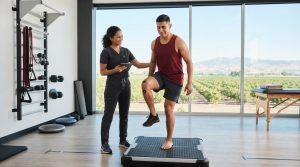
Return-to-sport rehabilitation bridges the gap between everyday movement and the specific challenges of your sport. Progress may start with comfortable daily tasks and build toward more demanding activity, with a clinician helping you assess your response along the way. The details depend on your injury and goals, so there isn’t one timeline or clearance threshold that fits every athlete.
Be specific about what “back” means to you. It might mean completing a casual bike ride, joining a team practice, or competing at your previous level. Defining the goal helps make recovery conversations practical and relevant.
Why can pain relief alone be an incomplete guide?
Pain is one part of the picture, not a complete measure of readiness. Sport can require quick movement, load management, coordination, and repeated effort. Those demands may differ substantially from walking around the house or completing a typical workday. Symptoms can also change during activity or afterward, so note what you feel and share it with your treating clinician.
“Less pain can signal progress, but readiness for full sport participation depends on how well you can meet your sport’s demands.”
For example, an athlete with knee pain may feel comfortable during routine movement but remain unsure about running, jumping, or changing direction. Discussing symptoms alongside function can clarify what to work on next, rather than relying on pain relief alone. Athletes managing knee symptoms can also explore the Fresno knee pain treatment guide for related information.
With return to sport rehabilitation Fresno athletes can approach a comeback as a collaborative process: explain what you want to return to, describe how activity affects you, and discuss the next step with a clinician. The aim is to make informed progress toward the activities that matter to you, not to rush toward a date.
How Fresno Sports Rehabilitation Progresses From Recovery to Sport-Specific Demands
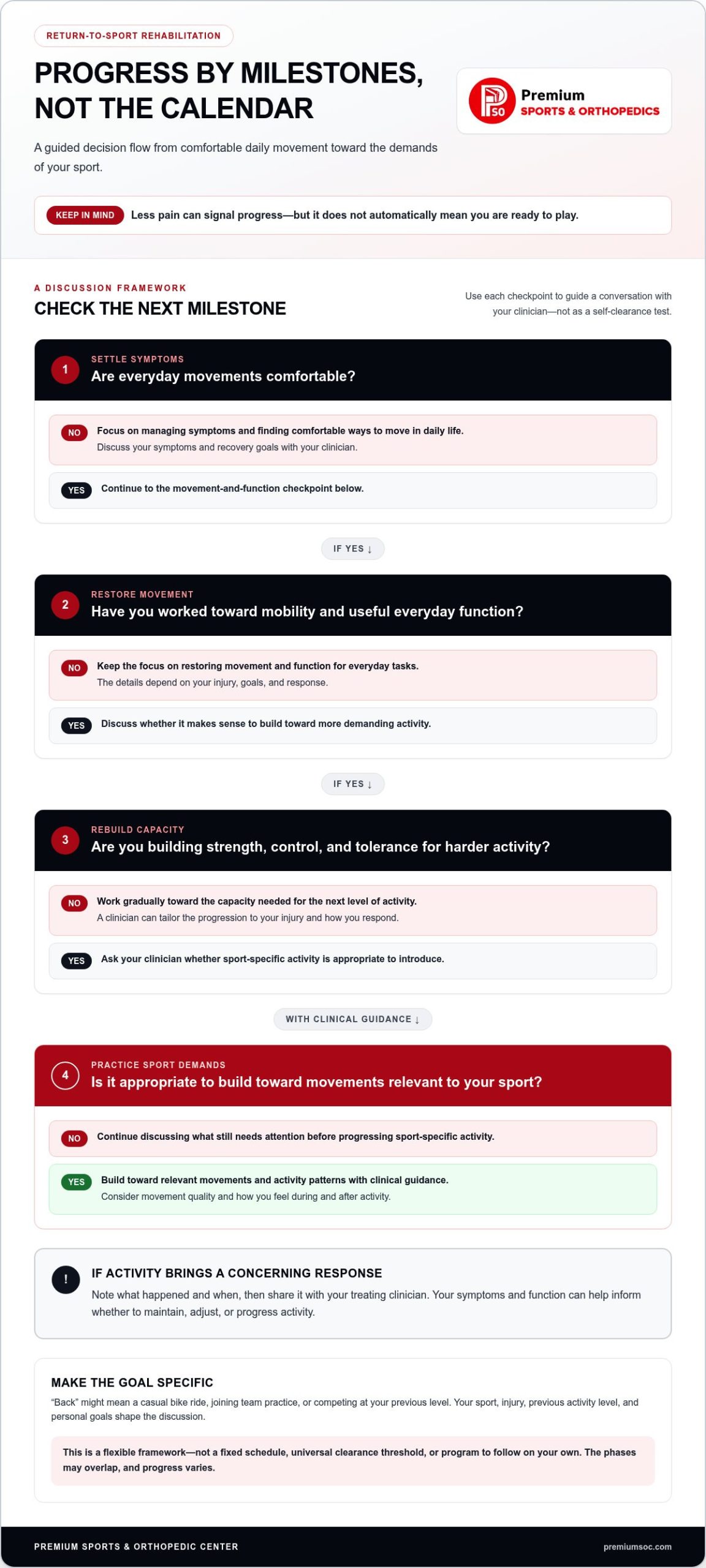
A return to sport takes shape through a series of manageable steps. Rehabilitation can move from addressing symptoms toward the strength, control, and activity demands your sport requires, while taking account of how your body responds. Stages may overlap, and progress varies with the injury, your starting function, and your goals. This is a framework, not a fixed schedule or a program to follow on your own.
A useful way to understand the progression is to think in four broad phases:
- Settle symptoms: Focus on managing symptoms and finding comfortable ways to move in daily life.
- Restore movement: Work toward mobility and useful function for everyday tasks.
- Rebuild capacity: Gradually develop strength, control, and tolerance for more demanding activity.
- Practice sport demands: With clinical guidance, build toward movements and activity patterns relevant to your sport.
This sequence is a framework, not a universal program. A clinician can consider your symptoms and function when guiding whether to maintain, adjust, or progress activity. If increasing activity brings a concerning response, note what happened and when, then share those details. Your feedback can help inform the next step.
From pain management to strength and movement
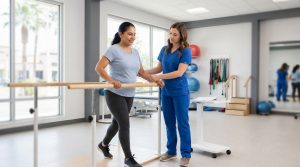
Early rehabilitation may focus on comfortable movement and useful function. As recovery progresses, physical therapy can build toward more challenging strength and movement-control work suited to your needs. The aim is to develop capacity for the next level of activity, not simply to rush through exercises. Your clinician can tailor the progression to your injury and response.
When does rehabilitation become sport-specific?
Sport-specific work becomes relevant as function and activity tolerance develop. A runner, for instance, may need to prepare for the repeated demands of running, while a court athlete may work toward changing direction. These are examples, not a prescribed sequence. Drills should progress with appropriate clinical guidance, taking account of movement quality and how you feel during and after activity.
The CDC’s return-to-play guidance is specifically designed for concussion, but its staged structure illustrates the principle of gradual progression. The CDC outlines a six-step return-to-play progression for concussion, including a gradual increase in activity and medical guidance before an athlete returns to sports. It isn’t a universal protocol for other injuries; your clinician can determine what progression is appropriate for your situation.
Progress should reflect what your body can do and what your sport asks of it, not a calendar alone. A sports medicine consultation can connect your injury assessment with recovery goals, while physical therapy supports a tailored path toward restoring function. Fresno-area athletes can learn more about sports medicine care in Fresno as they consider their next steps.
To discuss how your recovery goals relate to activity, learn about sports medicine consultations and physical therapy at Premium Sports & Orthopedic Center.
Return-to-Sport Readiness vs Calendar-Only Approach
A date can describe where you are in recovery, but it can’t show by itself how your body handles the demands of your sport. Return decisions are more useful when elapsed time is considered alongside symptoms, movement, strength, and the activity you’re preparing to resume. In return to sport rehabilitation Fresno athletes can discuss these factors with a clinician instead of treating a calendar milestone as automatic clearance.
| Calendar-only thinking | Individualized, function-informed progression |
|---|---|
| “It’s been this many weeks, so I should be ready.” | “How are symptoms, movement, and strength responding as activity changes?” |
| Uses elapsed time as the main reason to return. | Considers time alongside current function and the demands of the sport. |
| May not account for differences in injury history, sport, or personal goals. | Connects the recovery discussion to the athlete’s injury, current abilities, and intended activity. |
Time still matters as part of the overall picture. Injury type and healing needs can influence recovery, but a date alone can’t tell you whether you’re prepared for a particular practice, position, or level of play. A clinician-led discussion can put the timeline in context and identify what needs attention before activity increases.
What can a readiness discussion consider?
Bring a clear account of how symptoms behave during activity and afterward. Your clinician may discuss functional movement and relevant strength, and how those abilities relate to the demands you want to resume. Confidence matters too. Feeling hesitant about a movement is useful information to share, not something to hide. No single measure answers every return-to-sport question; readiness is considered in context.
Why do athletes need an individualized comparison?
Sports place different demands on the body, and athletes in the same sport may have distinct roles. A player who frequently changes direction, for example, may need to discuss different movement demands from a teammate whose role involves more straight-line running. Neither is universally harder. The useful question is how your activity compares with your current function.
Injury history also shapes that comparison. The same symptom or movement challenge may mean something different depending on the injury and your starting point. Discussing what you could do before the injury, what you can do now, and what you hope to return to makes the conversation specific and practical.
An individualized approach can ease pressure to return for a season, team, or personal deadline. Rather than relying on a date to settle the question, work with your clinician to understand what’s going well, what still needs attention, and how your goals fit the recovery picture. That gives you a clearer basis for planning without assuming one milestone fits every athlete.
How Fresno Athletes Can Prepare for a Return-to-Sport Assessment
A return-to-sport assessment is more useful when it reflects your real life, not just what you can do in a clinic. A little preparation can help you explain where recovery stands, what your sport asks of you, and what you hope to do next. You don’t need perfect answers. Clear observations and questions give your clinician a useful starting point for a conversation tailored to your condition.
What information should you bring?
Before your visit, jot down the essentials. Notes about your injury and recent activity can make the discussion more specific and easier to follow.
- Injury history: When and how did the injury happen? Note prior episodes, treatment, or relevant setbacks.
- Current activities: Describe what you can currently do for sport, exercise, work, or daily life, and how your body responds.
- Sport demands: Explain your role or event, typical training, and the movements or conditions you’ll need to manage.
- Recovery goal: Turn “get back to playing” into a clearer aim, such as returning to team practice or completing a particular part of training.
- Symptoms and questions: Note which movements bring on symptoms, when they occur, how you feel afterward, and what you want to understand about progression or symptom changes.
These details don’t replace an assessment. They help your clinician understand your experience and discuss your current function and possible next steps. If an activity feels different from one day to the next, include that too. A pattern can be as useful to discuss as one good or difficult session.
For a sports medicine consultation and physical therapy in Fresno, learn about care at Premium Sports & Orthopedic Center.
How can Fresno and Clovis athletes set useful goals?
Make a broad goal more concrete without turning it into a deadline. Instead of “return to my sport,” describe the activity you’re working toward, such as completing a practice, resuming a specific training activity, or returning to a particular role. Your clinician can relate that goal to your injury and current function.
Be realistic about your schedule, too. Work responsibilities, training plans, and your ability to attend rehabilitation sessions can affect how you organize recovery. Sharing those constraints helps your clinician shape practical next steps around your circumstances. Athletes in the area can also explore this Clovis sports medicine consultation guide for related information.
Bring questions, including what symptom changes to discuss and how to approach the next stage of activity. In return to sport rehabilitation Fresno, an open exchange helps connect your recovery plan to the sport and life you’re preparing to return to.
How Premium Sports & Orthopedic Center Supports Your Return to Sport in Fresno
A return-to-sport plan should connect your injury and current function with the activities you want to resume. At Premium Sports & Orthopedic Center, sports medicine consultations, orthopedic care, and physical therapy help Fresno-area athletes discuss those goals. Care is shaped around your individual recovery rather than assuming every athlete needs the same approach.
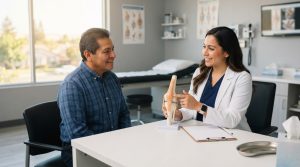
A consultation can connect an injury assessment with your priorities, whether you’re working toward recreational activity, practice, or a competitive goal. Your clinician can consider how the injury affects function and what your sport asks of you. The conversation can clarify which questions to address as you progress, so your next steps are relevant to your situation.
What can athletes expect from a personalized care plan?
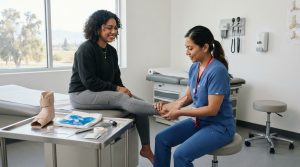
Your care plan begins with a clinical evaluation. The discussion can account for symptoms, current function, sport demands, and recovery priorities. Physical therapy can support progressive work toward your activity goals, with the approach tailored to your needs and response. The aim is to connect rehabilitation with the movements or activities you hope to resume, without assuming a preset timeline.
Based on your evaluation and clinical discussion, care may also involve muscle recovery treatments or joint tissue repair therapy. These aren’t automatic steps in every recovery plan. Your care team considers whether they are appropriate for you and your condition, and your clinician can explain how recommended care relates to your goals.
As care progresses, share changes in your function and how activities feel. This ongoing conversation can help your clinician adjust recommendations to your recovery priorities. It also gives you a chance to raise concerns, discuss what’s manageable alongside daily responsibilities, and understand how your care relates to the sport or activity you’re preparing to return to.
Take the next step toward your athletic comeback
Questions about readiness are appropriate at any point in recovery. You don’t need to wait until you feel certain or until a season is close to ask how your injury, function, and goals fit together. A sports medicine consultation gives you an opportunity to discuss those questions with a clinician and consider care suited to your evaluation.
For athletes exploring return to sport rehabilitation Fresno, Premium Sports & Orthopedic Center provides sports medicine consultations, orthopedic care, and physical therapy. Your comeback deserves thoughtful guidance grounded in your needs, without promises of a specific return date or performance outcome.
Take Your Next Step Toward a Confident Comeback
Your return to sport doesn’t have to be a decision you make alone. Use what you’ve learned about your injury, current abilities, and athletic goals to start a focused conversation about what comes next. Choose a next step that fits your circumstances and helps you move forward with clarity, not pressure to meet someone else’s timeline.
For return to sport rehabilitation Fresno athletes can turn to Premium Sports & Orthopedic Center for sports medicine consultations, orthopedic care, and physical therapy. The team serves Fresno and nearby communities, helping patients discuss recovery goals in the context of their individual needs.
Bring your questions, share what you hope to return to, and take an active role in planning your care. Explore sports medicine and orthopedic care at Premium Sports & Orthopedic Center and take a thoughtful next step toward the activities that matter to you. A confident comeback begins with informed choices and steady support.
Frequently Asked Questions
How do I know when I am ready to return to sport after an injury?
Readiness is an individualized decision to discuss with a qualified clinician, not something you can determine from one good day. Your conversation may cover symptoms, everyday and sport-related function, relevant strength, the demands of your activity, and how confident you feel about participating. These are considerations, not universal pass-or-fail rules. Feeling better or reaching a date you had in mind doesn’t establish readiness on its own.
Can I return to sport if I still have some pain?
Possibly, but pain during or after activity needs to be understood in context rather than answered with a blanket yes or no. Tell your treating clinician where you feel it, how intense it is, when it starts, and whether it changes during or after exercise. For example, note if discomfort appears only after a particular drill or lingers afterward. Don’t assume all pain means a new injury, or that it’s safe to ignore.
How long does return-to-sport rehabilitation take?
There isn’t one timeline that applies to every athlete or injury. The path can depend on the injury, your progress, the demands of your sport, and what a clinical assessment finds. For return to sport rehabilitation Fresno athletes, it’s more useful to discuss how recovery is progressing than to anchor plans to a promised date. Ask your care team what changes they’re watching for and how those observations may inform your next steps.
Do I need a sports medicine consultation before returning to play?
An individualized assessment can be helpful if symptoms persist, function feels limited, or you’re unsure how your sport’s demands relate to your recovery. The appropriate care pathway depends on your situation and applicable clinical guidance, so there isn’t one requirement that fits everyone. Premium Sports & Orthopedic Center provides sports medicine consultations and orthopedic care in Fresno. A consultation can help you discuss concerns and understand options relevant to your circumstances.
What should I do if symptoms return after I resume training?
If symptoms noticeably worsen or change, don’t push through without discussing it with a clinician. Note the activity that came before the symptoms, when they began, and how they changed afterward. For instance, record whether the change happened during a session or later that day. These details can help your clinician decide whether your plan needs reassessment, though they don’t identify the cause by themselves.
Is sports rehabilitation only for competitive athletes?
No. Rehabilitation can be relevant if you’re returning to organized competition, a recreational activity, or exercise that places physical demands on your body. Your goal might be joining a local game again or comfortably resuming a regular fitness routine. Care should reflect your activities and needs, not assume everyone requires the same training. Premium Sports & Orthopedic Center provides sports medicine consultations and physical therapy to support individualized recovery discussions.