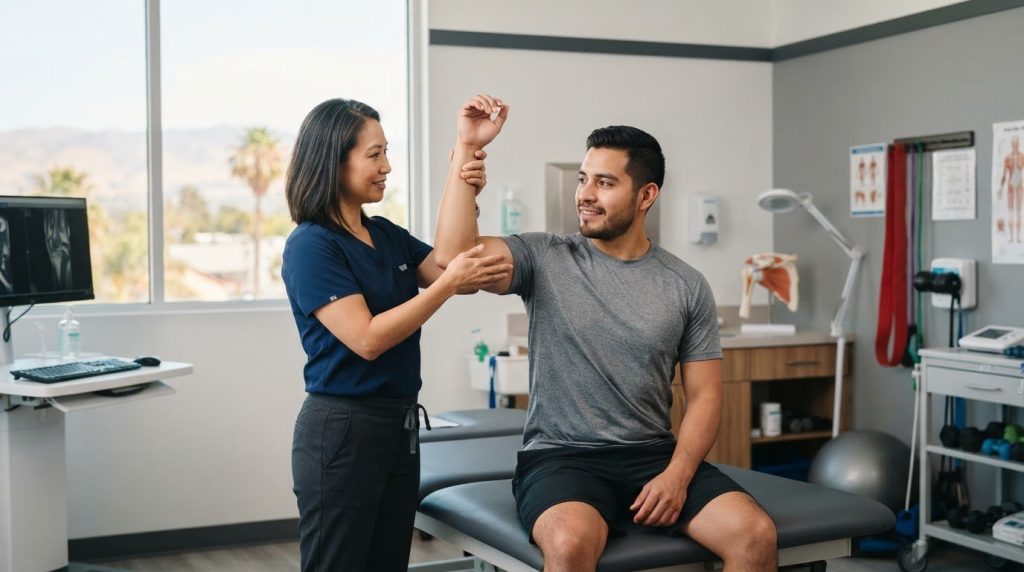
 10 Oct 2026
What if the first step toward shoulder recovery isn’t choosing a treatment, but understanding what’s causing the pain? If reaching overhead, sleeping comfortably, or keeping up with work and exercise has become difficult, it’s understandable to want answers rather than guesswork. A shoulder injury specialist Fresno patients can see for an assessment can consider your symptoms, movement, and daily demands to help clarify possible next steps.
Shoulder pain can follow an injury or develop over time, and similar symptoms may have different causes. A careful evaluation helps put those symptoms in context and identify care approaches that may fit your needs. Surgery isn’t the only path to consider: depending on the assessment, nonsurgical care such as physical therapy may be part of a clinician-guided plan.
In this guide, you’ll learn what a shoulder evaluation may involve, compare common care approaches, and see how recovery planning can reflect your goals, from everyday comfort to returning to sport. Premium Sports & Orthopedic Center offers Fresno-area patients orthopedic consultations, physical therapy, joint tissue repair therapy, and muscle recovery treatments as part of individualized recovery support.
Key Takeaways
- Know when persistent pain, weakness, or restricted movement may warrant a specialist’s assessment.
- Understand how symptom history, activity goals, and a physical assessment help guide next steps, including whether imaging may be useful.
- Compare activity adjustments, physical therapy, and other orthopedic approaches based on your needs, without assuming surgery is necessary.
- Prepare for a shoulder injury specialist Fresno visit by noting when symptoms began, what triggers them, and which activities are affected.
- Learn how orthopedic consultation, physical therapy, joint tissue repair therapy, and muscle recovery treatments may fit into an individualized care plan.
When should you see a shoulder injury specialist in Fresno?
Pain, weakness, or limited movement can make ordinary routines harder, whether you’re reaching for a shelf, getting dressed, working, or practicing a sport. If symptoms keep returning, interfere with activities you value, or aren’t settling, an assessment can help you understand what may be happening and which care options could suit your goals.
A shoulder injury specialist is a clinician who assesses musculoskeletal concerns affecting the shoulder and discusses appropriate care options. Symptoms may relate to rotator cuff irritation, a joint injury, stiffness, or a muscle strain, among other possibilities. These are examples, not diagnoses. Similar complaints can have different causes, so an evaluation helps put them in context. This overview of shoulder pain and injuries describes several conditions that can affect the joint.
Persistent limits on how you use your shoulder are a reason to seek assessment, not proof of a particular diagnosis. A shoulder injury specialist Fresno patients consult can consider your symptom history and pattern alongside movement and function, rather than relying on one clue alone.
Which shoulder symptoms deserve a closer assessment?
Consider an assessment if pain persists, your arm feels weaker than usual, or you can’t reach as comfortably as before. Symptoms that ease and then recur during lifting, throwing, swimming, or other activities are also useful to note. Pay attention to when discomfort begins, which movements bring it on, and whether your range of motion or strength has changed.
Pain location alone can’t reliably identify which structure is involved. Discomfort at the front, side, or back of the shoulder may occur with different problems, so avoid assuming the cause based only on where it hurts. Seek prompt medical assessment after significant trauma, such as a hard fall or collision, or if you suddenly lose the ability to use or move the arm normally. Similar warning signs after an ankle injury and guidance on ankle injury treatment in Fresno are covered in a practical recovery checklist.
How can a shoulder injury affect everyday life?
Shoulder problems often show up through small but meaningful changes. Reaching into a cupboard may become difficult. Dressing, lifting a bag, completing tasks at work, or finding a comfortable sleeping position may take more effort. For an athlete, pain or weakness during a throw, stroke, or lift can make it difficult to train or return to sport with confidence.
Track function as well as pain intensity. Note whether you can reach overhead, lift objects you could previously manage, sleep without being woken by discomfort, or complete your usual activities. Changes in what you can do, how symptoms respond to activity, and whether they are improving or recurring help a clinician understand the concern. A mild ache that quickly settles may not call for specialist care, but ongoing or worsening limitations deserve attention. You don’t need to identify the injury yourself before asking for guidance.
How a Fresno shoulder specialist evaluates an injury
A thoughtful evaluation starts with your experience, not a scan or a one-size-fits-all treatment. A shoulder injury specialist Fresno patients see can consider when symptoms started, which movements affect them, how the shoulder functions now, and what you need to get back to doing. Together, these details help shape a practical next step.
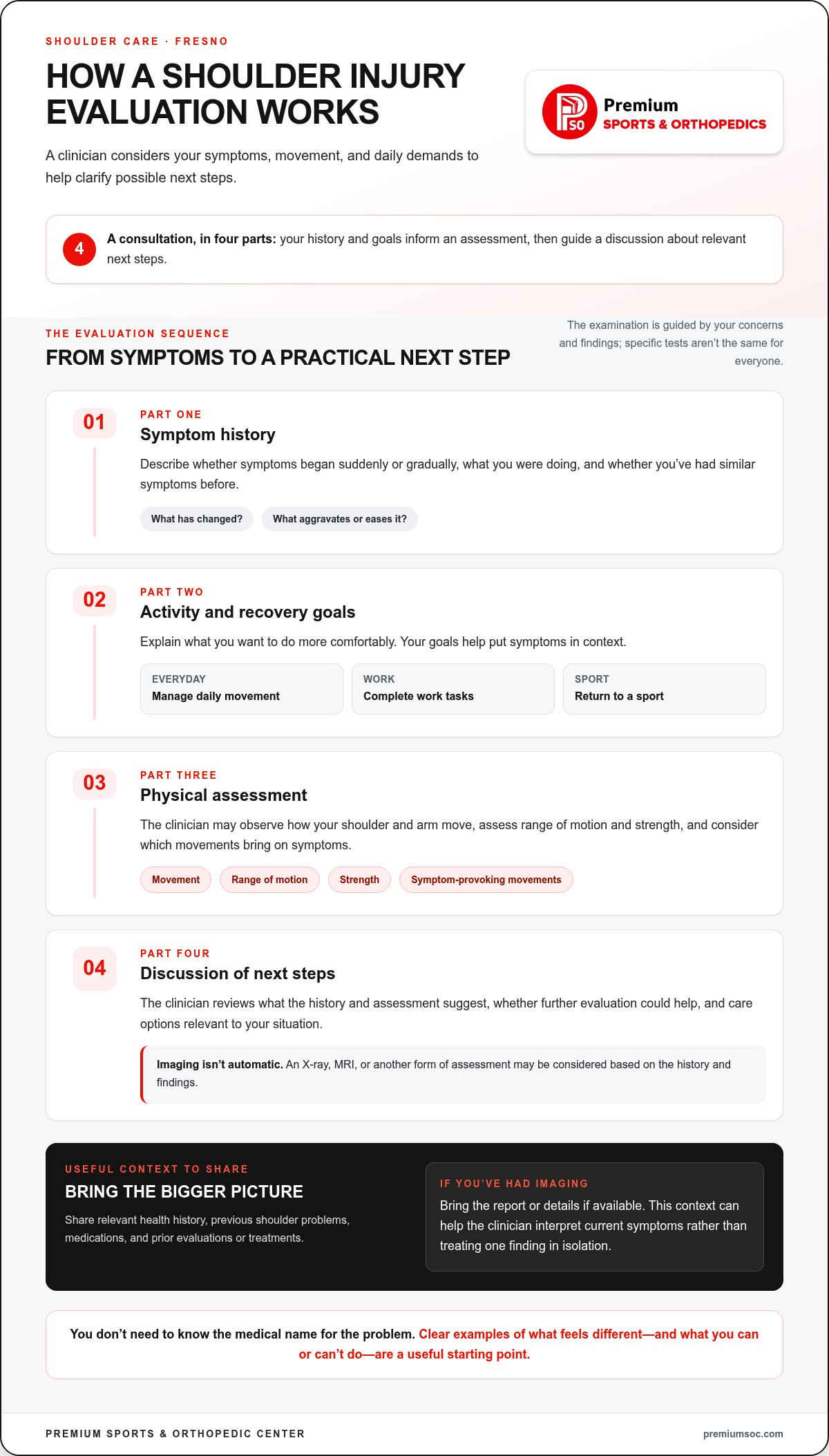
The consultation commonly moves through several parts:
- Symptom history: Describe whether the problem began suddenly or gradually, what you were doing at the time, and whether you’ve had similar symptoms before. Mention what has changed since it began, including movements that aggravate or ease discomfort.
- Activity and recovery goals: Explain what you want to do more comfortably, such as completing work tasks, returning to a particular sport, or managing everyday movement. These goals put your symptoms in context.
- Physical assessment: The clinician may observe how you move your shoulder and arm, assess range of motion and strength, and consider which movements bring on symptoms. The examination is guided by your concerns and findings; specific tests aren’t the same for everyone.
- Discussion of next steps: The clinician reviews what the history and assessment suggest, explains whether further evaluation could help, and discusses care options relevant to your situation.
Share relevant health history, previous shoulder problems, medications, and any prior evaluations or treatments. If you’ve had imaging, bring the report or details if available. This context can help the clinician interpret current symptoms rather than treating one finding in isolation.
What should you expect during the first consultation?
Be ready to explain when symptoms began and which movements bring them on, such as lifting your arm, reaching across your body, or performing a sport-specific motion. You don’t need to know the medical name for the problem. Clear examples of what feels different and what you can or can’t do are useful starting points.
Your history and examination guide an individualized shoulder-care plan by showing how symptoms, movement, and personal goals fit together.
When might imaging or further assessment be considered?
Imaging isn’t automatic for every shoulder concern. A clinician may consider an X-ray, MRI, or another form of assessment when the history and physical findings suggest that more information could help guide a decision. The timing and type depend on clinical findings and individual circumstances, including how the problem began and how shoulder function has changed.
If imaging is considered, ask how the findings relate to your symptoms and what decisions they could inform. A scan is one part of the picture; results need to be interpreted alongside your history and examination. The aim is to make the next step clearer, whether that means discussing conservative care, physical therapy, or another appropriate orthopedic approach.
For Fresno-area patients, an orthopedic consultation for shoulder concerns provides an opportunity to discuss symptoms, movement, and recovery goals and consider an individualized path forward.
Comparing shoulder injury care options without assuming surgery is necessary
Shoulder care isn’t a choice between ignoring symptoms and having surgery. Depending on the assessment, a plan may involve adjusting activities, physical therapy, or other appropriate orthopedic approaches. A shoulder injury specialist Fresno patients consult can relate those options to the likely cause of symptoms, current function, relevant health history, and personal recovery goals. No single approach suits every shoulder problem, and results can’t be guaranteed.
Each option has a different purpose and may involve trade-offs:
- Clinician-guided activity changes: Temporarily modifying movements that aggravate symptoms may help you stay active while avoiding unnecessary strain. The challenge is finding a workable adjustment that doesn’t unnecessarily restrict everyday tasks or valued activities.
- Physical therapy: When appropriate, rehabilitation can focus on movement, strength, and tasks that matter to you. The plan and its progression should reflect your assessment and response.
- Other orthopedic approaches: A clinician may discuss additional care based on the findings and your needs. Consider each option’s potential purpose, limitations, and fit rather than assuming it is right for every injury.
Premium Sports & Orthopedic Center offers orthopedic consultations, physical therapy, joint tissue repair therapy, and muscle recovery treatments. These services can be considered within an individualized outpatient recovery plan. Which approaches are appropriate depends on the clinical picture, not simply on a treatment’s availability or popularity.
What role can physical therapy play in shoulder recovery?
Physical therapy may address movement, strength, and functional goals when it fits the clinical assessment. For example, a plan can reflect the shoulder demands of your work or sport rather than follow a generic routine. Exercises and progression should be tailored to the individual and adjusted in light of how symptoms and function respond. An assessment is needed before choosing exercises or setting expectations for recovery.
How should readers think about tissue-repair approaches?
Joint tissue repair therapy can be part of an orthopedic care discussion. Before deciding, understand its intended goal, why it may or may not suit your situation, what limitations or uncertainties apply, and how it fits with other parts of the plan. Avoid treating a therapy as a universal fix or assuming it replaces rehabilitation or other care. A clinician can relate the discussion to your findings and priorities.
A useful comparison starts with the problem each option is meant to address, how it supports your functional goals, and what questions remain. For instance, consider whether a proposed approach helps you work toward comfortable daily movement or a gradual return to sport, and how progress will be reviewed. This keeps the decision focused on your needs instead of promises or one-size-fits-all claims.
For Fresno-area patients, an orthopedic consultation for shoulder pain can bring assessment findings and possible care approaches into one individualized discussion.
How to prepare for shoulder care in Fresno and compare your options
A little preparation can make a shoulder consultation more focused. You don’t need to arrive with a diagnosis. Instead, bring a clear picture of how symptoms began, what changes them, and what you hope to do more comfortably. These details help a shoulder injury specialist Fresno patients consult connect the assessment to your day-to-day priorities.
Before your visit, jot down:
- When symptoms started and whether they came on suddenly or gradually.
- Movements or activities that worsen, ease, or bring back the symptoms.
- Tasks that have become difficult, such as reaching, lifting, working, or training.
- Previous evaluations, treatments, or imaging reports, if available.
- Your questions about possible approaches, their purpose, and how progress may be reviewed.
Be specific about your goals. “I want my shoulder to feel better” is a valid starting point, but a more concrete goal, such as reaching comfortably at work or gradually returning to a favorite activity, gives the care discussion a useful direction.
What information can make a shoulder consultation more useful?
Describe what has changed over time, not just how your shoulder feels today. For instance, note whether discomfort appears during a particular movement, lingers afterward, or affects sleep. Bring available reports or information about previous care, and list relevant medications or health history. A short list of questions can help you understand the reasoning behind recommendations and how each option relates to your goals.
As you compare care plans, consider more than the treatment name. Look for a clear explanation of how the assessment informed the recommendations, how the plan reflects your activities and health history, and how you’ll discuss changes in symptoms or function. Useful questions include: What is each approach intended to address? What are its limitations or uncertainties? What signs would prompt a reassessment? Clear communication helps you take part in decisions without assuming one option fits every shoulder concern.
How can active patients plan around recovery goals?
Share the demands of your work, recreation, and sport, including the movements you need to perform and what returning to activity means to you. A clinician can use these priorities to shape an individualized discussion. Return-to-activity decisions should reflect clinical guidance and functional progress, rather than a fixed timetable or pressure to resume everything at once. Athletes exploring sports medicine consultations in Clovis can use the same goal-focused questions when discussing activity demands and care options.
For local context, learn more about sports medicine care in Fresno and how a clinician-guided consultation can relate orthopedic care to your activity goals. If shoulder symptoms are limiting your routine, schedule an orthopedic consultation to discuss your concerns and possible next steps.
Shoulder injury care at Premium Sports & Orthopedic Center in Fresno
Shoulder care should reflect what the assessment shows and what you need to do in daily life, at work, or in sport. At Premium Sports & Orthopedic Center, Fresno-area patients can discuss shoulder concerns through orthopedic consultations and consider care options suited to their situation. A shoulder injury specialist Fresno patients see can connect symptoms and function to a thoughtful next step, rather than starting with a predetermined treatment.
The care pathway may bring together several outpatient services, depending on clinical evaluation and personal goals:
- Consultation: Discuss symptoms, relevant history, and how shoulder function affects your routine.
- Physical therapy: Work toward movement and functional goals as part of a clinician-guided recovery plan.
- Joint tissue repair therapy: Discuss whether this approach may fit your needs, including its intended role and limitations.
- Muscle recovery treatments: Consider recovery support in the context of your overall orthopedic care.
These options are not a package that every patient follows. The appropriate next step depends on assessment findings, symptoms, health history, and priorities. A plan can focus on practical goals, such as improving comfort with everyday movement or working toward a gradual return to an activity, while leaving room to adjust as needs and function change.
A coordinated approach centered on function and recovery
Good care planning connects the clinical picture to the way you use your shoulder. Your concerns, activity demands, and functional priorities help guide a discussion of suitable options. Physical therapy and recovery support may contribute when appropriate, but the approach should reflect your assessment and response rather than an assumed protocol or promised result.
Clear communication matters throughout care. You should understand the purpose of the recommended approach, how it relates to your goals, and how to share changes or concerns. Decisions are more useful when they’re made collaboratively, with your questions addressed and the plan grounded in your individual circumstances.
Taking the next step with a Fresno shoulder care team
If you’re ready to discuss shoulder care, have a few details at hand: when the issue began, what movements affect it, how it limits your routine, and what you hope to return to doing. Bring available imaging reports or information about previous care, along with relevant health history. You don’t need to arrive with a diagnosis. A clear account of your experience is a helpful starting point for a consultation.
Premium Sports & Orthopedic Center welcomes Fresno-area patients seeking support for shoulder pain and orthopedic recovery. Explore shoulder and orthopedic care at Premium Sports & Orthopedic Center and request an appointment to discuss your concerns and goals.
Take a confident next step toward better shoulder function
You don’t have to map out your recovery alone. Start by identifying what you’d most like to do more comfortably, then bring that goal into a conversation with a shoulder injury specialist Fresno patients can access for orthopedic and sports medicine care. A clear personal priority can help make the next step feel more manageable.
At Premium Sports & Orthopedic Center, care planning can draw on physical therapy, joint tissue repair therapy, and muscle recovery treatments when appropriate to your assessment and needs. The focus is a thoughtful path shaped around your symptoms and functional goals, not a promise that one treatment suits everyone.
Ready to discuss your shoulder concerns with a Fresno-area care team? Explore shoulder and orthopedic care at Premium Sports & Orthopedic Center and take a positive step toward moving with greater confidence.
Frequently Asked Questions
Can a shoulder injury improve without surgery?
Yes, some shoulder injuries can be managed without surgery, but the right approach depends on the injury and your overall health. A shoulder injury specialist Fresno patients consult can help determine whether options such as activity adjustments or physical therapy may be appropriate. Some injuries need different care, so don’t assume that pain improving temporarily means the underlying issue is resolved. Seek an assessment if symptoms persist, recur, or limit your usual function.
What symptoms after a shoulder injury need urgent medical attention?
Seek prompt medical attention after a serious fall or collision, a visible change in shoulder shape, sudden inability to move the arm, or severe pain and swelling. Numbness, tingling, or a hand that becomes unusually pale or cold after an injury also needs urgent assessment. These signs can indicate more than routine soreness. If symptoms are severe or rapidly worsening, seek emergency care rather than waiting for a routine appointment.
How long can shoulder injury recovery take?
Recovery may take weeks or months, depending on what’s injured, symptom severity, health factors, and how shoulder function changes over time. A mild strain and a more complex tendon or joint injury shouldn’t be expected to follow the same course. Rather than relying on a fixed timeline, track whether everyday tasks become easier and follow clinical guidance. If progress stalls or symptoms worsen, arrange reassessment to review the plan.
Should I keep exercising if my shoulder hurts?
Don’t push through sharp pain, worsening discomfort, or new weakness during exercise. Pause or modify the movement that brings on symptoms, especially overhead lifting or repetitive throwing, and seek clinical guidance if pain persists or affects daily use. The right activity level depends on the cause of the pain. A clinician can help distinguish between movements to limit temporarily and activity that may remain comfortable for you.
Why can shoulder pain feel worse at night?
Shoulder pain may feel more noticeable at night if lying on the affected side puts pressure on it or holds the arm in an uncomfortable position. Less daytime activity may also make discomfort harder to ignore. Try changing sleep position and supporting the arm with a pillow, but don’t treat this as a diagnosis. If night pain repeatedly disrupts sleep or comes with worsening weakness or limited movement, arrange an assessment.
Can a shoulder injury affect my neck, arm, or hand?
Yes, discomfort may spread beyond the shoulder, but pain traveling into the arm or hand can also have causes outside the shoulder joint, including irritation involving the neck. Note where symptoms travel and whether you also experience tingling, numbness, or changes in grip strength. These details help guide an assessment. Seek prompt medical advice for new or worsening weakness, persistent numbness, or symptoms that follow a significant injury.