
 25 Oct 2026
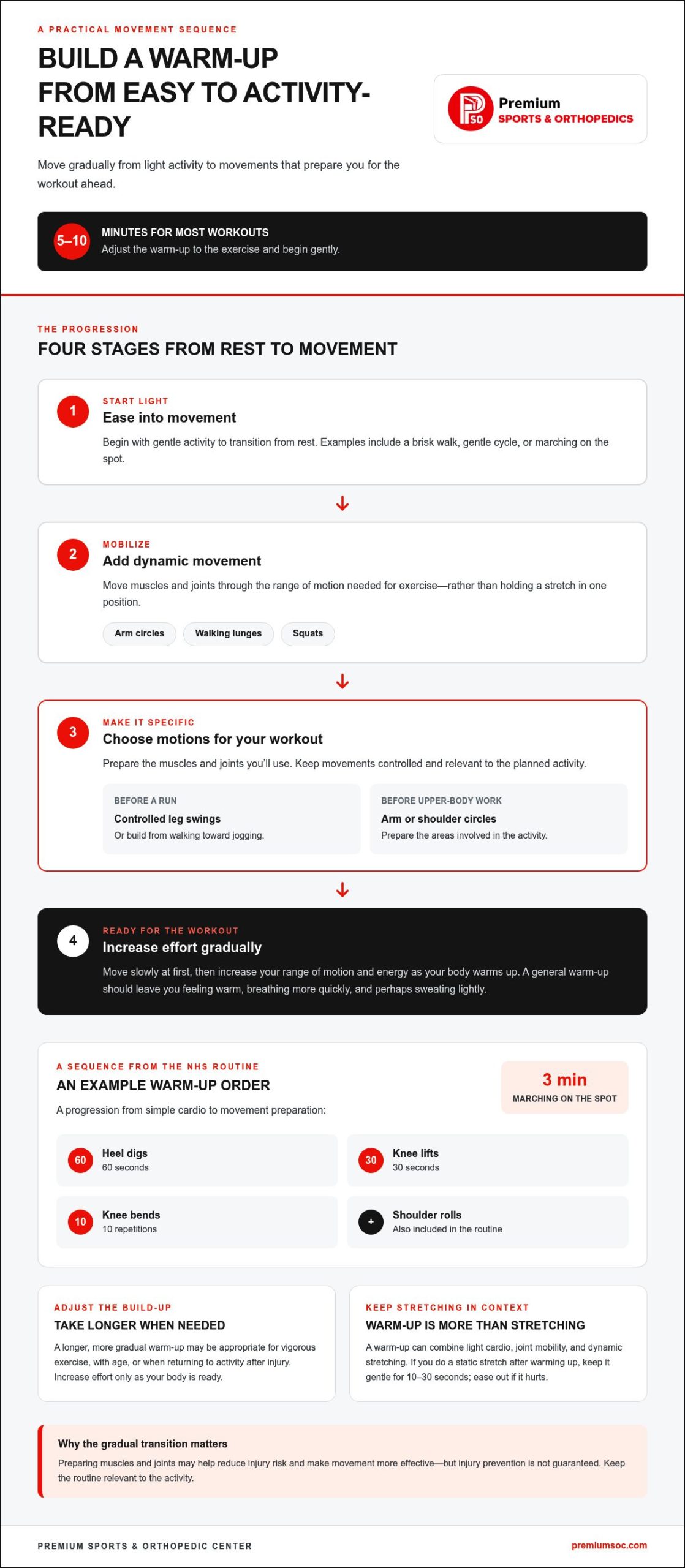
A warm-up is important because it gradually raises your body temperature, heart rate, and breathing before more vigorous activity. For most workouts, aim for 5-10 minutes, adjusting the time to match the exercise and starting gently. Understanding why a warm-up is important before exercise also means recognizing how it prepares working muscles and can help reduce injury risk.
It’s tempting to jump straight into the part of a workout you enjoy, but a gradual start helps your body and mind get ready to move. The right warm-up is more than a few stretches: it builds from light activity toward movements suited to what comes next. This article explains how warm-ups prepare your body, why warming up matters for performance and injury prevention, and how to tailor the length and movements to your activity.
Key Takeaways
- Plan a warm-up of about 5-10 minutes for a typical workout, and adjust it to the activity and conditions.
- Build gradually from gentle movement to activity-specific motions so your body is ready for the work ahead.
- Use dynamic movements, such as arm circles or walking lunges, to prepare muscles and joints for movement.
- A longer, more gradual warm-up can better prepare you for vigorous exercise or a return to activity after injury.
- If knee, back, leg, or hand pain is affecting exercise, learn how orthopedic care may help address it.
Why Warm Up Before Exercising?
A warm-up is a low-level activity that gradually raises body temperature and prepares you for more vigorous exercise. For most workouts, 5-10 minutes of movement can help you transition from rest to activity.
Dynamic Stretching in Warm-Ups
Dynamic stretching moves a body part through the range of motion needed for your upcoming activity. Arm circles, walking lunges, and squats engage muscles while you move, rather than holding one position. Choose movements that resemble your workout: a runner might use controlled leg swings, while someone preparing for upper-body exercise might make arm circles.
Move slowly at first, then increase your range of motion and energy as your body warms up. This gradual approach helps prepare muscles and joints for the movements ahead. Dynamic stretches can also help improve range of motion, allowing your body to move more freely during activity.
Warm-Ups Compared With Stretching
A warm-up is a broader preparation period; stretching is one type of movement that may be part of it. A brisk walk or gentle cycle, for example, gradually increases activity, while a stretch focuses on moving or lengthening particular muscles. Treating them as separate but complementary helps you avoid mistaking a few stretches for a complete warm-up.
A warm-up can include light cardio, joint mobility, and dynamic stretching before the main activity. A general warm-up should leave you feeling warm, breathing more quickly, and perhaps sweating lightly. Then choose movements related to your workout, such as lunges before a run or shoulder circles before upper-body work.
Stretching can support flexibility and range of motion, helping you move more freely. Static stretching involves holding a position to lengthen a muscle or muscle group. After warming up, hold a stretch for 10 to 30 seconds and keep the sensation gentle. For example, a standing calf stretch can target the lower leg before an activity that includes running or jumping.
Long static holds aren’t the best opening move when your muscles are still cold. Static stretching for too long may weaken muscles, so prioritize gentle movement and dynamic stretches before exercise. Stretch in a controlled way, not to the point of pain, and ease out if a position hurts.
The NHS warm-up routine includes marching on the spot for 3 minutes, followed by movements such as heel digs, knee lifts, knee bends, and shoulder rolls. According to the NHS, its routine includes 60 heel digs in 60 seconds, 30 knee lifts in 30 seconds, and 10 knee bends. These examples show how a warm-up can move from simple cardio to joint movement and activity preparation.
Let your planned workout guide your warm-up. A walk before a run can build gradually toward jogging, while arm circles and controlled lunges can prepare different areas of the body. This practical distinction explains why a warm-up is important before exercise: it creates a gradual bridge between rest and the movements your activity demands.
Injury risk reduction
A gradual warm-up prepares muscles and joints for the demands of exercise, which may help reduce injury risk. The NHS says warming up before exercise helps prevent injury and make workouts more effective.
Warm-Ups and Injury Prevention
Warming up means gradually increasing activity before more demanding movement, helping prepare your body for exercise. That transition matters because going straight from rest to hard effort places sudden demands on muscles and joints. A gentle start, followed by movements related to your workout, can help prepare the tissues that will work hardest.
Warm muscles are also better prepared for stretching, since cold muscles are more prone to strains or tears. An effective warm-up should therefore start with light movement, not forceful stretching. Injury prevention is not guaranteed, but preparing your body can be one useful part of managing the risk of injury during physical activity.
Tailoring Warm-Ups to Exercise and Individual Needs
A suitable warm-up matches the sport, planned intensity, and your needs. A tennis player can prepare with controlled shoulder and arm movements, while a runner can begin with easy walking and build toward jogging. These specific motions activate muscles needed for the activity, rather than preparing the body only in a general way.
Age, vigorous exercise, and a return after injury call for a longer, more gradual build-up. Start gently, then increase effort only as the body is ready for the next movement. If shoulder pain affects sports participation, a sports medicine consultation can help address concerns related to returning to activity.
Should warm-ups be specific to the sport or workout? Yes. Choose movements that prepare the muscles and joints used in the planned activity, such as controlled arm swings before a sport involving throwing.
Skipping a Warm-Up
Skipping a warm-up means starting your workout before your body has gradually adjusted to its demands. A sudden sprint from rest, for example, asks your legs and cardiovascular system to work hard immediately. Without preparation, your muscles may feel stiff, and your body may be less ready to coordinate fast or forceful movement.
What happens if you skip a warm-up? You miss the gradual preparation that can help reduce injury risk and make movement more effective. Skipping doesn’t mean an injury will occur, but it removes a practical step that prepares your body for exercise.
Evidence on injury prevention varies by sport and warm-up approach. Research on soccer players, for example, has produced mixed findings about whether comprehensive warm-up programs reduce injuries. A 2008 Norwegian study compared injury rates among a thousand female soccer athletes who warmed up with rates among several hundred who did not; that comparison alone doesn’t establish that every warm-up works for every sport. Keep the routine relevant, gradual, and suited to the workout’s intensity.
Adjusting warm-up length to exercise intensity
Warm-up duration should reflect the effort ahead: vigorous activity needs a longer, more gradual build than easy movement. For a typical workout, 5-10 minutes is a useful starting point, adjusted for the activity and conditions.
Gradually Increasing Exercise Intensity
Gradual progression means starting with gentle motion and raising your effort in stages before the main workout. This gives your heart rate, breathing, and body temperature time to rise instead of demanding a sudden change. Before a challenging rowing session, for example, begin with easy strokes, then increase pace and power in controlled steps.
Keep early movements comfortable, then add range of motion and speed as your body responds. A warm-up should remain light to moderate, not become a workout of its own. More vigorous activities call for a longer progression, giving your muscles and circulation time to prepare for greater demands.
Choose the warm-up’s length according to the activity’s intensity and complexity. A gentle mobility session may need less preparation than repeated jumps, fast direction changes, or heavy resistance work. If your activity includes several demanding movements, prepare each key area instead of spending the entire warm-up on one motion.
Cold conditions can also affect timing. Athletes exercising outdoors in winter should warm up longer, because their bodies need more time to feel ready for vigorous effort. Progress from gentle movement to activity-specific movements, then begin the main exercise within a few minutes of finishing. This timing helps carry the warming effect into the workout.
Recognizing When You Are Warmed Up Enough
A sufficient warm-up leaves you feeling warm, lightly sweating, and breathing faster than at rest. Your heart rate should also be elevated, while your movements feel controlled and your range of motion suits the activity. These signs help you judge readiness without relying on a fixed duration for every workout.
Use a brief, activity-specific check before increasing effort. For a session with overhead lifts, try unloaded arm movements first; for hill walking, begin on level ground and gradually increase the incline. If those movements feel smooth and your breathing remains manageable, progress toward the planned intensity.
How do you know when you are warmed up enough? Look for warmth, light sweating, and a modest rise in heart rate and breathing. You should also be able to perform your workout’s movements with control, rather than forcing a stiff or restricted range.
Some warm-up sessions take longer than the typical 5-10 minutes. Ramsay Health UK describes warm-ups commonly lasting between ten and thirty minutes, reflecting how duration can vary with the activity. A 3-mile run, for example, may use a half-mile warm-up approach. Treat examples as starting points, then consider the planned intensity, weather, and how your body moves.
Muscle temperature and explosive performance
During a warm-up, moving muscles increases blood flow and gradually raises their temperature. That circulation delivers oxygen and nutrients to the muscle groups working hardest. Before a sprint, for example, easy jogging engages the legs before they produce faster, more forceful movements. This gradual change helps prepare your body for physical activity without asking cold muscles to perform at full intensity immediately.
Muscle temperature matters for explosive actions that require rapid force. Warmer skeletal muscles can perform explosive movements, such as sprinting and jumping, more effectively. A basketball player might use gentle jogging and controlled jumps before practicing faster takeoffs. The warm-up doesn’t create the skill or strength behind a jump; it helps prepare the muscles for the movement’s speed and power demands.
Circulation also supports the cardiovascular and respiratory systems as activity increases. As you move from an easy pace to a more active one, your heart rate and breathing rise, helping supply working muscles with oxygen. For a cycling workout, begin with relaxed pedaling, then gradually increase your pace. This gives your body time to respond before a harder interval places greater demands on your legs.
Use the activity ahead to decide which muscles to warm up. A sprinter can include light running before short accelerations, while someone preparing for a jumping workout can start with easy bouncing or controlled hops. These examples engage relevant muscle groups while progressively increasing movement. Aim to feel prepared for the next effort, not tired before the main activity begins.
Some activity-specific warm-ups also connect preparation with performance technique. In baseball, swings with a standard-weight bat can increase batting speed. This example shows how warm-ups can rehearse a movement as well as raise muscle temperature. A baseball player can start with smooth, controlled swings, then build toward the pace and range used during batting practice.
Preparation matters after exercise, too. Stretching after physical activity can help muscles recover and reduce soreness. After a run, for instance, walk as your pace slows, then gently stretch the legs that carried most of the workload. Stretching supports flexibility and movement, while a cool-down helps your body transition out of vigorous effort.
Warm muscles aren’t a substitute for sound training or recovery. Treat warming up as one part of a thoughtful routine: engage the muscles needed, build effort progressively, and match movements to your workout. Before sprinting, prepare your legs; before batting, rehearse controlled swings. This targeted approach connects circulation, temperature, and movement with the demands of the activity.
How warm-ups prepare the body for exercise
A warm-up prepares more than the muscles you can feel working. Light activity gradually raises your heart rate, breathing, and body temperature, helping your cardiovascular and respiratory systems respond before more vigorous exercise. An easy walk before a brisk uphill route, for example, gives your body a transition instead of an abrupt shift from sitting to climbing.
As you move, blood flow delivers oxygen and nutrients to working muscles. This gradual supply matters when an activity asks large muscle groups to work repeatedly, such as cycling or climbing stairs. Beginning at an easy pace lets your body increase its demands step by step, rather than asking your heart, lungs, and legs to meet full workout intensity immediately.
The movements you choose also prepare your coordination. A warm-up can activate muscles and rehearse the motion needed for your planned activity. Before a dance class, controlled steps and arm movements help you practice timing before faster combinations. Before a racket sport, gentle side steps prepare you for changes in direction. The pattern should resemble the workout without exhausting you beforehand.
Preparation involves attention as well as physical readiness. A few minutes of focused movement can help you mentally shift toward the session and concentrate on posture, balance, or technique. During a walking warm-up, notice how your feet land and how your breathing changes as your pace rises. That awareness can help you enter the main activity with a clearer sense of rhythm and control.
Warm-ups can also prime performance qualities such as muscle power, speed, coordination, and reaction time. Someone preparing for a jump-focused workout might progress from easy movement to controlled jumps before more demanding efforts. This sequence gives the body a chance to adjust to the motion and effort involved. It doesn’t replace practice, but it prepares the body for the task.
Think of the warm-up as a bridge, not a separate test. Move from gentle activity toward the specific effort ahead, using the muscles and movement patterns your session requires. A general warm-up should leave you feeling warm, breathing faster, and perhaps sweating lightly. Ramsay Health UK advises beginning the main activity within a few minutes of warming up, while those signs are still present.
That preparation is useful whether you’re starting a neighborhood walk or a vigorous workout. Match the movements to the activity, build effort gradually, and pay attention to how your body responds. If pain is changing how you move or exercise, explore care for movement concerns as a next step.
Premium Sports & Orthopedic Center: Knee Pain
Premium Sports & Orthopedic Center provides orthopedic care and sports medicine consultations for people in the Fresno area whose knee pain interferes with exercise or everyday movement. If discomfort keeps returning during warm-ups, limits your range of motion, or changes how you move, a consultation can help assess the concern and guide next steps.
Warm-ups prepare your body for activity, but they don’t replace care for persistent pain. Note which movements bring on discomfort and how it affects your workout; these details can inform a conversation about your knee symptoms. Premium Sports & Orthopedic Center also provides care for back, leg, and hand pain.
For support with knee pain or exercise-related concerns in the Fresno area, contact Premium Sports & Orthopedic Center or visit premiumsoc.com.
Make Your Next Workout More Intentional
Make preparation a steady part of your routine, not an afterthought reserved for demanding training days. Knowing why a warm-up is important before exercise can help you approach movement with greater awareness: notice how your body feels, choose a suitable starting pace, and build toward the activity ahead. That simple shift can make it easier to stay consistent and adapt your workout to your needs.
If knee, back, or leg pain is changing how you move or exercise, support is available in the Fresno area. Premium Sports & Orthopedic Center provides care for knee pain, back pain, and leg pain. A conversation about what hurts and which activities are affected can help you consider a suitable next step toward moving comfortably.
Reach out when you’re ready to discuss your concerns. Contact Premium Sports & Orthopedic Center and take a positive step toward your active goals.
Frequently Asked Questions
How Long Should a Warm-up Last?
A typical warm-up lasts 5-10 minutes, with more time useful before vigorous activity or exercise in cold weather. Use the planned workout to guide the pace: before a relaxed neighborhood walk, easy walking may be enough; before hill intervals, build from gentle movement toward a brisker effort. Start the main activity within a few minutes of warming up, while your body still feels ready to move.
What Are The Benefits of Warming up?
Warming up can support physical readiness, coordination, and mental focus before exercise. Before a recreational tennis game, for example, gentle side steps and controlled racket swings can help you focus on the movements you’ll use. A warm-up also helps you transition into activity instead of beginning at full effort. The NHS says warming up helps prevent injury and make workouts more effective.
What Does a Warmup Do For Your Body?
A warm-up gradually increases your heart rate, breathing, and body temperature. As you move, blood flow helps deliver oxygen and nutrients to working muscles. Before a cycling class, relaxed pedaling gives your legs and cardiovascular system time to adjust before faster efforts. You may feel warmer and breathe more quickly, signs that your body is responding to the rising activity.
What exactly is warming up and why is it important?
Warming up means doing light activity that prepares your body for more demanding movement. Its value lies in the gradual transition: an easy cycle before a hilly route, for instance, lets you move from a comfortable pace toward greater effort. It also gives you a moment to focus on posture and the activity ahead, rather than shifting suddenly from rest into strenuous exercise.
What should a warm-up involve?
A warm-up can combine gentle cardio, joint mobility, and movements related to your workout. For a dance class, begin with easy steps, then add controlled turns and arm movements before faster combinations. Keep early movements comfortable and build gradually. Dynamic stretches can prepare the range of motion you’ll use; save longer static stretches until your muscles are warm or after the workout.
Why Warmup Before Working Out?
Warm up before working out to give your body a gradual start and prepare for the session’s demands. If you’re heading from a desk to strength training, begin with light movement and then rehearse the patterns you plan to use, such as unloaded squats before weighted ones. This helps you notice how the movements feel before adding effort and gives your attention time to shift toward safe, controlled technique.
Why is a Warm-up Important?
A warm-up matters because it prepares you for exercise and may help reduce injury risk, but it can’t eliminate that risk. Research findings on comprehensive warm-ups and soccer injuries have been mixed, so a routine’s value depends partly on how well it suits the activity. A session with quick direction changes, for example, calls for controlled changes of direction, not only steady walking.
What are the benefits of warming up before exercise?
Warming up can help you approach exercise with greater readiness, movement control, and focus. Before a recreational hike, begin with an easy walk and let your pace increase before tackling a steep section. This gives you time to check your footing and settle into a rhythm. The NHS also notes that warming up can make workouts more effective, alongside helping prevent injury.