 24 Oct 2026
The therapy that helps you move farther isn’t always the one that makes everyday tasks easier. The key difference in occupational therapy vs physical therapy is the goal: physical therapy improves movement, strength, and mobility, while occupational therapy helps you manage daily activities more independently. The two approaches can overlap, especially during recovery from an injury or health condition.
It’s easy to see the terms as interchangeable: both therapies can support recovery and help you return to activities that matter. The right focus depends on what’s getting in your way, whether that’s walking with less pain, rebuilding strength, getting dressed, or using your hand comfortably.
This guide explains how each therapy works, what treatment may involve, and where their roles overlap during rehabilitation. You’ll learn which goals align with physical therapy, which fit occupational therapy, and when a coordinated approach may support both movement and daily function.
Key Takeaways
- Physical therapy focuses on movement, strength, balance, and mobility; occupational therapy helps make everyday activities more manageable and independent.
- Match the therapy focus to your main challenge, such as moving with less pain or completing daily tasks more easily.
- Recovery after an injury or health condition may involve both approaches, with each addressing different effects on function.
- Learn how orthopedic care for knee, back, leg, or hand pain can support your next steps toward better movement and function.
What’s the Difference Between Occupational Therapy and Physical Therapy?
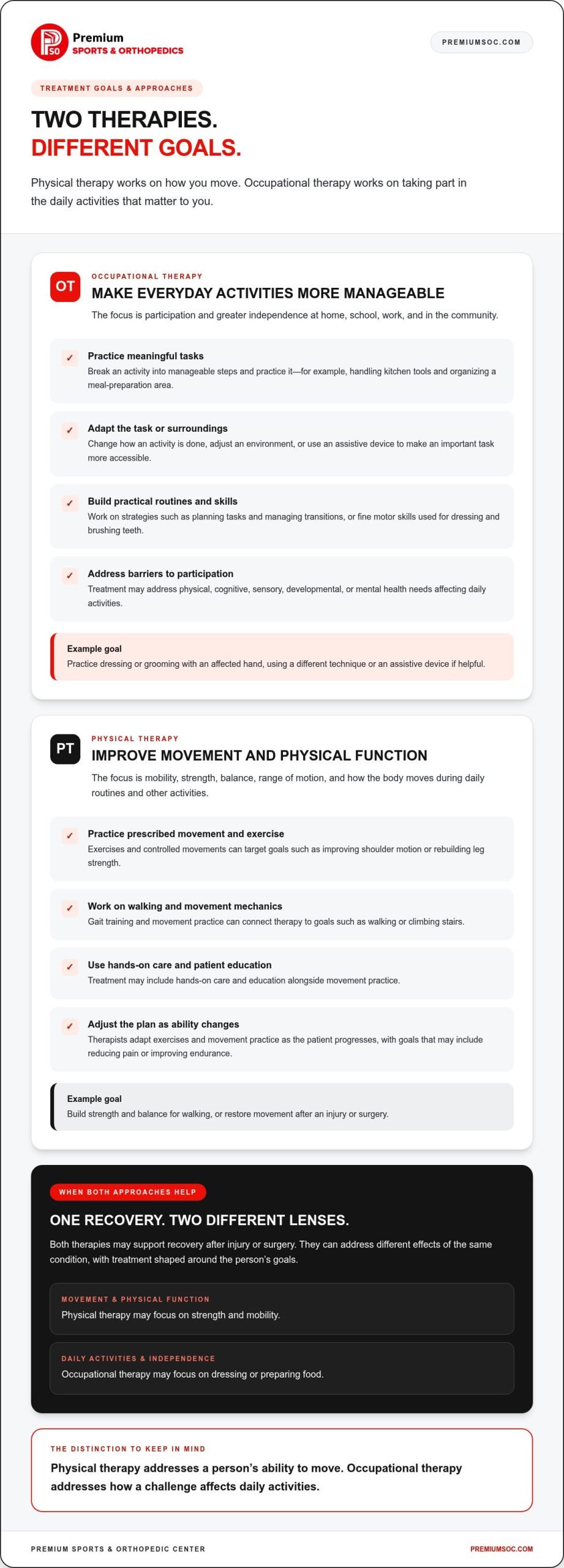
Physical therapy targets movement, strength, balance, and mobility. Occupational therapy focuses on helping people take part in daily activities with greater independence.
The approaches can complement each other, but their goals differ: restoring movement is not the same as adapting a task to make it manageable.
Conditions Treated by Each Profession
Both professions may support people with orthopedic injuries, neurological conditions, chronic pain, or recovery after surgery. The distinction lies in how those challenges affect a person’s goals. Physical therapy works on movement and physical function; occupational therapy focuses on participation in self-care, school, work, and leisure.
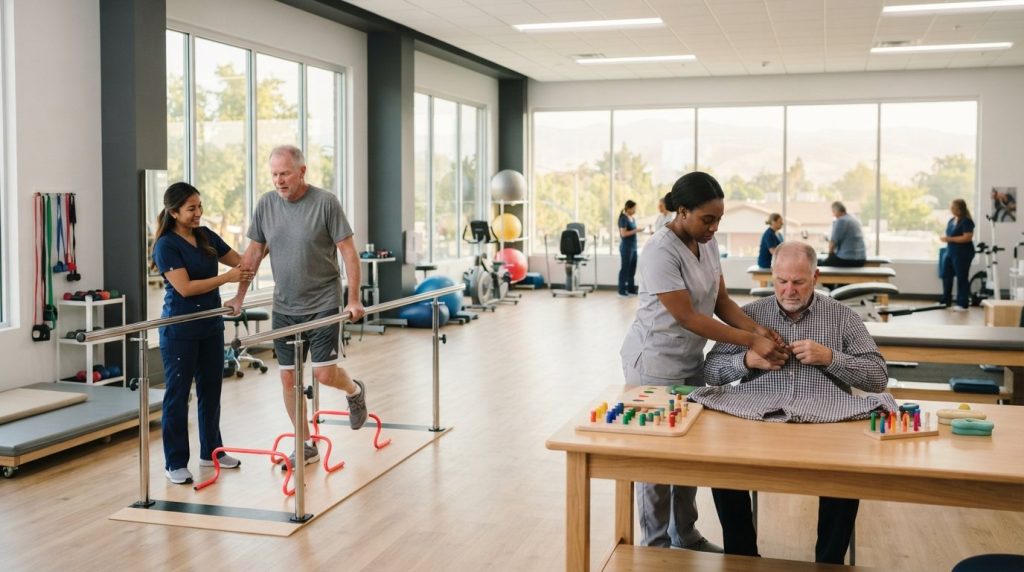
Occupational therapists consider the task, the person’s skills, and the environment. For example, they may help someone with hand difficulties practice dressing or brushing their teeth, adapt the activity, or change the surroundings. They may also address cognitive, sensory, developmental, or mental health needs that affect participation in daily life.
Daily independence can include practical routines beyond self-care. An occupational therapist may help someone use a planner, manage money, or build social skills for school or work. The aim is to regain or adapt abilities for meaningful activities, including returning to a career.
A Doctor of Physical Therapy program typically takes 3 years. The Commission on Accreditation in Physical Therapy Education reports this duration.
| Option | Main focus | Example goal |
|---|---|---|
| Physical therapy | Movement and physical function | Build strength and balance for walking |
| Occupational therapy | Daily activities and independence | Practice dressing with an affected hand |
Choose the focus that matches your main barrier: moving safely or completing daily tasks.
Referrals, Insurance, and Treatment Duration
In the United States, some therapy services can be accessed without seeing a doctor first, but the process varies by state. Insurance coverage depends on the plan and care involved, so review benefits, authorization requirements, and visit limits. Costs also vary by setting, session, and coverage; there is no single amount that applies to everyone.
Therapy duration depends on the condition, goals, progress, and the tasks or movements a person needs to practice. A plan may change as abilities improve or priorities shift. Physical therapy may focus on milestones such as walking or building strength, while occupational therapy may track progress with dressing, household routines, or work activities.
That distinction remains useful when both professionals work with the same condition: physical therapy addresses a person’s ability to move, while occupational therapy addresses the effect on daily activities. Occupational therapy supports independent living by helping people across the lifespan develop, regain, or adapt practical skills for daily participation. Depending on the task, occupational therapists may use adaptive techniques, assistive devices, or environmental changes; they may also work on fine motor skills needed for dressing or brushing teeth.
Treatment goals and therapeutic approaches
Treatment plans start with the patient’s goals and the activities or movements that feel difficult. Occupational and physical therapy can both support recovery, but each builds skills differently. The approach depends on whether the priority is completing a meaningful task or improving the movement that supports it.
Occupational therapy goals and treatments
Occupational therapy helps people take part in everyday activities at home, school, work, and in the community. An occupational therapist may break a task into manageable steps, practice it with the patient, and adjust the activity or environment. For example, someone struggling to prepare a meal might practice handling kitchen tools and organizing the work area.
Occupational therapy can address physical, cognitive, sensory, developmental, or mental health needs that affect participation. A patient who loses focus during the workday may practice routines for planning tasks and managing transitions. Someone with hand pain may learn a different way to complete grooming or household activities. The therapist connects strategies to the patient’s priorities rather than treating a task as an isolated exercise.
Adaptive equipment and environmental changes can also support independence. For instance, an occupational therapist may suggest a practical change to a workspace or help someone use an assistive device while dressing. The aim is to make important activities safer or more accessible while building skills the person can use beyond therapy.
Physical therapy goals and treatments
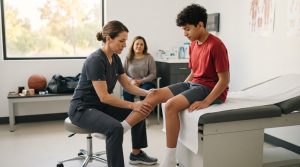
Physical therapy aims to improve mobility, strength, balance, range of motion, and physical function. A therapist may use prescribed exercise, hands-on care, gait training, and patient education. For example, someone with limited shoulder motion may practice controlled movements to support reaching, while someone rebuilding leg strength may work on walking mechanics.
Physical therapy addresses how the body moves during daily routines, sports, and other activities. Treatment plans may focus on reducing pain, improving endurance, or restoring movement after injury or surgery. Therapists adjust exercises and movement practice as the patient progresses, connecting clinic work to practical goals such as climbing stairs or returning to regular exercise.
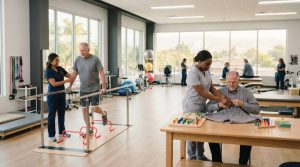
Both approaches can contribute to one recovery plan. After surgery, physical therapy may focus on strength and mobility, while occupational therapy addresses dressing or preparing food with the recovering limb. Coordination helps each professional focus on distinct goals while keeping the patient’s overall routine in view.
If pain or restricted movement is limiting your activity, physical therapy care can be a relevant next step for movement-focused goals.
Injury rehabilitation and prevention
An injury can affect more than strength or range of motion. It may also make dressing, cooking, working, or moving around the home harder. Physical therapy and occupational therapy address different effects of the same condition, helping patients work toward restoring movement and greater independence.
Yes, someone can receive occupational therapy and physical therapy at the same time. People recovering from surgery, a stroke, Parkinson’s disease, arthritis, a fall, or weakness after hospitalization may benefit from both. A doctor usually recommends therapy, and some people receive both approaches during the same recovery period.
Rehabilitation works best when each professional understands the shared goals. Physical and occupational therapists commonly coordinate care plans and exchange information about a patient’s progress. For example, if walking safely is a goal, physical therapy can focus on balance and mobility, while occupational therapy addresses everyday tasks around the home. This teamwork helps treatment address both movement and its effect on daily life.
After surgery, therapy goals depend on how the procedure and recovery have affected the patient. Physical therapy may focus on rebuilding strength, movement, and mobility needed for walking or other physical tasks. Occupational therapy may help the person adapt dressing, bathing, or meal preparation while those abilities are limited. The approaches can complement each other without treating the same goal as interchangeable.
Stroke rehabilitation shows how the roles differ. A physical therapist may work on the strength and balance needed for walking. An occupational therapist may help the patient practice brushing their teeth or using a computer with an affected hand. These goals connect physical recovery to tasks that support independence and participation in daily routines.
Injury prevention can also involve practical movement skills. Physical therapists may use walking and balance training, strength and endurance exercises, and fall-prevention work. These activities can help patients improve mobility after an illness or injury and practice safer ways to move. Occupational therapy can address how a task or environment affects safety, such as adapting a routine when reaching or carrying feels difficult.
Progress can shape the plan: as walking improves, the team may shift attention to stairs, household tasks, or returning to work. Families and caregivers can support rehabilitation by understanding the patient’s goals and reinforcing agreed-upon strategies at home. The key measure is whether treatment restores useful movement and helps the person manage activities that matter to them.
Movement, strength, and physical function in physical therapy
Physical therapy focuses on improving movement, strength, balance, and mobility. Its goal is to help people move safely, restore useful motion, and manage physical challenges. A patient might work on walking more steadily, reaching overhead, or getting up from a chair with better control. These goals connect treatment to movement used at home, work, and recreation.
A physical therapist first considers how a condition affects physical function. Limited ankle motion, for example, can change how someone walks and manages stairs. The therapist may observe the movement, identify limits in control or range, then build a program around those needs. The plan can change as movement improves and the patient takes on more challenging activities.
Therapeutic exercise is a central tool. A program may include strength exercises, balance practice, or movements that develop range of motion. For someone who struggles to rise from a chair, repeated sit-to-stand practice can address leg strength and control. Exercises are selected for the physical goal, then adjusted to match the patient’s progress and daily demands.
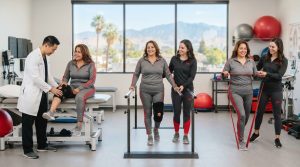
Gait training is another practical example. A therapist may help a patient practice walking, turning, or managing uneven surfaces. After an illness that affected mobility, the focus may be on improving walking endurance and balance. These sessions develop movement skills for everyday settings rather than treating each step as an isolated action.
Physical therapy can also include hands-on care and patient education. A therapist might guide a joint through controlled motion while teaching the patient how to continue prescribed movements safely. Education can cover how posture or movement choices affect a task, such as lifting a light object from the floor. The patient learns how to practice and what the exercise is intended to improve.
Fitness and wellness goals can fit into physical therapy when they relate to physical function. Someone returning to regular activity may work on strength, endurance, and movement quality. The therapist can use exercises that reflect the activity’s demands, such as controlled stepping for someone who wants to move confidently around a busy home. The aim is practical capacity, not simply completing more repetitions.
Progress is measured against the patient’s starting challenges and chosen goals. A therapist may track whether someone can move a joint farther, walk with better balance, or complete a physical task with greater control. These changes help shape the next steps in the program. As movement improves, practice can progress toward the motions and routines the patient wants to regain.
Common misconceptions about the professions
One misconception is that occupational therapy only prepares people for a job. In practice, “occupation” means activities that give daily life structure and purpose, including bathing, cooking, studying, working, and leisure. An occupational therapist might help someone adapt a morning routine after an illness, even when returning to a career isn’t the immediate goal.
Another assumption is that physical therapy is only for athletes or people recovering from major injuries. Physical therapists also work with people managing chronic pain, balance difficulties, weakness, or reduced mobility after illness. For example, someone who feels unsteady walking around the house may practice balance and walking skills without having a sports injury.
The difference between these professions isn’t that one treats the body and the other ignores it. Occupational therapy can address hand strength and coordination when they interfere with dressing or preparing food. Physical therapy can build strength and movement for walking or climbing stairs. The distinction is the functional goal: taking part in daily tasks or improving the movement that supports activity.
Some people believe the therapies never overlap. They can. After a stroke, a physical therapist may address walking and balance, while an occupational therapist helps the person use an affected hand to brush their teeth or use a computer. Each professional works on distinct skills that contribute to greater independence.
Occupational therapy isn’t limited to physical disability or mental health alone. It can address physical, cognitive, sensory, developmental, and mental health challenges when they affect daily participation. For instance, someone having difficulty organizing school tasks may practice planning and routines, while another person may adapt household activities around limited hand function.
Physical therapy also isn’t simply a set of exercises repeated without purpose. A program may combine therapeutic exercise, gait training, hands-on care, and education. If a patient has trouble stepping up a curb, the therapist can work on strength, balance, and movement control related to that task. The plan connects practice to physical function.
Finally, choosing between the professions isn’t a judgment about which is better. Neither is universally superior; the person’s goals and needs guide the fit. If pain or restricted movement is affecting your activities, explore physical therapy support for movement-focused care.
It is also a misconception that a prescription is always needed. In many cases, people can receive help from a physical or occupational therapist without one.
Premium Sports & Orthopedic Center: Knee Pain
Premium Sports & Orthopedic Center provides orthopedic care for people whose knee pain affects walking, exercise, or everyday movement. When pain limits activity or makes movement difficult, an orthopedic evaluation can help identify the concern and guide appropriate care. The center also treats back, leg, and hand pain, connecting symptoms with movement and functional goals.
Sports medicine consultations may help when knee discomfort arises during training or interferes with returning to activity. Share which movements trigger symptoms and how they affect your routine to focus the discussion on your needs. The next step depends on whether your priority is understanding persistent pain, addressing an orthopedic concern, or restoring comfortable movement.
For support with knee pain or another orthopedic concern, contact Premium Sports & Orthopedic Center or visit premiumsoc.com.
Choose a Next Step That Fits Your Goals
Let the activity you want to return to guide your next move. Before seeking care, note which movements or routines feel difficult, what makes them harder, and what you hope to do more comfortably. These details can focus a conversation about care on your priorities, whether you’re comparing occupational therapy vs physical therapy or seeking support with pain.
For orthopedic concerns, Premium Sports & Orthopedic Center provides care for knee pain, back pain, and leg pain. Share how your symptoms affect movement and everyday life so your next steps stay connected to what matters to you.
Contact Premium Sports & Orthopedic Center to discuss your orthopedic care needs. Each step toward understanding your options can help you move forward with greater confidence.
Frequently Asked Questions
Which is better, OT or PT?
Neither occupational therapy nor physical therapy is universally better; the right fit depends on the challenge you want to address. If limited shoulder movement makes reaching a shelf difficult, physical therapy may target that movement. If you can reach but have difficulty completing a kitchen task safely, occupational therapy may focus on adapting the task. Some people benefit from both approaches.
What is the difference between occupational therapy and physical therapy?
Occupational therapy helps people take part in everyday activities, while physical therapy centers on movement and physical function. For example, an occupational therapist might help someone manage a coat fastener with stiff fingers. A physical therapist might work on the joint motion and strength needed to lift an arm. The practical distinction in occupational therapy vs physical therapy is the outcome each approach targets.
What does an occupational therapist do during a session?
An occupational therapist may observe how you perform a real-life task, identify what makes it difficult, then practice strategies with you. For example, if sorting laundry feels challenging, you might organize the steps, position items within reach, or adapt how you handle clothing. The therapist may also consider attention, coordination, sensory needs, and your surroundings, then tailor practice to the activities you want to manage.
What does a physical therapist do during a session?
A physical therapist may assess how you perform a movement, then guide exercises, hands-on care, or movement education. For example, if getting into a car is difficult, the session could examine how you bend, turn, and shift your weight. The therapist can use that information to select movement practice related to the task and teach you to perform exercises with controlled, purposeful form.
How do occupational therapy and physical therapy goals differ?
Occupational therapy goals describe activities you want to manage, such as preparing breakfast or completing a work routine. Physical therapy goals describe movement abilities that support those activities, such as bending, reaching, or maintaining balance. If carrying a lunch tray is difficult, an occupational therapist may focus on completing that routine, while a physical therapist may address the movement capacity involved.
How do you choose between an occupational therapist and a physical therapist?
Start by naming the task or movement that limits you most. If the main difficulty is completing self-care, household, school, or work activities, occupational therapy may align with your goal. If pain, weakness, restricted motion, or balance makes movement difficult, physical therapy may be the closer fit. A healthcare provider or home care team can help assess whether one approach or both suit your needs.