 18 Oct 2026
What if another orthopedic perspective could help you move from uncertainty to a clearer next step? A diagnosis, imaging results, or recommendation for surgery can raise questions, especially when medical terms are difficult to interpret or a decision could affect your daily activities. Seeking an orthopedic second opinion Fresno patients can use to better understand their options is a reasonable way to approach an important care decision.
You don’t need to dismiss your first doctor’s advice to ask for another perspective. An orthopedic consultation gives you an opportunity to discuss your concerns, goals, and available care options. This article explains when a second opinion may be helpful, how to organize your records and imaging, and what questions can clarify the potential benefits and limitations of each approach. It also covers how to use the discussion to plan next steps, including treatment and rehabilitation considerations that fit your life in the Fresno area.
Key Takeaways
- An orthopedic second opinion Fresno patients seek can clarify a diagnosis or treatment recommendation without dismissing the first clinician’s perspective.
- A consultation may cover your symptoms and medical history, examination findings, and existing records.
- Compare opinions by looking at the diagnosis, supporting information, care options, personal goals, and questions that remain.
- Prepare a symptom timeline and gather imaging reports, medication details, and prior recommendations to make the discussion more focused.
- Bring questions about pain, mobility, and the activities that matter to you to an orthopedic or sports medicine consultation.
When should you seek an orthopedic second opinion in Fresno?
A diagnosis, imaging result, or proposed treatment can leave you with more questions than answers. You may understand the explanation but remain unsure what a scan means, why a treatment is recommended, or how it could affect work, exercise, and everyday movement. That uncertainty is understandable, especially when the decision involves surgery or another major step in your care.
Seeking another perspective doesn’t mean rejecting your clinician’s judgment. It can help clarify what you’ve been told, explore whether other options may be appropriate, and support a decision that reflects your health needs and personal goals. An orthopedic second opinion Fresno patients pursue can add context while respecting the care they’ve already received. For a general overview of the role another perspective can play in medical decisions, see What is a Second Opinion?
What questions can an orthopedic second opinion help address?
A consultation can help you understand how a diagnosis relates to your symptoms, history, and available test results. Ask what treatment options may be appropriate, what their potential benefits and limitations are, and what recovery could involve. You can also discuss how care decisions relate to daily function, such as walking comfortably, returning to a sport, or managing work tasks. Another opinion can inform your decision, but it can’t guarantee a particular diagnosis or recommendation.
When is another orthopedic perspective worth considering?
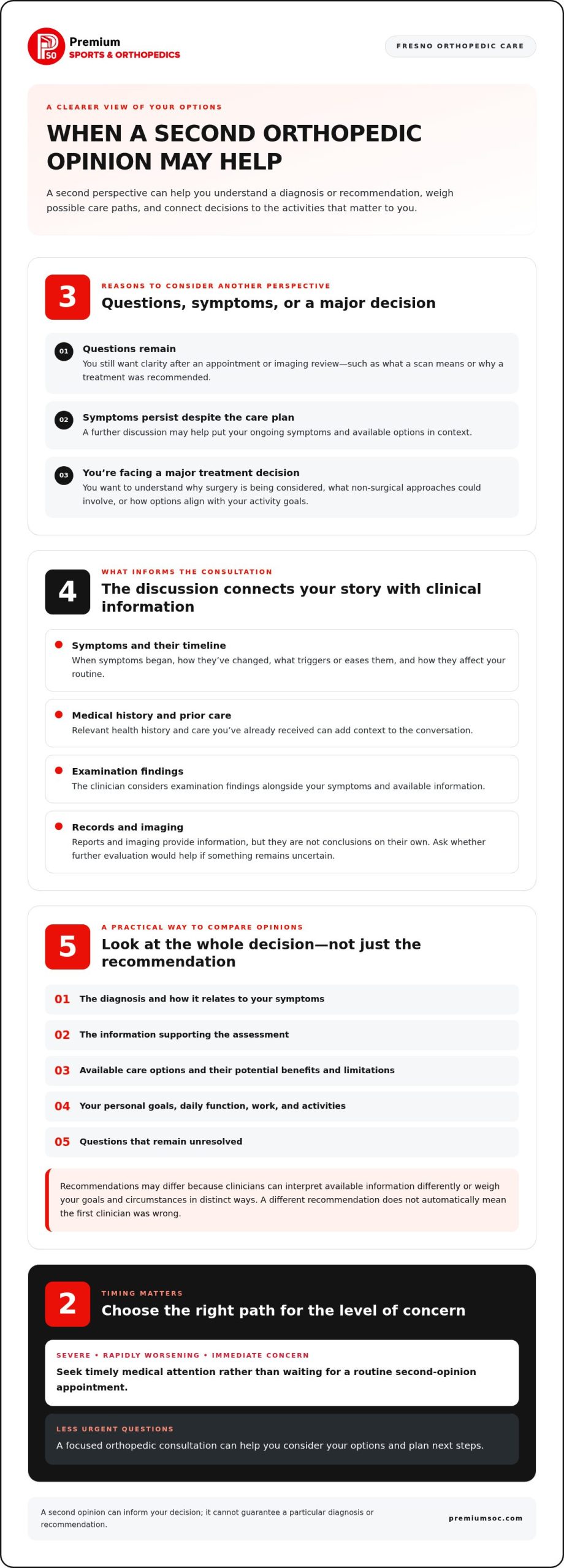
Consider another consultation if questions remain after an appointment or imaging review, if symptoms persist despite the care plan, or if you’re facing a major treatment decision and want to understand alternatives. For example, you may want clarity about why surgery is being considered, what non-surgical approaches could involve, or how different options align with your activity goals. A different recommendation doesn’t automatically mean the first clinician was wrong. Clinicians may interpret available information differently or weigh your goals and circumstances in distinct ways.
Before arranging a routine consultation, consider the timing of your symptoms. If pain or other symptoms are severe, rapidly worsening, or causing immediate concern, seek timely medical attention rather than waiting for a second-opinion appointment. For less urgent questions, another perspective can help you make a more considered decision. Write down what feels unresolved so you can keep the discussion specific and useful.
Start by identifying the decision you’re trying to make. Are you looking to understand a diagnosis, compare treatment paths, or learn what to expect if you continue with the current plan? Bring that question to an orthopedic consultation, along with the activities you hope to maintain or return to. A focused conversation about your concerns and goals can clarify next steps, even when the opinions don’t match exactly.
What happens during an orthopedic second-opinion consultation?
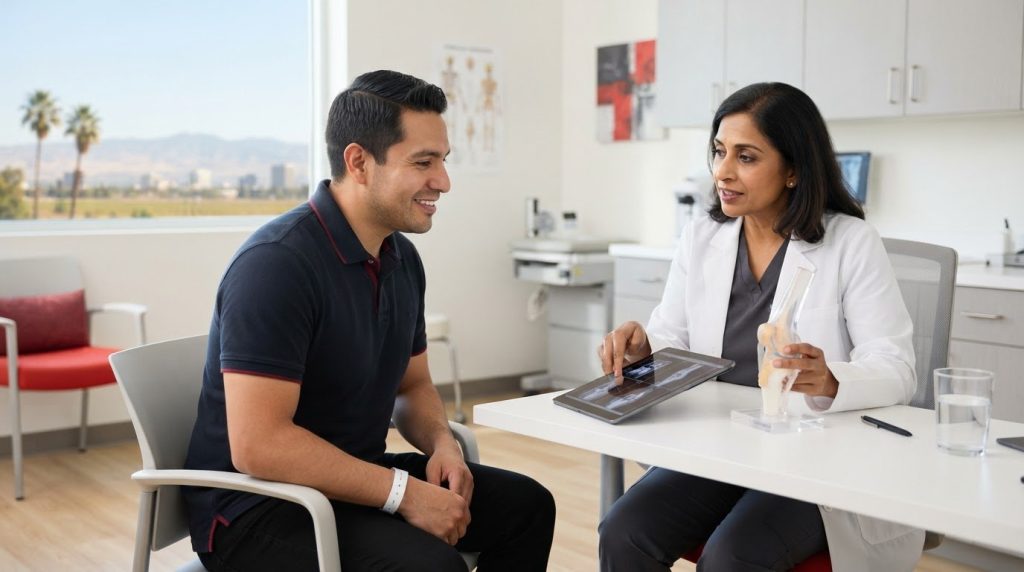
A second opinion is an additional clinical perspective on a health concern or care recommendation. It gives you space to describe what you’re experiencing, discuss how the available information relates to your situation, and ask about possible next steps. An orthopedic second opinion Fresno consultation isn’t a promise of a different diagnosis or treatment plan. Its value is in helping you understand the reasoning and consider your choices in light of your priorities.
The conversation may cover your symptoms, medical history, examination findings, and available records or imaging. Depending on your concern, the clinician may discuss what those details suggest and whether additional evaluation is appropriate. The assessment depends on the reason for the visit and the clinical information available. You don’t need to arrive with a preferred answer; bring the questions you want resolved.
How symptoms, medical history, and imaging inform the discussion
When symptoms began, how they’ve changed, and what triggers or eases them can help put a diagnosis or recommendation in context. Describe the effect on your routine, too. For instance, a sore knee may make stairs difficult, while shoulder discomfort may interrupt sleep or make lifting challenging. Relevant health history and prior care can add useful context.
Imaging and reports provide information, but they aren’t conclusions on their own. A clinician considers them alongside your symptoms and examination findings. If something remains uncertain, ask whether further evaluation would help clarify the picture.
How treatment options and personal goals fit together
Your care discussion should connect clinical findings with what matters in your life. Work duties, household activities, walking comfortably, or returning to a sport may shape the questions you bring. Explain which movements are most challenging and what you hope to do more comfortably. That context helps frame a conversation about realistic options and priorities.
Depending on the individual findings, recommendations may involve different approaches, such as rehabilitation or other forms of orthopedic care. Surgery, physical therapy, and joint tissue repair aren’t automatically right for every person. Ask how each option relates to your concern, what its potential limitations are, and what factors may guide the decision. The goal is to understand the choices, not assume one treatment fits everyone.
To keep the discussion focused, consider asking:
- How do my symptoms and examination findings relate to the diagnosis?
- What options may be appropriate for my situation, and what are their trade-offs?
- How could each approach affect the activities I want to maintain or resume?
- What questions or uncertainties should I resolve before deciding on a next step?
At Premium Sports & Orthopedic Center, orthopedic and sports medicine consultations give Fresno- and Clovis-area patients an opportunity to discuss concerns, goals, and care options. Bring questions about pain, movement, and daily activity to help shape a useful conversation. Learn more about an orthopedic consultation as you consider your next step.
How to compare orthopedic opinions without feeling overwhelmed
Two recommendations can sound very different, especially when one focuses on a procedure and another discusses a non-surgical approach. Compare the reasoning behind each, not just the treatment labels. An orthopedic second opinion Fresno patients seek is most useful when it makes the supporting information, options, and open questions easier to understand.
Use a simple side-by-side chart to organize your notes. You can bring it to a follow-up discussion or use it to identify what you still need clarified. You don’t have to decide by yourself which recommendation is “right”; the comparison helps show where the explanations agree and differ.
| Compare | Write down |
|---|---|
| Diagnosis | What condition or cause does each clinician describe? |
| Supporting information | Which symptoms, examination findings, or test results inform the view? |
| Options | What approaches were discussed, and what are their potential limits? |
| Your goals | How does each plan relate to work, mobility, and activities you value? |
| Unanswered questions | What remains unclear or would help you make a decision? |
A useful second opinion explains its reasoning and gives you a clearer sense of possible next steps. It doesn’t have to match the first recommendation to be helpful.
What if two orthopedic recommendations are different?
Different recommendations don’t automatically mean one clinician is wrong. Clinicians may interpret findings differently or prioritize options based on your symptoms, history, and goals. Identify where the views diverge: the diagnosis, interpretation of test results, or proposed approach. Then ask what information supports each view and what uncertainties remain. Specific questions invite explanation, not argument.
Which questions help clarify a treatment recommendation?
Ask what each option is intended to address, what course of care it may involve, and what limitations to consider. Explore how it could affect your work, mobility, and activity goals. You can also ask what signs or changes would warrant reassessment or a change in plan. Specific questions make trade-offs easier to understand without expecting a guaranteed result.
Keep your comparison focused on what matters to you, rather than ranking recommendations by how intensive they sound. For example, consider whether the explanation accounts for the movements that cause difficulty and whether the proposed next step fits your priorities. If an answer uses unfamiliar terms, ask for a plain-language explanation connected to your situation.
It’s also reasonable to write “not sure yet” beside an unanswered question. That can help you identify what to discuss next instead of forcing a decision before you feel ready. The aim isn’t to collect opinions indefinitely, but to understand the reasoning well enough to make an informed choice with your care team.
How to prepare for an orthopedic second opinion in Fresno
A little preparation can help you use consultation time well. You don’t need a perfect medical file or a complete account of every symptom. Gather what you have, note what you want clarified, and focus on how your concern affects daily life. That gives the discussion a practical starting point.
Organized records and focused questions help make consultation time more productive. Use this checklist to prepare for an orthopedic second opinion Fresno consultation:
- Collect relevant visit summaries. Include notes or summaries from appointments related to your concern, along with prior recommendations and treatments you’ve tried.
- Gather test and imaging information. Bring available imaging reports and, if you have them, the imaging files. Both reports and images can inform the clinical discussion.
- List your medications. Note current medications related to your health and any treatment details you think may be relevant.
- Write a brief symptom timeline. Note when the problem began, how it has changed, and what tends to worsen or ease it. Include activities, positions, or movements that affect your symptoms.
- Choose your priorities and questions. Write down your main concern, the decision you’re weighing, and the activities or functional goals you hope to maintain or return to.
Which records and details should you organize?
Focus on information connected to the orthopedic concern: relevant appointment summaries, test reports, imaging, and a concise history of care so far. Include current medication details and a clear description of how symptoms affect your routine. If you don’t have every document, bring the materials already available to you. Don’t delay needed medical attention just to complete your file.
A short timeline can be more useful than a long narrative. Note whether discomfort began after a particular activity, whether it has changed since then, and which movements now feel difficult. Describe what you notice without trying to interpret the cause yourself.
How to make the most of a Fresno-area consultation
Before the visit, identify the concern you most want addressed and the decision you hope to understand better. During the conversation, take notes or ask someone you trust to help you keep track of the discussion. If a medical term is unfamiliar, ask for a plain-language explanation connected to your situation. That makes it easier to review the information afterward.
If your question relates to training, sports, or returning to an activity, explain what that activity involves and what you hope to do. The Fresno sports medicine care guide offers related context for active individuals. Bring your goals to an orthopedic or sports medicine consultation so you can discuss care options in light of your concerns and priorities.
When you’re ready to talk through your orthopedic concerns and goals, schedule an orthopedic consultation with Premium Sports & Orthopedic Center.
Discuss your orthopedic second opinion with Premium Sports & Orthopedic Center
Uncertainty about a diagnosis or treatment recommendation can make it hard to know what to do next. Premium Sports & Orthopedic Center provides orthopedic and sports medicine consultations for patients in the Fresno and Clovis areas. A consultation is an opportunity to discuss your concerns, understand available care options, and connect the conversation to your personal goals. An orthopedic second opinion Fresno patients pursue can support a more informed decision without assuming the answer will differ from the recommendation they’ve already received.
Bring the questions that matter most to you. You might want to understand what could be contributing to pain, how a recommendation relates to mobility, or what an approach could mean for work, recreation, or exercise. Sharing what you hope to keep doing or return to doing helps make the conversation relevant to your life.
Connect the consultation to your daily life and recovery goals
Orthopedic concerns affect more than a test result. Describe the movements that are difficult and the parts of your routine you want to protect, whether that’s caring for family, staying active at work, or enjoying recreation. These details help frame an individualized discussion about orthopedic care and rehabilitation. If knee pain is part of your concern, the knee pain treatment guide provides additional context for considering care options.
Physical therapy or joint tissue repair therapy may be discussed when clinically appropriate to your concern and findings. Neither is an automatic recommendation for every patient. Ask how any proposed approach relates to your needs, what questions remain, and how your goals factor into planning.
Take a clear next step with local orthopedic care
Before your discussion, choose the concern you most want to address. Bring relevant records you already have, summarize what you’ve been told, and note the questions that still need answers. If back-related symptoms are shaping your decision, the Fresno back pain care guide offers further information to support that conversation.
Local care can help you discuss your needs in the context of life in Fresno or Clovis, including the activities and routines you want your care plan to consider. You don’t have to arrive with a decision already made. Share your concerns and priorities, then use the discussion to understand possible next steps. The aim is a clearer, more personalized conversation, not a promised outcome.
If you’re ready to discuss your orthopedic concerns, connect with Premium Sports & Orthopedic Center to explore a consultation.
Take your next step with confidence
You don’t have to resolve every question at once. A confident care decision can begin with one useful next step: identifying what you still need to understand and making time to discuss it. An orthopedic second opinion Fresno consultation can help you explore those questions and consider how your priorities fit into the conversation about care.
As you move forward, ask for clarity, weigh the information, and take time to understand what a recommendation means for your life. The goal isn’t to pursue a particular answer. It’s to feel informed enough to choose a path that makes sense for your needs, with guidance along the way.
Discuss your orthopedic concerns with Premium Sports & Orthopedic Center and take a thoughtful next step toward care that supports your goals. You deserve a clear conversation and the confidence to keep moving forward.
Frequently Asked Questions
Is it worth getting a second opinion for an orthopedic diagnosis?
Yes, an additional perspective can be worthwhile if a diagnosis doesn’t explain your symptoms or you’re unsure how to proceed. An orthopedic second opinion Fresno consultation may help you understand how a clinician connects your symptoms and examination findings to the diagnosis. If discomfort affects a specific movement but that connection wasn’t clear during your first visit, ask how the diagnosis accounts for it and what information could clarify the picture.
Can I get a second opinion before orthopedic surgery?
Yes, you can seek another orthopedic perspective before deciding about surgery. Use the conversation to understand the goal of the proposed procedure, what alternatives may be considered for your situation, and how the decision relates to your health and activity needs. You can also ask what the clinician expects the procedure to address and what it may not resolve. Don’t postpone time-sensitive care; discuss timing with your treating clinician if you’re unsure.
How do I prepare for an orthopedic second opinion?
Prepare a concise account of what changed your health or activity, what care you’ve already tried, and what you want to understand next. Include medication names and relevant visit or test information you have access to. If you’ve received a specific recommendation, write down what feels uncertain, such as its purpose or how it could affect a work task. A focused starting point can keep the discussion practical.
What if two orthopedic doctors give different opinions?
Different opinions can reflect different interpretations of available information, not necessarily a mistake. Compare the specific points of difference, such as the explanation for your symptoms or the reasoning for a recommended approach. Ask what findings support each recommendation and what could change it. If you’re still unsure, discuss the differing views with your treating clinician to understand the trade-offs and what further clarification may help.
Do I need imaging for an orthopedic second opinion?
Not necessarily. Existing imaging reports or files may help a clinician understand your concern, but whether imaging is needed depends on your symptoms and the information available. Bring any records you already have, including the report if you can’t access the images. Don’t arrange repeat imaging on your own just to prepare. The clinician can discuss whether the existing material is useful or whether further evaluation should be considered for your circumstances.
Can I seek an orthopedic second opinion in Fresno for sports injuries?
Yes. A sports medicine consultation can address an injury affecting training, competition, or everyday movement. Describe how the injury happened, which movements bring on symptoms, and what activity you hope to resume. Premium Sports & Orthopedic Center provides orthopedic and sports medicine consultations for patients in the Fresno and Clovis areas. The discussion can help you understand care considerations in relation to your injury and activity goals.
Will a second opinion replace my current orthopedic doctor?
No. A second opinion is an additional perspective that you can use to inform a conversation with your current orthopedic doctor. You may continue with your existing clinician, discuss a recommendation together, or consider another care arrangement based on your needs. If you receive new guidance, sharing it with your current care team can help coordinate decisions and give your clinicians a chance to address remaining questions.