 01 Oct 2026
What if the best next step for joint pain isn’t choosing a treatment, but finding a clinic that connects your symptoms to your everyday goals? When pain makes walking, reaching, or enjoying favorite activities harder, it’s natural to wonder whether to start with orthopedic care, physical therapy, or another option. A Fresno joint pain clinic should help you understand the choices and explain why a particular approach may or may not suit your situation.
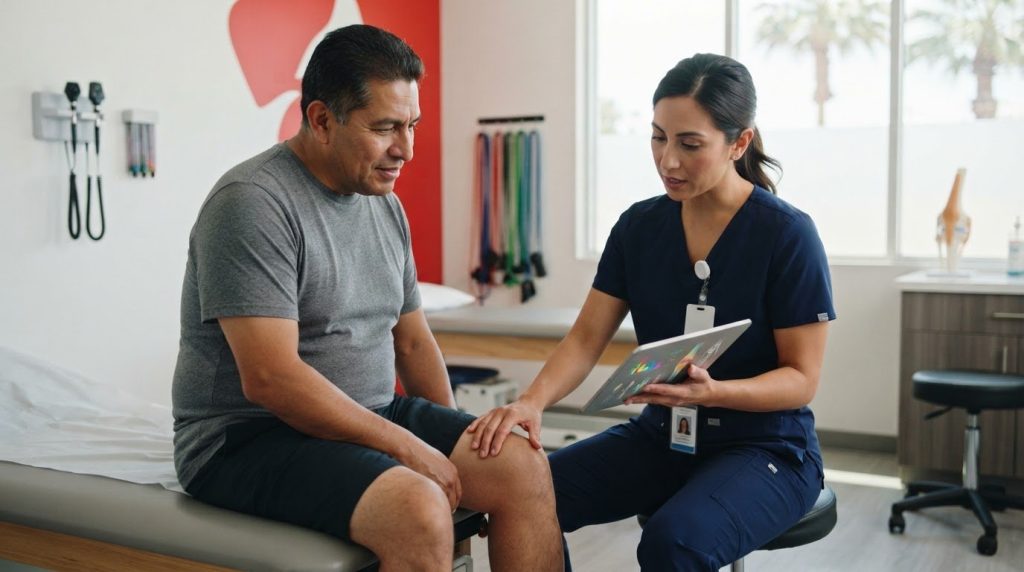
A useful consultation starts with specifics: where it hurts, when the discomfort began, which movements affect it, and what you want to get back to doing. A provider can then discuss possible care options and whether further evaluation may be appropriate. Non-surgical approaches may be part of the conversation, but their suitability depends on your individual assessment.
This guide explains what to expect at a joint pain consultation, how to compare orthopedic care, physical therapy, and other services, and what questions can help you make an informed choice. It also offers a practical way to compare Fresno-area care by looking at how clearly a clinic connects evaluation, treatment options, and your functional goals.
Key Takeaways
- A Fresno joint pain clinic should connect your symptoms, movement, and activity goals to appropriate care options.
- Learn what a consultation may involve, from discussing your pain history to considering how it affects daily function.
- Compare orthopedic consultation, physical therapy, joint tissue repair therapy, and muscle recovery care by their roles and the questions to ask.
- Use a practical checklist to compare clinics, including whether they evaluate your concern and explain recommendations clearly.
- Explore how Premium Sports & Orthopedic Center’s services may fit different needs, remembering that recommendations depend on individual assessment.
What Does a Fresno Joint Pain Clinic Help Evaluate?
A joint pain clinic provides a setting to discuss symptoms, understand how they affect movement, and consider suitable care options. Pain in one area doesn’t, by itself, explain what’s causing it. The same knee or shoulder discomfort can have different contributing factors, so a clinician’s assessment helps determine what to consider next. Joint pain, also called Arthralgia (joint pain), describes a symptom rather than a specific diagnosis.
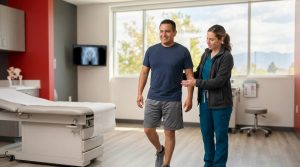
A Fresno joint pain clinic may evaluate concerns involving the knees, shoulders, ankles, hands, back, or legs. The conversation may cover where discomfort occurs, when it began, which activities affect it, and whether your movement has changed. Be as specific as you can: for example, note whether walking, reaching, or another routine activity has become harder. That detail helps the clinician understand your situation rather than rely on the pain location alone. The goal is to discuss an appropriate next step, not to assume everyone needs the same treatment.
Outpatient orthopedic care focuses on evaluating and addressing musculoskeletal concerns without hospital admission. It differs from general primary care, which addresses broader health needs, and from emergency services, which respond to urgent or life-threatening situations. A clinic can help you explore orthopedic care and related services, but it isn’t a substitute for emergency care.
Which symptoms and movement concerns should prompt an evaluation?
Consider discussing pain that persists, returns, worsens, or interferes with activities that matter to you. You might find walking, working, sleeping, exercising, or completing everyday tasks more difficult than usual. New discomfort or a noticeable change in how you move can also be a reason to seek a qualified clinician’s perspective. These experiences don’t point to one diagnosis on their own, but they can help guide a useful evaluation. For practical guidance on persistent symptoms, see chronic joint pain management myths, facts, and practical steps.
Before an appointment, note when the symptoms started, where you feel them, and which movements or activities seem to affect them. If the discomfort changes over time, describe that pattern too. There’s no checklist that can determine what’s happening; share what feels different for you so the clinician has a clearer starting point.
When is joint pain urgent rather than a clinic appointment?
Severe or sudden symptoms may call for prompt medical attention rather than a routine clinic visit. If you think you’re facing an emergency, contact emergency services or go to an emergency department. This clinic does not provide emergency room care. If you’re unsure how urgent your symptoms are, contact a qualified clinician or emergency service for guidance.
For non-emergency concerns, an outpatient evaluation can help clarify what to discuss next. The right starting point depends on your symptoms and needs, so ask the clinic whether it evaluates your specific joint or concern before arranging care.
How Does a Fresno Joint Pain Clinic Build a Care Plan?
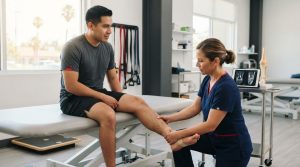
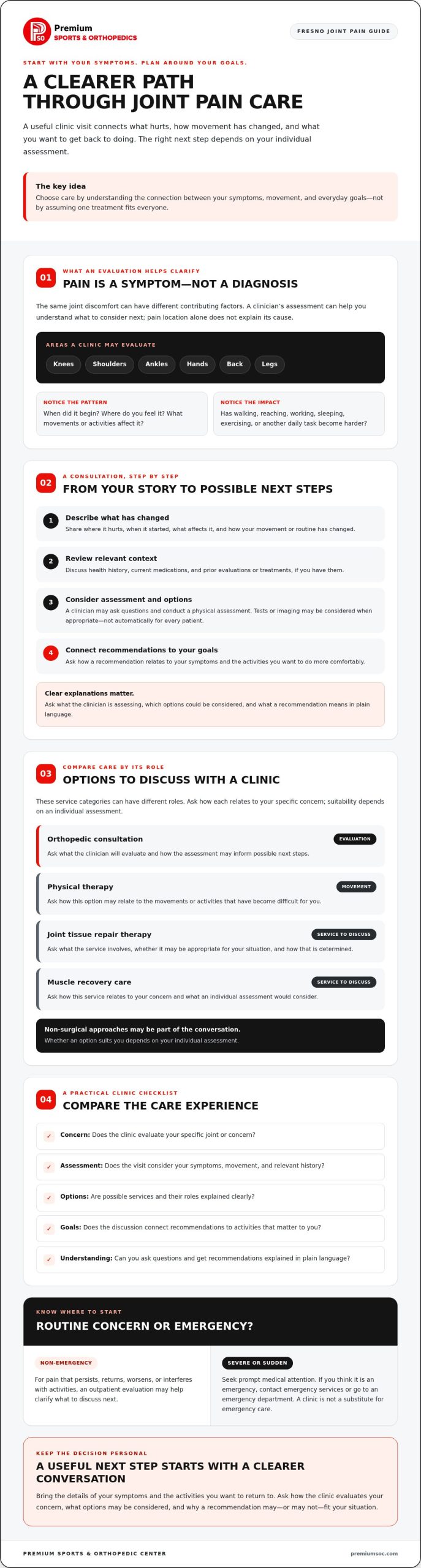
A thoughtful care plan begins with your experience, not a predetermined treatment. At a Fresno joint pain clinic, the discussion may follow a few practical steps: describe your symptoms, review relevant health history, consider how movement is affected, and talk through possible next steps. The clinician should explain how a recommendation relates to what you’re experiencing and what you hope to do more comfortably.
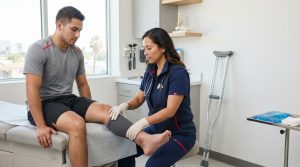
Evaluation is individual. A clinician may ask questions and conduct a physical assessment to better understand your concern. Tests or imaging may be considered when appropriate, but they aren’t automatically needed for every patient. The American Academy of Family Physicians offers an overview of how joint pain is evaluated, including the role of clinical assessment and further testing.
What should patients share during an orthopedic consultation?
Make the conversation specific. Describe when the discomfort began, what seems to worsen or ease it, and how it changes the way you move. Mention effects on activities such as walking, work, exercise, or sleep. Bring relevant medical history, a current medication list, and details of prior evaluations or treatments if you have them.
Your questions matter, too. You might ask what the clinician is assessing, which options could be considered, and how a recommendation relates to your daily goals. If a term or recommendation is unclear, ask for an explanation in plain language. Clear answers can help you understand the choices without feeling rushed into a decision.
How should a care plan reflect your symptoms and goals?
Recommendations should account for the joint involved, your health history, and the activities you want to return to or maintain. Depending on the assessment, a clinician may discuss orthopedic care, physical therapy, pain management, joint tissue repair therapy, or other appropriate options. These services aren’t interchangeable, and a recommendation for one person may not suit another. For a knee-specific example, the article Understanding Knee Pain Treatment Options in Fresno can help frame questions to bring to a consultation.
Ask how a proposed next step is intended to address your symptoms, what role you’ll play, and when the plan might be reviewed. You can also ask what alternatives may be considered and what would prompt a change in approach. A useful care discussion leaves room for your priorities and explains why an option may or may not fit your situation.
If you’re considering outpatient orthopedic or rehabilitation care in the Fresno and Clovis area, you can explore the clinic’s services and consider which questions to raise about your needs.
How Do Joint Pain Treatment Options Compare?
Different services play different roles in joint pain care. An orthopedic consultation can help assess a concern and discuss possible directions. Physical therapy focuses on guided rehabilitation and movement goals. Joint tissue repair therapy and muscle recovery treatments have distinct purposes that a clinician can explain in relation to your situation. A visit to a Fresno joint pain clinic doesn’t automatically mean surgery or a specific procedure; recommendations should follow an individual assessment.
Use this comparison to start a conversation, not to select treatment on your own. Ask how each option relates to your symptoms, what it’s intended to address, and what alternatives may be appropriate. A useful comparison focuses on the purpose of each service and how it connects to your goals, rather than assuming that more services mean better care.
| Care option | Goal or typical role | Questions to discuss |
|---|---|---|
| Orthopedic consultation | Evaluate a musculoskeletal concern and discuss possible care directions. | What might be contributing to my symptoms? What are the reasonable next steps? |
| Physical therapy | Support rehabilitation and work toward movement or functional goals. | Which activities or abilities would the plan focus on? How will progress be reviewed? |
| Joint tissue repair therapy | Discuss a tissue-focused option as part of care when clinically appropriate. | What is it intended to address? What evidence, limitations, risks, and alternatives should I understand? |
| Muscle recovery treatments | Address muscle recovery needs as determined through discussion with a clinician. | How does this relate to my concern, and what follow-up might be involved? |
What roles can physical therapy and orthopedic care play?
An orthopedic consultation is a chance to discuss the concern, relevant history, and options before deciding on a direction. Physical therapy may provide guided rehabilitation tied to practical goals, such as improving how you manage a particular movement. Ask which movements or daily activities the plan would focus on and how the care team would review your progress. Physical therapy doesn’t guarantee a particular result, and the approach depends on individual needs. For more context, see Physical Therapy in Fresno: Specialized Rehabilitation Care.
What should patients ask about tissue repair and recovery treatments?
Before considering joint tissue repair therapy or muscle recovery care, ask what the treatment is meant to address and what evidence supports its use for your situation. Discuss potential risks, limitations, alternatives, and what follow-up may involve. The overview Joint Tissue Repair Therapy: How Treatment Supports Recovery can offer additional context, and our step-by-step guide to advanced joint repair therapy walks through how assessment, imaging, and realistic goals shape a plan, while your clinician can explain whether the option fits your assessment and goals.
These services aren’t interchangeable, and more treatment isn’t automatically better. A clear recommendation should explain its purpose and how it connects to your needs, leaving room for questions before you choose a next step.
How Can You Compare Fresno Joint Pain Clinics?
Look beyond a clinic’s list of services. A good fit should be able to explain who will evaluate your concern, which care options may be relevant, and how recommendations relate to the activities you want to manage. Use these questions to compare a clinic’s communication and scope of care before arranging a visit.
- Confirm the clinic evaluates your concern. Ask whether it sees patients with pain in your specific joint or area, such as the knee, shoulder, ankle, hand, back, or leg.
- Ask who will assess your symptoms. Find out who conducts the evaluation and how they’ll explain possible next steps.
- Check which services may fit. Ask whether orthopedic care, physical therapy, joint tissue repair therapy, or muscle recovery treatments could be considered, and how alternatives are discussed.
- Look for clear, individualized explanations. Recommendations should connect to your symptoms and functional goals, not assume that one approach suits everyone.
- Ask how decisions are revisited. Find out how the care team communicates about progress, changes in your needs, and possible follow-up without expecting a particular protocol.
Which questions help you assess a clinic’s approach?
Use the first conversation to understand how the clinic works with patients. You might ask, “What happens during an evaluation?” “How will you explain the options?” and “What alternatives should I consider?” You can also ask how the team will discuss progress if your symptoms or activity goals change. Clear, thoughtful answers can help you feel informed and involved in decisions.
What local details should Fresno-area patients confirm?
Before arranging care, confirm the clinic’s current address, the area it serves, and its appointment process directly. Although Premium Sports & Orthopedic Center serves Fresno and Clovis-area patients, verify the location that applies to your visit rather than assuming a particular office. Ask the clinic about insurance and payment details, since coverage and costs aren’t confirmed here.
A Fresno joint pain clinic should be able to answer practical questions about its services and explain whether your concern fits its scope. If you’re considering outpatient orthopedic or rehabilitation care, explore Premium Sports & Orthopedic Center’s services and prepare questions about your needs before taking the next step.
What to Expect from Premium Sports & Orthopedic Center
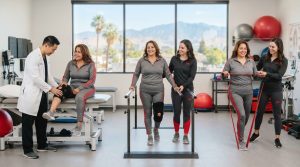
Premium Sports & Orthopedic Center serves patients in the Fresno and Clovis areas with outpatient orthopedic and pain management care. Its services include orthopedic care, sports medicine consultations, physical therapy, joint tissue repair therapy, and muscle recovery treatments. These options address different needs, but an assessment is important before deciding which, if any, may be appropriate for you.
Which joint pain services does the center provide?
The center addresses concerns involving knee, back, leg, hand, shoulder, and ankle pain. A consultation provides an opportunity to discuss your symptoms and possible care directions. Depending on your situation, physical therapy may be considered to support rehabilitation, while joint tissue repair therapy or muscle recovery treatments may be discussed for other needs. You don’t automatically need several services, and no option should be assumed suitable before clinical assessment.
Connect the service discussion to your concern and what you want to do more comfortably. For example, explain which movements or activities are difficult, then ask how a recommended service relates to those goals and what alternatives may be considered.
What is a practical next step for Fresno-area patients?
Before contacting a Fresno joint pain clinic, make a brief note of which joint or area is affected, when the symptoms began, and how they influence your daily activities. You can also share what you hope to return to or manage more easily. This gives the clinic a clearer starting point for discussing whether its services may be relevant.
Ask directly about the evaluation process, which services are currently available for your concern, and practical details such as the clinic’s current location, appointment process, and payment or insurance information. For back-specific questions, Back Pain Relief in Fresno: How to Choose the Right Care may help you prepare for that conversation.
Premium Sports & Orthopedic Center provides outpatient care, not emergency room services, inpatient hospitalization, or general primary care. If your symptoms are an emergency, seek emergency services rather than contacting the clinic for an urgent response.
If you’re ready to explore your options, contact Premium Sports & Orthopedic Center to discuss your symptoms, ask about an evaluation, and learn which services may fit your needs. A clear conversation can help you identify a sensible next step without committing to a treatment before your situation has been assessed.
Take a Clear Next Step Toward Easier Movement
Choosing a Fresno joint pain clinic starts with finding a team that listens, evaluates your needs, and explains why a care option may fit your symptoms and goals. A consultation can help clarify possible next steps, while orthopedic care, physical therapy, and joint tissue repair therapy may be discussed based on your individual assessment. No single approach is right for everyone.
Premium Sports & Orthopedic Center serves patients in Fresno and Clovis with outpatient care. The center is led by Dr. Green and a team of licensed medical practitioners. As you consider care, note which movements or activities are challenging and prepare questions about evaluation, services, and follow-up.
Explore orthopedic and joint pain care with Premium Sports & Orthopedic Center to learn more and discuss whether an evaluation may be a practical next step. With clear information and a plan shaped around your needs, you can focus on the activities that matter to you.
Frequently Asked Questions
How do I choose a joint pain clinic in Fresno?
Choose a Fresno joint pain clinic by whether it evaluates your concern and explains recommendations clearly. Ask who will assess you, which services may fit, what alternatives exist, and how follow-up works. Confirm that the clinic addresses your affected joint, then verify its current location, appointment process, and insurance or payment details directly. The conversation should connect care to your movement and activity goals.
What happens at a joint pain clinic appointment?
A clinician typically asks about your symptoms, relevant health history, and how pain affects movement or daily activities. They may assess function and discuss possible next steps based on your situation. The evaluation varies, and not everyone needs the same tests or treatment. Bring a list of concerns, medications, and prior evaluations. Ask how any recommendations relate to your goals and what alternatives may be considered.
Can a joint pain clinic help without surgery?
Yes, some clinics provide outpatient options that don’t involve surgery, such as physical therapy, pain management, or other treatments. Whether a non-surgical approach is suitable depends on your symptoms, health history, and clinical assessment. Ask the clinician to explain potential benefits, limitations, risks, and alternatives for options they recommend. Don’t assume a particular treatment will be right for you or produce a specific result.
What types of joint pain can a Fresno clinic evaluate?
A clinic’s services vary, so confirm its scope before arranging an appointment. Premium Sports & Orthopedic Center lists care for knee, back, leg, hand, shoulder, and ankle pain. The appropriate evaluation depends on your symptoms and individual circumstances. If you have sudden or severe symptoms that may be an emergency, seek emergency care rather than relying on an outpatient clinic appointment.
Does physical therapy help with joint pain?
Physical therapy may be considered when improving movement or function is an appropriate goal. A clinician can discuss whether it fits your symptoms, health history, and broader care plan. The approach varies by patient, and results aren’t guaranteed. Ask what the therapy is intended to address, how the care team may review progress, and what other options could be discussed. A recommendation should follow an individual assessment.
What should I ask before starting joint tissue repair therapy?
Ask what concern joint tissue repair therapy is intended to address and why it may be appropriate for your situation. Discuss what evidence supports its use, along with potential risks, limitations, alternatives, and expected follow-up. A clinician should explain the recommendation in terms you understand and consider your individual circumstances. Be cautious of broad promises, and make treatment decisions only after an informed discussion and assessment.
Is Premium Sports & Orthopedic Center an emergency room?
No. Premium Sports & Orthopedic Center provides outpatient orthopedic care, pain management, sports medicine consultations, physical therapy, and related recovery services. It doesn’t provide emergency room services or inpatient hospitalization. For a medical emergency or severe sudden symptoms, contact emergency services or go to an emergency department. For non-emergency concerns, contact the clinic directly to confirm its current services and appointment details.