 27 Sep 2026
What if protecting your back doesn’t mean avoiding movement? When each bend, step, or turn hurts, resting can feel like the only sensible choice, while advice to keep moving may sound risky. That uncertainty is real: the right activity depends on your symptoms, health, and how your back responds. Physical therapy for back pain uses an individualized, gradual approach to help you build toward meaningful movement without pushing through pain or relying on a one-size-fits-all routine. For many people, staying gently active may be more helpful than prolonged rest, but how you move matters.
In this guide, you’ll learn what a physical therapist may assess and how the findings can shape a plan around your needs and everyday goals. We’ll cover ways to begin gentle movement, adjust activity if symptoms change, and understand when professional guidance can help. You’ll also learn to recognize warning signs that call for prompt medical assessment. Use this information to ask clearer questions and consider your next steps, not as a diagnosis or a substitute for care tailored to you.
Key Takeaways
- Back pain can have different causes, so exercise choices should follow an individualized assessment rather than a generic routine.
- Learn what to expect from evaluation and goal-setting, and how a therapist may use your response to movement to guide progress.
- Physical therapy for back pain can emphasize tailored activity. Passive treatments may play a supporting role, depending on your needs and goals.
- Use a cautious approach to movement at home, and recognize when symptoms call for prompt medical assessment.
- If you’re considering care in Fresno, ask how the provider evaluates back pain, plans treatment, and reviews progress.
How Physical Therapy for Back Pain Can Support Everyday Movement
Back pain can make ordinary tasks, from getting dressed to carrying groceries, feel harder than they should. Physical therapy for back pain offers a structured way to work toward moving with greater comfort and confidence. The plan should fit your symptoms, health history, and daily needs. Back pain can have different causes, and no single exercise routine suits everyone.
Physical therapy is individualized care that uses assessment and guided movement to build strength and support everyday function, rather than a generic set of online exercises. A therapist can adapt activity to your abilities and review how you respond. Therapy may support recovery, but it can’t guarantee pain relief or prevent back pain from returning. For general background on non-medication approaches, see this overview of physical therapy for chronic low back pain.
What does a physical therapist assess for back pain?
An evaluation often begins with a conversation about when symptoms started, what affects them, your health history, and which activities you want to resume. The therapist may observe movement and assess strength, flexibility, or everyday tasks such as standing, walking, bending, or getting up from a chair. The examination varies by person. If your symptoms or history suggest another issue, additional medical evaluation may be appropriate.
When might physical therapy be part of a back-pain plan?
A clinician may recommend therapy after considering your symptoms, how they affect function, and examination findings. For ongoing or recurring discomfort, an individualized plan may help you work toward specific daily goals and understand which movements are appropriate. Sudden symptoms that are severe, rapidly worsening, or accompanied by new weakness, numbness, or changes in bladder or bowel control call for prompt medical advice rather than trying exercises first.
In Fresno, Premium Sports & Orthopedic Center offers physical therapy and orthopedic care. Ask about the evaluation process and which back-pain services are currently available. For more guidance on choosing local care, see the article on choosing back-pain care in Fresno.
What Happens During Physical Therapy for Back Pain?
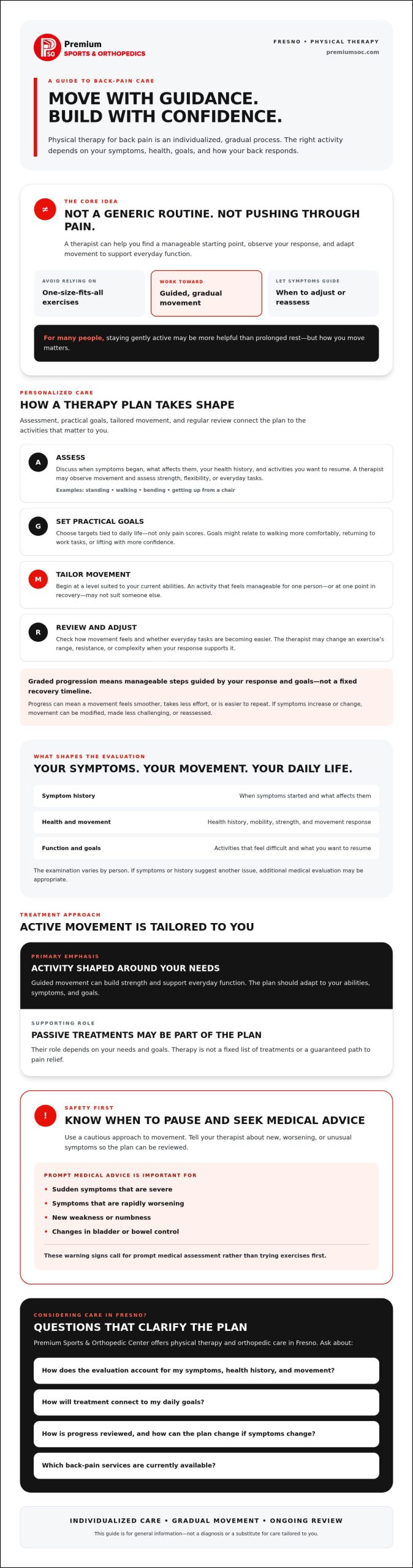
A therapy plan is a process of assessing, learning, and adjusting, not a fixed list of exercises. During physical therapy for back pain, your therapist uses your symptoms and movement response to guide what comes next. The aim is to connect treatment to activities that matter to you, such as walking comfortably, returning to work tasks, or lifting with more confidence.
How is a back-pain therapy plan individualized?
The therapist considers how symptoms behave, your mobility and strength, and what you want to resume. An activity that feels manageable for one person may aggravate another, or may not suit the same person at a different point in recovery. Together, you can identify an appropriate starting level, then adjust it based on what happens during and after movement. Tell your therapist about new, worsening, or unusual symptoms so the plan can be reviewed.
What are the steps in a therapy plan?
- Assessment: Review your symptoms, health history, movement, and current activity limits.
- Goal-setting: Choose practical targets that reflect your daily life, rather than focusing only on pain scores.
- Tailored movement: Begin with activities suited to your current abilities, then consider how exercise fits into an active, evidence-based physical therapy approach.
- Progress review: Check how movement feels and whether everyday tasks are becoming easier, then update the plan as needed.
Graded progression means adjusting movement in manageable steps according to your response and goals, without assuming a fixed recovery timeline. Progress may mean a movement feels smoother, takes less effort, or becomes easier to repeat in daily life. If an activity increases or changes your symptoms, your therapist can modify the movement, reduce its challenge, or reassess whether it’s appropriate. That feedback is useful, not a reason to push through.
How does a therapist track progress?
Progress reviews can look at movement tolerance, daily function, and the goals you set together. Your therapist may gradually change an exercise’s range, resistance, or complexity when your response supports that step. If a change brings a setback or a new symptom, share it promptly. The plan should respond to you, not require a universal number of visits or a guaranteed schedule.
If you’re looking for local guidance, explore physical therapy and orthopedic care in Fresno and ask about the evaluation process and services for back pain.
Active Exercise or Passive Treatment: What Should Back-Pain Therapy Include?
Back-pain therapy may include activities you do yourself and treatments delivered by a clinician. These approaches serve different purposes. Active movement can help build the capacity for daily tasks, while passive care may support a broader plan. Neither a particular exercise nor treatment is right for everyone. The choice depends on your assessment, preferences, response, and functional goals.
Active approaches
- Examples may include mobility work, strengthening, balance, or practicing movements related to daily tasks.
- You take part directly, and the activity can be adjusted to your current ability.
- The aim is to support movement and function, not to force progress through pain.
Passive approaches
- Examples may include hands-on care or other treatments applied by a clinician.
- These approaches require less active effort during the treatment itself.
- They may be considered as one part of care, but they don’t guarantee relief or replace an individualized plan.
What role can strengthening and mobility exercises play?
Depending on your needs, a therapist might explore gentle movement to improve mobility, strengthening to support tasks like standing or lifting, or practice of an activity that has become difficult. They can modify range, load, pace, or position. For example, a movement can be made smaller or performed in a different position if that feels more manageable. Your therapist can help distinguish ordinary effort from a symptom response that needs a change.
Some effort or mild, familiar discomfort doesn’t automatically mean harm, but pain during every exercise isn’t a sign of progress. Stop and seek guidance if an exercise causes sharp or escalating pain, new numbness or weakness, or symptoms that feel unusual for you. Don’t assume all movement is harmful, either. The goal is to find an appropriate starting point and adjust based on your response.
Are hands-on or other passive treatments enough on their own?
Hands-on care or another passive treatment may be considered when it fits the assessment and your preferences. A clinician may pair it with active rehabilitation, such as practicing comfortable movement or building strength for a daily task. The right balance varies, and a treatment that feels helpful for one person may not suit another. Ask how each part of your plan connects to a functional goal and how you’ll review whether it’s helping. If you’re weighing your options, learning about non-invasive back pain treatment options and their benefits can help you prepare informed questions for a clinician.
How to Approach Back-Pain Exercises Safely at Home
Home movement should feel like a cautious experiment, not a test of how much discomfort you can tolerate. Physical therapy for back pain is tailored to the person, so an exercise shown online may not suit your symptoms or health history. Treat the ideas here as general education, not a diagnosis or personal exercise prescription. If you have significant health concerns, changing symptoms, or difficulty with basic daily activities, ask a qualified clinician which movements are appropriate before starting.
Use this simple sequence to make a more informed choice:
- Check for warning signs. If you notice concerning new symptoms, don’t begin or continue an exercise in place of getting medical advice.
- Choose comfortable movement. If there are no warning signs, you might try a familiar, gentle activity such as changing position or walking at an easy pace. These are examples, not recommendations for every person.
- Monitor your response. Notice how you feel during the activity and afterward, including whether symptoms change or affect function.
- Adjust or pause. Make the movement smaller or easier, or stop if it causes sharp, escalating, or concerning symptoms. Contact a qualified clinician for guidance.
How should you respond if movement increases pain?
Don’t push through sharp or worsening pain to prove an exercise is working. Pause or modify the activity, then note what you were doing, what changed, and whether symptoms settled or continued. Share those details with a clinician or physical therapist. There isn’t one pain score or rule that safely fits everyone. Your health history, symptom pattern, and response all matter.
When should back pain be assessed promptly?
New loss of bladder or bowel control, difficulty urinating, numbness around the groin or saddle area, or significant, progressive weakness requires urgent medical assessment. Seek prompt evaluation for severe symptoms or pain after significant trauma, too. Online guidance can’t determine the cause of your pain or judge how urgent your individual situation is. If you’re unsure, contact a qualified medical professional rather than trying to manage a concerning change with home exercises.
For help choosing movement that fits your needs, consider discussing your symptoms and goals with a physical therapist. Explore physical therapy options and ask about the current back-pain evaluation and services available.
Choosing Back-Pain Physical Therapy in Fresno and Planning Your Next Step
Choosing care is easier when you know what you want help with. If back pain is affecting work, household tasks, recreation, or sport, share those specifics during an evaluation. They help connect physical therapy for back pain to your everyday priorities, rather than focusing only on a symptom in isolation. An in-person assessment may be useful when you’re unsure which movements are appropriate or how to adjust activity safely. For a broader overview of causes and care options, see this guide to lower back pain treatment in Fresno, which covers what a clinician may consider during evaluation and how physical therapy can fit into a care plan.
What should you ask a physical therapy provider?
A clear conversation can help you understand what the plan involves and how you’ll work together. Consider asking:
- How will the evaluation connect my symptoms and movement to goals that matter in daily life?
- How will my exercise plan be adjusted if my symptoms change or an activity feels difficult?
- How will we review progress and decide whether to modify the plan?
- Which back-pain assessment and physical therapy services are currently offered at this location?
- Do I need a referral, and what are the current appointment steps?
Confirm availability, referral requirements, and appointment details directly with the provider, since these can vary. You can also ask who to contact if you have concerns between progress reviews.
How can local care support a gradual return to activity?
A useful plan should reflect your symptoms and the demands of your day. Tell the therapist what you’re working toward, whether that means standing through a work shift, managing household chores, returning to a walk, or resuming a sport. An in-person conversation can help clarify how those goals might shape exercise choices and how activity can be adjusted as your response changes.
Premium Sports & Orthopedic Center provides physical therapy and orthopedic care for people in the Fresno area. To learn whether its current services fit your needs, ask about the evaluation process and the back-pain support available. Related information on back-pain care and Fresno sports medicine may also help you prepare questions for a provider.
If you’re ready to explore local options, explore physical therapy and orthopedic care at your own pace.
Take Your Next Step Toward More Comfortable Movement
Back pain doesn’t have to mean choosing between avoiding movement and pushing through it. Select activity based on your individual needs, adjust it according to your response, and seek medical guidance for concerning symptoms. Physical therapy for back pain can help you work toward practical goals with a plan shaped around your movement and daily function, though no approach can promise a particular result.
If you’re unsure which exercises are right for you, an individualized evaluation can help clarify what to try and what questions to ask. Premium Sports & Orthopedic Center offers physical therapy and orthopedic services to patients in the Fresno area. Check directly with the center about current services, referral requirements, and appointment details.
Explore physical therapy and orthopedic care and consider what everyday activity you’d like to work toward. With thoughtful guidance and a manageable approach, you can take the next step at a pace that respects your needs.
Frequently Asked Questions
Is physical therapy effective for back pain?
Physical therapy can help address movement limitations and support functional goals for some people with back pain. The right approach depends on your symptoms, health history, and clinical assessment. Results vary, and no exercise plan can guarantee relief. A physical therapist or other qualified clinician can help determine whether therapy fits your situation, choose suitable activities, and adapt care as your symptoms and abilities change.
What exercises do physical therapists recommend for back pain?
There’s no single exercise routine for every type of back pain. After assessing you, a therapist may consider mobility work, strengthening, or functional movements related to your goals, such as walking or lifting. Begin only with activity appropriate for your situation. If symptoms worsen, feel unusual, or limit daily tasks, seek guidance. An online list can offer general ideas, but it can’t replace an individualized plan.
Can physical therapy make back pain worse?
Some movement may temporarily change symptoms, but sharp, escalating, or unusual pain shouldn’t be ignored. Stop or modify the activity and contact a qualified clinician for advice. The right response depends on your symptoms and their cause, so one rule won’t fit everyone. Seek urgent assessment for new bowel or bladder problems, numbness around the saddle area, or significant, progressive weakness.
How long does physical therapy take to help back pain?
The time needed varies with the cause and duration of symptoms, health history, functional goals, and response to care. A clinician can review how you’re doing and adjust your plan, but can’t promise a specific recovery timeline. Ask how progress will be assessed and what changes should prompt follow-up. If symptoms worsen or new concerns develop, contact a qualified clinician for reassessment.
Should I rest or keep moving when my back hurts?
The right balance depends on your symptoms and individual circumstances. Prolonged inactivity may make a return to normal activity harder for some people, while certain movements may not suit everyone. A clinician can help you decide what’s reasonable based on an assessment. Don’t force an activity that causes concerning pain. Seek care for severe, worsening, or unusual symptoms instead of relying on a general rule about rest or movement.
When should I see a physical therapist for back pain?
Consider an assessment if back pain interferes with daily activities, persists or recurs, or leaves you unsure how to move safely. A clinician can review your symptoms and discuss appropriate care or whether additional medical assessment is needed. Seek urgent evaluation for new bowel or bladder dysfunction, saddle-area numbness, significant progressive weakness, or severe pain after major trauma. These symptoms need prompt attention, not an online exercise plan.
Can I do back-pain physical therapy exercises at home?
Home exercises may be part of a therapy plan, but the right movements and progression depend on the individual. A physical therapist can demonstrate technique, explain how to adjust activity, and clarify which symptoms need follow-up. Don’t treat online exercises as a diagnosis or personal prescription. Stop any activity that causes concerning symptoms and contact a qualified clinician for guidance. In Fresno, confirm directly which physical therapy services are currently available.