 29 Sep 2026
What if back pain doesn’t automatically mean you need an injection or surgery? For many people, a non-invasive back pain treatment plan may start with staying active, heat, structured exercise, or physical therapy. The right approach depends on what may be causing your symptoms and how they affect daily life.
It’s understandable to feel unsure about which options are appropriate, especially when treatment claims can sound alike. This guide explains how common non-invasive approaches differ, what a clinician may consider during an assessment, and what to discuss at a Fresno-area orthopedic or rehabilitation consultation. It also covers symptoms that call for prompt medical attention.
Care often focuses on helping you stay active and build strength, with a qualified clinician adjusting the plan to your needs and response. A local orthopedic assessment can help clarify possible next steps, including whether physical therapy may fit your goals. New leg weakness, numbness around the groin or saddle area, or loss of bladder or bowel control warrants urgent medical assessment. Knowing what to ask can help you make a more informed decision about care.
Key Takeaways
- Learn what non-invasive back pain treatment can include and how it differs from injections or surgery.
- See how symptoms, daily function, and health history can help guide a clinician’s recommendations.
- Compare physical therapy, activity guidance, and other conservative options by their goals and practical demands.
- Prepare questions about suitability, progress, potential risks, and when to reassess your plan.
- Explore how an orthopedic or rehabilitation consultation in Fresno can clarify possible next steps, including physical therapy.
What Does Non-Invasive Back Pain Treatment Include?
Back pain can leave you wondering whether to rest, keep moving, or seek care, and whether treatment will involve an injection or surgery. The best next step depends on the person. A balanced plan considers your symptoms, health history, physical examination, and goals, such as returning to work or making everyday movement more comfortable.
Non-invasive back pain treatment refers to care that doesn’t require surgery. It may include supervised physical therapy, guidance on staying active, and other conservative approaches recommended by a clinician. Injections are different: they use a needle to deliver medication or another substance, so they’re generally described as minimally invasive rather than non-invasive. For a broad overview of approaches, see Low back pain management.
What counts as non-invasive care for back pain?
Care may focus on maintaining comfortable activity and gradually building strength or mobility with a physical therapist’s guidance. A clinician may recommend other conservative measures based on the likely cause of your pain and your circumstances. Medication advice also needs individual consideration: health conditions, other medicines, and potential side effects can affect what’s appropriate. Don’t assume that a treatment that helped someone else is right for you.
These options aren’t interchangeable, and no single approach fits every type of back pain. Ask why a particular option may suit your symptoms, what it involves, and what signs would prompt a change in the plan. This section is educational, not a diagnosis or a substitute for individualized medical advice.
When should back pain receive prompt medical attention?
Some symptoms call for urgent assessment rather than trying a routine treatment plan first. Seek urgent medical care for new loss of bladder or bowel control, difficulty urinating, numbness around the groin or saddle area, or severe or rapidly developing leg weakness. Back pain after a major fall, crash, or other significant trauma also needs prompt assessment.
Get medical advice promptly if pain is severe, worsening quickly, or accompanied by other concerning changes. If you’re unsure how urgent your symptoms are, contact a qualified healthcare professional or local urgent medical service for guidance. This general information can’t determine the cause of your pain or provide personal triage. When symptoms raise concern, an in-person assessment helps a clinician decide what evaluation and care are appropriate.
How Clinicians Assess Back Pain Before Recommending Treatment
A useful care plan starts with more than the location of your pain. A clinician considers how symptoms began, what changes them, how they affect daily function, and whether your health history may influence care. Treatment selection begins with clinical assessment, not a one-size-fits-all protocol. That evaluation helps determine whether a non-invasive back pain treatment is a reasonable next step and whether further assessment is needed.
What information helps identify the right care pathway?
Before an appointment, note when the pain started, where you feel it, whether it travels into a leg, and which movements or activities make it better or worse. Include relevant medical conditions, previous injuries, current medicines, and treatments you’ve already tried, along with how you responded. This gives the clinician a clearer picture of your symptoms and what has or hasn’t helped.
Describe the effect on your daily life, too. Does pain interrupt sleep, make it harder to sit through work, or limit walking, lifting, or getting dressed? A clinician may ask about these activities and perform a physical examination guided by your symptoms. Depending on the situation, this may include observing movement and posture, checking range of motion, or assessing strength and sensation. The exact examination varies, and not everyone needs the same tests.
Does every person with back pain need imaging?
No. X-rays, MRI, or other imaging may be considered when symptoms, examination findings, or health context make a closer look appropriate. A scan is only one part of the picture. Findings need to be interpreted alongside your symptoms and examination, because an image alone may not explain what you’re feeling or determine which treatment will help.
If a test is recommended, ask what question it’s intended to answer, how the result could change your care, and what its limitations are. You can also ask whether it’s reasonable to begin with another approach and reassess. Johns Hopkins Medicine offers an overview of non-surgical back pain treatments, but a clinician can help relate general information to your situation.
Preparing a short symptom and health-history summary can make your consultation more focused. If you’re considering local orthopedic care, you can also learn about orthopedic care in Fresno and discuss which assessment and next steps may fit your needs.
Comparing Non-Invasive Back Pain Treatment Options
Different approaches serve different purposes. A plan may emphasize guided movement, adjustments to everyday activity, or other clinician-recommended conservative care, depending on your assessment and goals. The potential benefits and suitability of any treatment vary by diagnosis and individual response. Use this comparison to prepare questions, not to choose a treatment without clinical advice.
| Approach | Main goal | Practical demands and considerations |
|---|---|---|
| Physical therapy | Build or restore movement, strength, mobility, and function. | A physical therapist can tailor activities and adjust them as symptoms and abilities change. Suitability and the plan depend on individual assessment. |
| Activity guidance | Help you manage daily movement while working toward personal goals. | Advice may involve adapting specific tasks or activity levels. What makes sense depends on symptoms, work, home responsibilities, and clinician guidance. |
| Medication guidance | Consider whether medicine could play a role in managing symptoms. | Discuss options with a qualified clinician. Health conditions, other medicines, and potential side effects affect what may be suitable. |
| Other conservative care | Consider additional non-surgical options as part of an individualized plan. | Ask what a proposed approach involves, what evidence supports its use for your situation, and how progress will be reviewed. Availability and suitability should be confirmed with the provider. |
How can physical therapy support back-pain recovery?
Physical therapy can focus on movement and function that matter to you, such as walking more comfortably, managing work tasks, or building strength for daily activities. There’s no universal exercise sequence. A physical therapist can adapt activities to your symptoms, health context, and progress. Read more in this guide to physical therapy for back pain.
How do other conservative approaches differ?
Activity modification and self-management guidance are intended to help you navigate daily demands in a way that fits your assessment, not to prescribe the same restrictions for everyone. Medication is also an individual decision, since benefits and risks can vary.
Some providers offer tissue-repair or muscle-recovery services, but the name alone doesn’t explain what a treatment involves or whether it’s appropriate for back pain. Premium Sports & Orthopedic Center lists Joint Tissue Repair Therapy and Muscle Recovery Treatments among its services. Ask the clinic which specific options may be appropriate for your circumstances, what evidence and risks to consider, and how a treatment relates to your goals. A clinician can help you weigh those options alongside physical therapy and other approaches.
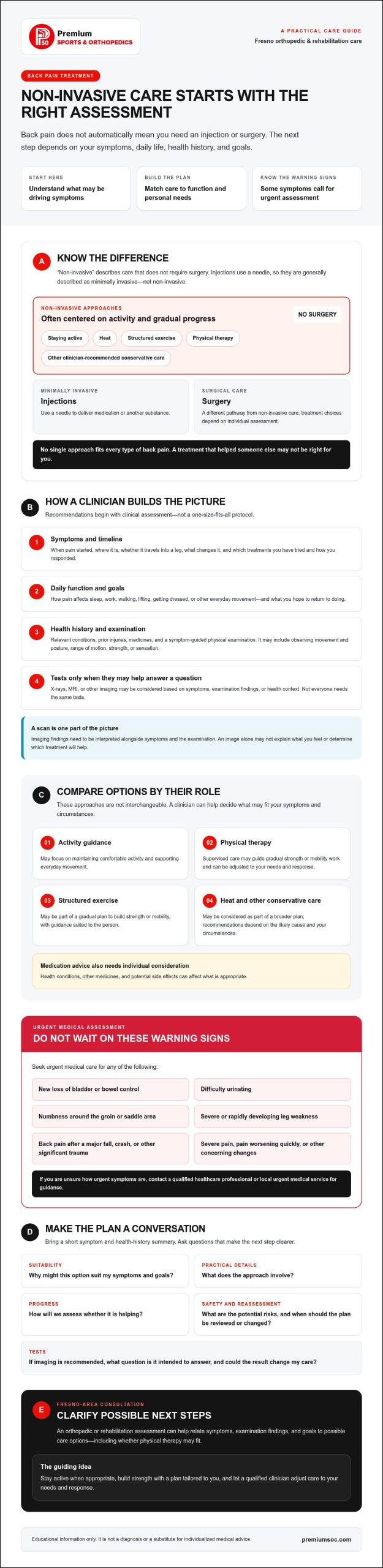
How to Choose and Track a Non-Invasive Back Pain Plan
A plan is easier to follow when you understand its purpose and how you’ll assess whether it’s helping. Use your consultation to agree on a practical path for non-invasive back pain treatment, then review progress with your clinician rather than judging the plan by one difficult day.
- Clarify your goals. Identify daily activities you want to manage more comfortably, such as walking, sleeping, or completing work tasks.
- Review the options. Ask how each recommendation relates to the assessment and what its demands, potential risks, and limitations are.
- Agree on a plan. Confirm what you’ll do, what to monitor, and when you’ll check in about your response.
- Reassess together. Discuss whether the plan should continue or change based on symptoms and function.
Which questions should you ask before starting care?
Ask what the evaluation suggests, how each proposed option addresses your needs, and what progress might look like in daily life. Find out when your clinician will review the plan, what risks or limitations to consider, and what to do if symptoms change. Share relevant health conditions, medication concerns, activity restrictions, and personal goals so recommendations reflect your circumstances.
When should a treatment plan be reviewed or changed?
Track more than pain intensity. Note whether you’re sleeping better, walking farther, or finding everyday tasks easier, as well as any new or worsening symptoms. Contact your clinician if function declines, symptoms worsen, or you develop new concerns. If your response differs from expectations, the clinician may revisit the assessment, discuss other options, or adjust the plan. For additional perspective on choosing care, see how to choose back pain care in Fresno.
Keep brief notes between visits about which activities feel easier or harder, what changes your symptoms, and any questions that arise. These observations make follow-up conversations more specific and can help you and your clinician decide on next steps. If you’re exploring local options, read about lower back pain causes and care options in Fresno.
For an individualized discussion of orthopedic care or physical therapy for back pain, contact Premium Sports & Orthopedic Center to ask about assessment and possible next steps.
Exploring Local Non-Invasive Back Pain Care in Fresno
Choosing where to seek care is part of building a plan that fits your symptoms and goals. An orthopedic or rehabilitation consultation can help you describe what you’re experiencing and discuss which non-surgical options may be appropriate. Premium Sports & Orthopedic Center serves the Fresno area and provides orthopedic care and physical therapy. The services recommended depend on an individual evaluation, so confirm current treatment options directly with the clinic.
What can patients expect from an orthopedic consultation?
A consultation generally gives you time to explain when your pain began, how it affects movement and daily activities, and what you hope to do more comfortably. The clinician may ask about relevant health history, previous injuries, current medications, and care you’ve already tried. You can discuss non-invasive back pain treatment options, including why an approach may fit your situation and what other steps might be considered.
Recommendations depend on the information gathered during your evaluation. Possible next steps may include discussing physical therapy or other appropriate care, arranging further assessment, or suggesting a referral. A consultation doesn’t guarantee a particular diagnosis or treatment. Confirm details such as appointment availability, referral requirements, and insurance participation with the provider.
How can Fresno patients take a practical next step?
A little preparation can make a conversation more focused. Before contacting a provider, consider gathering:
- A brief timeline of when symptoms began and how they’ve changed.
- A current medication list and relevant health-history details.
- Examples of activities that are harder or easier, such as walking, sitting, working, or sleeping.
- Questions about the evaluation, possible care options, risks, progress reviews, and what to do if symptoms change.
Use the conversation to clarify what the provider currently offers and whether it matches the needs you want assessed. Ask about practical details, including how to arrange an appointment, whether a referral is needed, and which insurance plans are accepted. These details can vary, so confirm them directly rather than assuming they apply.
Seeking guidance doesn’t mean committing to a particular treatment. It’s a chance to understand your options, share your goals, and make an informed decision with a qualified clinician. For a local discussion about orthopedic care and physical therapy for back pain, Discuss your back-pain care options with Premium Sports & Orthopedic Center.
Take the Next Step Toward a Back-Care Plan That Fits
The right non-invasive back pain treatment depends on your symptoms, health history, and goals, not a standard plan for everyone. A qualified clinician can help you understand which options may suit your situation, what to monitor, and when to reassess. Tracking everyday function alongside symptoms can make follow-up conversations more useful.
If you’re in Fresno, Premium Sports & Orthopedic Center provides orthopedic care and physical therapy. You can ask the team about current services and discuss possible next steps based on an individual evaluation. No single approach is right for every person, but a thoughtful conversation can help clarify your choices.
Explore back-pain care options with Premium Sports & Orthopedic Center and ask about an assessment to discuss possible next steps for your back pain.
Frequently Asked Questions
What is the best non-invasive treatment for back pain?
There’s no single best option for everyone. The right approach depends on the likely cause, symptoms, health history, and goals identified during a clinical assessment. A clinician may discuss physical therapy, activity guidance, or other conservative care. Ask how each recommendation fits your situation, what changes to monitor, and when to review the plan. Treatment should reflect your needs rather than follow a one-size-fits-all routine.
Can back pain improve without surgery?
Many people explore non-surgical care, but the suitable approach and expected course vary from person to person. After assessing your symptoms, a clinician may discuss physical therapy or other conservative options when appropriate. Non-surgical treatment can’t guarantee a particular outcome, and some symptoms need further evaluation. Seek prompt medical advice for severe or rapidly worsening pain, new weakness, or changes in bowel or bladder control.
How does physical therapy help back pain?
Physical therapy may support movement, strength, mobility, and daily function through a plan shaped around your assessment and goals. A qualified clinician can adjust activities as your symptoms and abilities change. The right exercises and pace are individual, so a general online routine shouldn’t be treated as personal medical advice. Ask your therapist how progress will be assessed and what changes should prompt you to check in.
Is non-invasive back pain treatment safe?
Safety depends on the treatment, the cause of your pain, and your individual health circumstances. Before beginning care, tell your clinician about relevant health conditions, current medicines, previous injuries, and any new symptoms. Ask about potential risks, alternatives, and when to seek reassessment. If symptoms are concerning or changing quickly, get medical advice rather than relying on an online guide to decide what care you need.
When should I see a doctor for back pain?
Consider a professional assessment if back pain persists, limits everyday activities, keeps returning, or concerns you. Seek prompt medical care for severe or rapidly worsening pain, significant weakness, symptoms following major trauma, or new bowel or bladder problems. A clinician can consider your symptoms and health context to determine whether an examination, testing, or a treatment plan is appropriate. If you’re uncertain about urgency, contact a healthcare professional for guidance.
Do I need an MRI for back pain?
Not everyone with back pain needs an MRI. A clinician considers your symptoms, examination, medical history, and whether imaging could affect care before recommending a scan. Ask what question the MRI is intended to answer and how its results might change your plan. Imaging findings should be interpreted alongside your clinical assessment, not used on their own to explain every symptom or choose treatment.
How do I choose a back pain specialist in Fresno?
Look for a qualified clinician whose services fit your needs and who takes time to understand your symptoms and goals. Ask about assessment, non-surgical options, follow-up, and how the plan may change if progress is limited. Premium Sports & Orthopedic Center serves patients in Fresno and provides orthopedic care and physical therapy. Confirm current services, clinician credentials, insurance details, and appointment availability directly with the provider.