 05 Nov 2026
A knee that can bear weight may still have a meniscus tear. A meniscus tear diagnosis in Fresno starts with understanding how the injury happened and assessing symptoms and knee movement. Imaging may help clarify what is affecting the joint. The menisci are two pieces of cartilage that cushion the knee between the thighbone and shinbone.
It’s natural to focus on pain after a twist or sports injury, but pain isn’t the only clue. Swelling, stiffness, clicking with discomfort, catching, or difficulty moving the knee can also matter. A knee noise on its own, however, doesn’t automatically mean a serious injury.
This guide explains what the meniscus does, which symptoms may point to a tear, and how an examination and imaging help evaluate a knee injury. The movement that triggered symptoms and their effect on everyday activities can also help shape a clearer assessment. Understanding the evaluation can help you take a confident next step toward protecting your mobility and returning to the activities that matter to you.
Key Takeaways
- Notice patterns such as swelling, stiffness, painful clicking, catching, or trouble fully moving the knee; a knee noise alone doesn’t establish a tear.
- Understand how X-rays can show bone and joint changes, while MRI can help assess soft tissues such as the meniscus.
- Learn how symptom history and a physical examination, including checks of knee motion and joint-line soreness, contribute to an evaluation.
- See why a twisting movement during sports can injure the meniscus, and how the injury’s pattern and location help guide next steps.
Meniscal tear symptoms
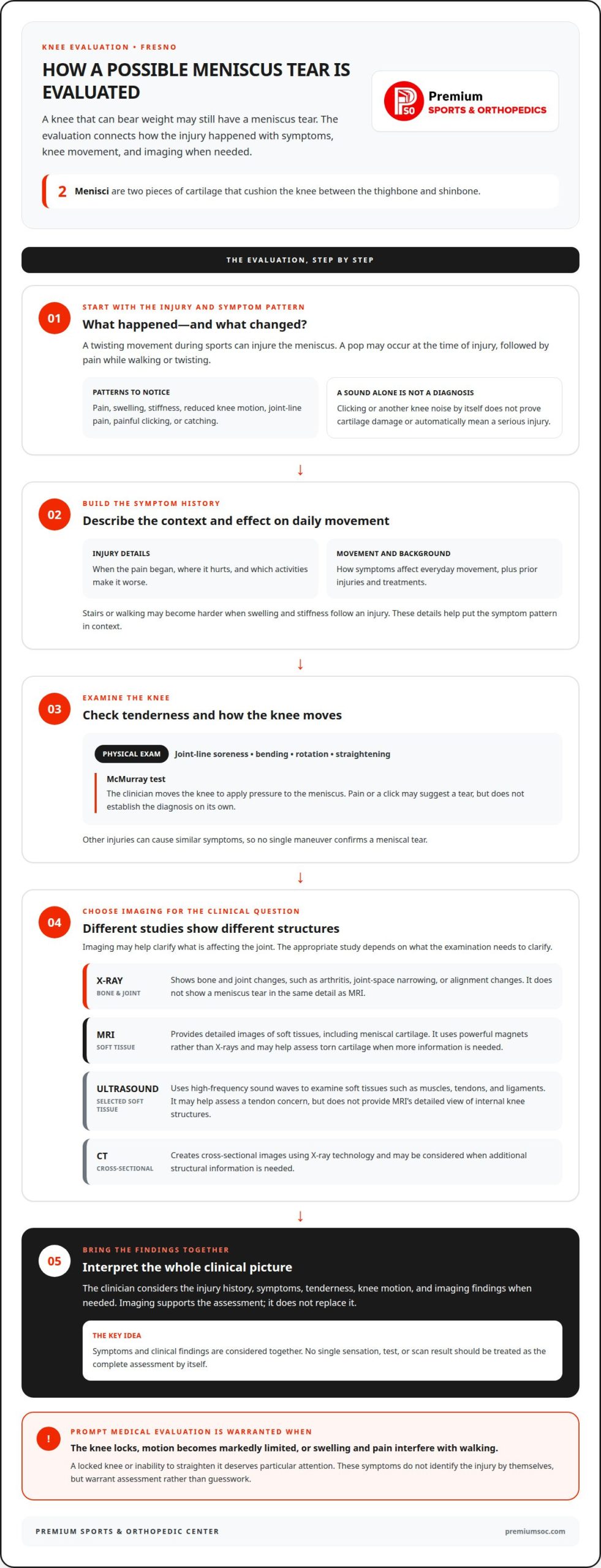
A meniscus tear can cause pain, swelling, stiffness, or reduced knee motion. Some people notice a pop when the injury happens, followed by pain while walking or twisting. Clicking can occur too, especially with pain, swelling, or catching. A click alone doesn’t prove cartilage damage, since knee noises can occur without a serious problem. These symptoms can also have other causes, so no single sensation confirms a meniscal tear.
Patterns offer useful clues. Pain along the joint line, where the thighbone and shinbone meet, may accompany a tear. A knee that catches, locks, buckles, or won’t fully straighten can also signal a problem. For example, a patient may twist during a game, then develop swelling and stiffness that limit stairs or walking. These details help distinguish an injury pattern from symptoms that appear mainly after rest, though an examination is needed to identify the cause.
Seek prompt medical evaluation if your knee locks, its motion becomes markedly limited, or swelling and pain interfere with walking. A locked knee or inability to straighten it deserves particular attention. These symptoms don’t identify the injury by themselves, but they can affect joint function and warrant an assessment rather than guesswork.
Without an assessment, persistent pain or limited motion may remain unexplained, making it harder to match care to the problem. Meniscal tears vary in pattern and location, and other knee conditions can cause similar symptoms. An orthopedic evaluation connects your injury history with movement, tenderness, and imaging findings when needed. A clinician may also consider your activity level when discussing care. No single test or professional title determines whether a tear is present; symptoms and clinical findings must be considered together. An early assessment can clarify what is affecting your knee and which next steps may suit your needs.
Musculoskeletal conditions and imaging
Imaging helps assess different knee structures, from bone and joint alignment to soft tissue. The appropriate study depends on what the clinical examination needs to clarify.
X-Rays and Additional Imaging
X-rays show bone and joint changes, while MRI provides detailed images of soft tissues, including meniscal cartilage. An X-ray can help identify arthritis, joint-space narrowing, or alignment changes, but it doesn’t show a meniscus tear in the same detail. MRI uses powerful magnets rather than X-rays, helping clinicians assess torn cartilage and other soft-tissue concerns when more information is needed.
Ultrasound uses high-frequency sound waves to examine soft tissues such as muscles, tendons, and ligaments. It may help assess a tendon concern, but it doesn’t provide the same detailed view of internal knee structures as MRI. CT creates cross-sectional images using X-ray technology and may be considered when additional structural information is needed.
On-Site Imaging
On-site imaging means a medical center has imaging equipment at its location. Imaging may be considered as part of a knee assessment, depending on the clinical question. Having imaging in the same location can make an evaluation more convenient, but images still need to be interpreted alongside symptoms and examination findings. The choice depends on which structures need a closer look.
MRI and Diagnosis Timing
There’s no single timeline for receiving a knee MRI and diagnosis in Fresno. Scheduling, scan completion, image interpretation, and clinician review all affect how quickly an assessment comes together. MRI costs also depend on insurance coverage and imaging arrangements; the price depends on the case and is given after a quote request.
For athletes with persistent symptoms, an MRI can help clarify whether the meniscus or another soft tissue is involved. Imaging findings support, rather than replace, clinical assessment. A focused orthopedic evaluation can help connect the images with knee movement and daily function, guiding discussion of appropriate next steps without assuming surgical treatment or knee replacement is needed.
Clinical evaluation and diagnosis
A meniscus assessment combines your injury history, a knee examination, and imaging when needed. Each step helps distinguish cartilage injury from problems involving a ligament, muscle, or other joint structure.
Evaluation for a Possible Meniscus Tear
In Fresno, a clinician who evaluates knee injuries can assess a possible meniscus tear. A meniscus tear diagnosis in Fresno starts with understanding the injury and how symptoms affect movement. An orthopedic specialist can provide a focused knee examination when symptoms persist or movement remains limited. The evaluation helps determine whether further imaging or another approach to care may be appropriate.
Expect questions about when your knee pain began, where it hurts, which activities make it worse, and how it affects daily movement. Mention prior injuries and treatments too. These details give the clinician context before examining your knee.
Providers Who Diagnose Meniscus Tears
Primary care and urgent care clinicians can assess knee symptoms and perform an initial examination; orthopedic specialists also evaluate suspected meniscus injuries. For a meniscus tear diagnosis in Fresno, the clinician uses your medical history and physical findings to guide next steps, including whether X-rays or MRI may help. The appropriate route depends on your symptoms and the evaluation needed.
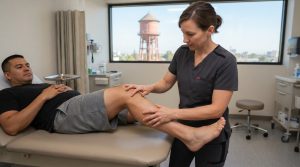
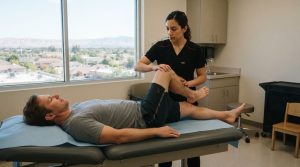
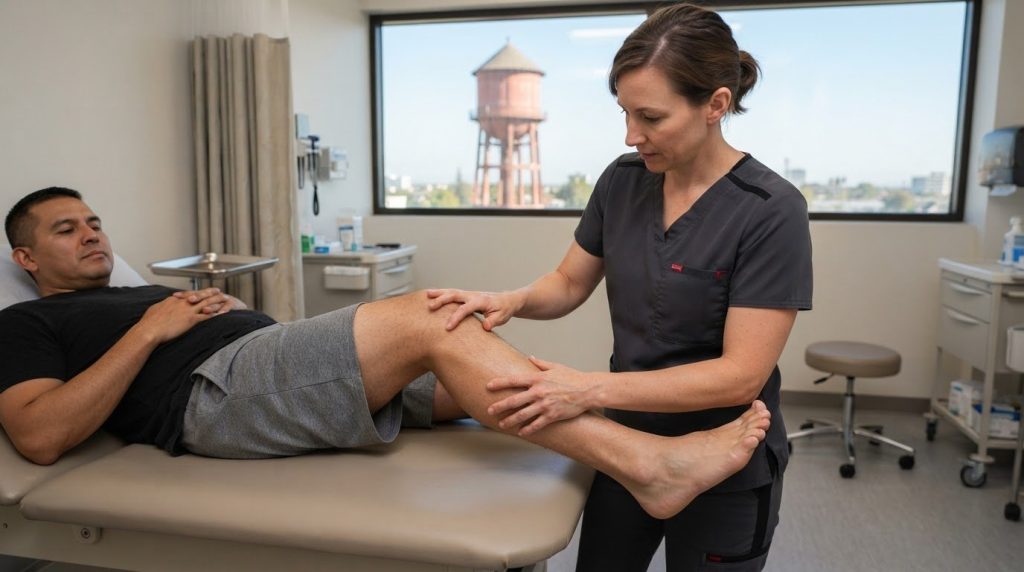
A clinician may check for joint-line soreness and bend, rotate, and straighten your knee. The McMurray test uses those movements to apply pressure to the meniscus. Pain or a click may suggest a tear, but doesn’t establish the diagnosis on its own. Other injuries can cause similar symptoms.
Diagnosis relies on the whole clinical picture, not one maneuver. A clinician considers when symptoms began, tenderness, motion, and whether a twisting movement triggered the problem. Imaging can add detail: X-rays show bone and joint changes, while MRI can help assess soft tissues such as the meniscus.
Age-related changes can also affect the knee, so cartilage wear and a sudden sports injury may cause overlapping symptoms. If findings point toward a ligament injury rather than a meniscus tear, that distinction matters for care planning. A clinician may use examination and imaging results to decide whether further orthopedic assessment is appropriate.
Meniscus injuries and sports injuries
Sports can place stress on the meniscus during a sudden twist, especially when the foot stays planted as the knee turns. Bending the knee too far can also strain the cartilage. Football, tennis, and basketball involve movements that can put the knee at risk, including pivots, quick changes of direction, and contact.
Athletes aren’t the only people affected. Meniscal tears can happen at any age, while age-related cartilage wear can make degenerative tears more likely. A sudden injury during a game and gradual symptoms in an older adult may have different causes, even when both affect knee function.
Some sports injuries involve more than one structure. A meniscus tear can occur alongside an anterior cruciate ligament injury, so pain after a pivot doesn’t identify the damaged tissue by itself. A clinical evaluation considers how the injury happened and which structures may be involved; imaging can then help clarify the picture.
Tear patterns vary. Longitudinal, bucket-handle, flap, parrot-beak, and complex tears describe different shapes of meniscal damage. Pattern and location matter because treatment options depend on a tear’s characteristics. A sports injury assessment can help distinguish a meniscal problem from other causes, such as arthritis or a fracture, which affect the knee differently.
For an athlete, being able to walk after a twist doesn’t rule out a meniscus tear. The knee may still lack its full range of motion. Note what movement triggered symptoms, whether the knee twisted or bent too far, and how function changed afterward. These details help connect the sports injury with examination and imaging findings.
If knee symptoms followed a sports injury, schedule a sports medicine consultation to discuss an evaluation and appropriate next steps.
Premium Sports & Orthopedic Center
Premium Sports & Orthopedic Center provides orthopedic care and sports medicine consultations in the Fresno area for people with knee symptoms after an injury or during everyday activities. An evaluation can help clarify what may be contributing to pain or restricted movement and identify appropriate next steps based on the clinical findings.
Consider an assessment if knee discomfort persists, limits your usual activities, or began during a sport or twisting movement. Sharing when symptoms started, which motions aggravate them, and how they affect daily function can help guide the discussion. Care is tailored to your orthopedic needs, with the goal of supporting comfortable movement.
If you have ongoing knee concerns or would like to discuss an evaluation, contact Premium Sports & Orthopedic Center in the Fresno area.
Take the Next Step Toward Confident Movement
A meniscus tear diagnosis in Fresno can be the first step toward a clearer plan for protecting your mobility. An evaluation can turn uncertainty about knee symptoms into an informed conversation about what may be affecting your movement and which options may suit your needs.
Premium Sports & Orthopedic Center provides care for knee pain, as well as back and leg pain, in the Fresno area. If knee concerns are changing how you walk, exercise, or manage everyday activities, a focused discussion can help you consider the next step without assuming one approach fits every situation.
Bring your questions and describe the activities you hope to return to. That context can help shape a discussion centered on your goals and day-to-day function. Contact Premium Sports & Orthopedic Center to discuss your orthopedic care needs and take a positive step toward moving with greater confidence.
Frequently Asked Questions
What Is a Meniscus?
The meniscus is cartilage inside the knee, with a medial meniscus on the inner side and a lateral meniscus on the outer side. These structures help distribute force across the joint during everyday movement. Their position matters: a clinician may describe tenderness by the inner or outer joint line, which helps locate the area needing assessment.
What Are Common Symptoms of a Knee Problem?
Knee problems can cause pain or reduced movement that changes how you manage familiar tasks. For example, discomfort when getting out of a chair may differ from pain during a quick turn. Track which movements bring on symptoms and whether they interfere with walking, stairs, or exercise. That pattern gives an evaluator useful context.
What Can My Doctor Do for Me?
A clinician can assess your symptoms, examine your knee, and decide whether imaging may clarify the cause. Bring a concise account of when the problem began, any prior knee injury, and which activities now feel difficult. This helps the clinician connect your concerns with examination findings and discuss next steps, including whether orthopedic assessment is appropriate.
When Should I Seek Surgery or Nonsurgical Treatment From a Knee Specialist?
Treatment depends on the tear’s type, size, and location, along with your age and activity level. Initial nonsurgical care may include rest, ice, anti-inflammatory medication, and physical therapy. If symptoms persist despite conservative care, a surgeon may consider surgery. A knee specialist weighs the tear pattern and your goals before discussing which approach may fit your situation.
Why Does My Knee Click, Pop, or Grind?
A knee click, pop, or grinding noise doesn’t automatically mean a serious injury. The sound is more significant when it occurs with pain, swelling, catching, or restricted movement. For example, painless clicking during ordinary movement differs from a painful click after a twisting injury. Note what you were doing and any accompanying symptoms for your evaluation.
How Is a Meniscus Tear Diagnosed?
Diagnosis combines your injury history with a physical examination, and imaging may provide more detail. A clinician may check for joint-line tenderness and assess how your knee bends, rotates, and straightens. X-rays can show bone and joint changes, while MRI helps assess soft tissues such as the meniscus. Findings are considered together rather than relying on one test alone.