 04 Nov 2026
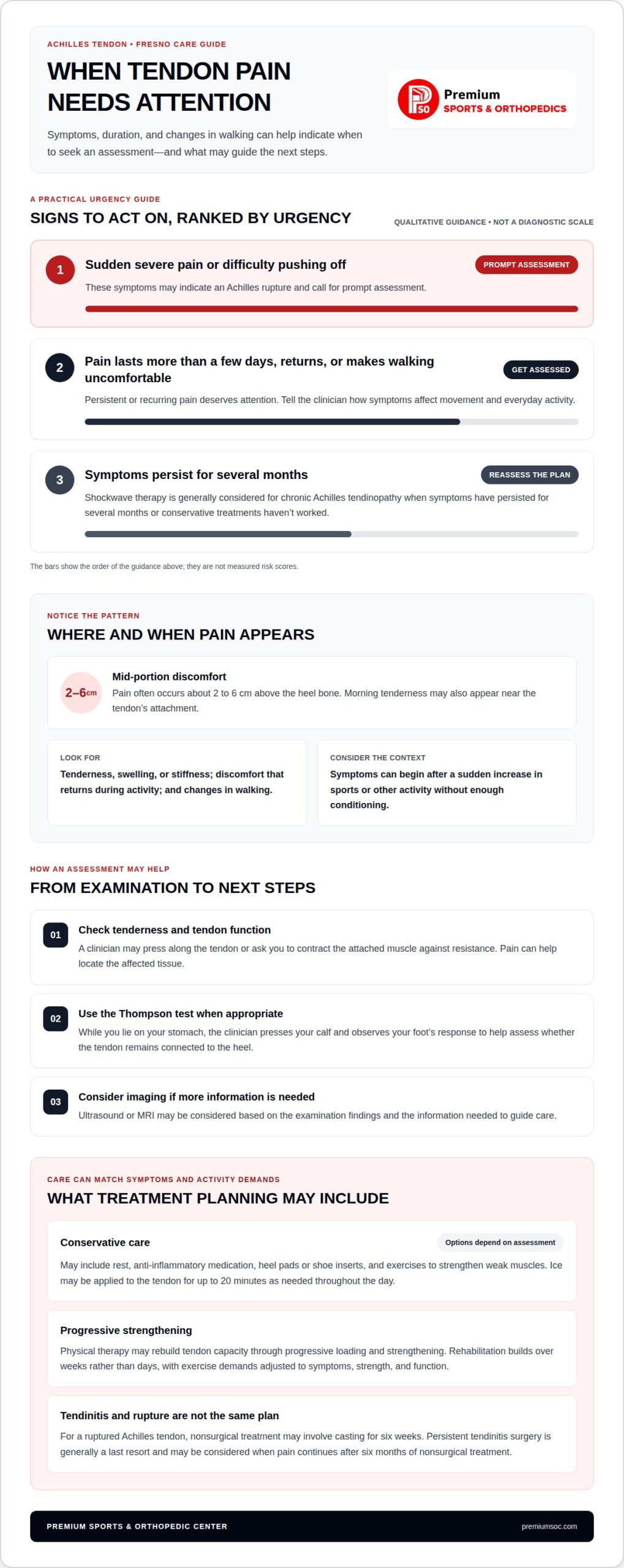
For Achilles tendonitis therapy in Fresno, seek professional care if pain lasts more than a few days, keeps returning, or makes walking uncomfortable. Achilles tendon pain can bring morning tenderness and discomfort about 2 to 6 cm above the heel bone.
A sudden increase in activity without enough conditioning can overload the Achilles tendon, so symptoms may begin after a change in your routine. It’s understandable to hope soreness will settle with rest, but persistent or recurring pain deserves attention.
Learn to recognize common symptoms, understand what a physical examination may involve, and see when imaging may help clarify the cause. This guide explains how treatment can reflect your symptoms, activity level, and recovery goals, so you can better understand the path toward comfortable movement.
Key Takeaways
- Notice where tendon discomfort appears and how it affects movement to better describe your symptoms during an assessment.
- Learn what a physical examination, including the Thompson test, may reveal and how ultrasound or MRI can help assess the tendon.
- Understand how treatment planning can account for your symptoms, activity demands, and recovery needs.
- Explore how changes in activity and conditioning can contribute to Achilles tendon problems, and why recovery plans may focus on rebuilding strength progressively.
Achilles tendinitis symptoms and local treatment
A sudden increase in activity without enough conditioning can overload the Achilles tendon. Pain location, tenderness in the morning, and changes in walking can help indicate when a professional assessment may be useful.
Common Symptoms and Causes
Achilles tendinitis is an overuse injury that irritates the tissue connecting the calf muscles to the heel. Mid-portion pain often occurs about 2 to 6 cm above the heel bone, while morning tenderness may appear near the tendon’s attachment. A sudden increase in sports or other activity without adequate conditioning can contribute to symptoms.
Notice whether discomfort returns during activity, limits walking, or comes with swelling or stiffness. Pain that lasts more than a few days, recurs, or makes walking uncomfortable should be assessed. Achilles tendonitis therapy in Fresno can start with an evaluation of your symptoms and movement to help identify suitable care.
A clinician may press along the tendon or ask you to contract the attached muscle against resistance, either of which may cause pain. A Thompson test can help assess whether the tendon remains connected to the heel. Tendon problems lasting more than a few weeks usually involve structural changes rather than ongoing inflammation. Sudden severe pain or difficulty pushing off may indicate a rupture and calls for prompt assessment.
Chronic Symptoms and Shockwave Therapy
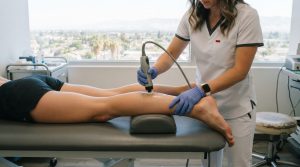
Shockwave therapy is generally considered for chronic Achilles tendinopathy when symptoms have persisted for several months or conservative treatments haven’t worked. Timing matters because ongoing symptoms may call for a different plan than a recent flare after increased activity. Achilles tendonitis therapy in Fresno can take symptom duration, movement, and activity demands into account.
Conservative care can include rest, anti-inflammatory medication, heel pads or shoe inserts, and exercises to strengthen weak muscles. Ice may be applied to the tendon for up to 20 minutes as needed throughout the day. These options address symptoms and loading; an assessment helps identify which approaches suit the person’s pain and activity goals.
Physical examination, Thompson test, ultrasound, and MRI
A clinical assessment relates your symptoms to tendon function, movement, and strength. The examination findings help determine whether imaging or a tailored physical therapy plan may be useful.
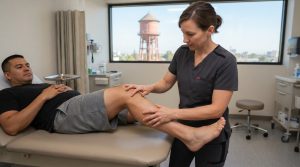
During an examination, a clinician may press along the tendon or ask you to contract the attached muscle against resistance. Pain during either step can help locate the affected tissue. The Thompson test checks whether the tendon remains connected to the heel: while you lie on your stomach, the clinician presses your calf and observes how your foot responds.
Ultrasound or MRI may be considered if the examination indicates that the tendon needs further assessment. Imaging can help inform next steps alongside the location of discomfort and changes in mobility. The choice depends on examination findings and what information is needed to guide care.
Physical therapy may use progressive loading and exercises to strengthen weak muscles. Tendon rehabilitation builds over weeks rather than days, allowing the plan to progress with your strength and function. A physical therapy assessment can consider how walking, sports, or everyday tasks challenge the tendon, then adapt exercises to those demands.
Effective physical therapy gradually rebuilds tendon capacity through strengthening exercises and progressive loading. The approach should reflect your symptoms and movement, rather than rely on stretching alone or pushing through pain.
For an individual plan, physical therapy for tendon strength can address mobility and recovery goals as part of care. The clinician can also use follow-up assessments to adjust exercise demands as your function changes.
Individual assessment and treatment planning
A treatment plan connects the diagnosis with tendon function, daily activities, and recovery goals. Examination findings help determine whether care should focus on loading, protection, or further intervention.
Nonsurgical Treatment and Casting
Nonsurgical care can combine activity changes, heel pads or shoe inserts, and exercises that strengthen weak muscles. For a ruptured Achilles tendon, nonsurgical treatment may involve casting the injured area for six weeks, allowing the tendon to reattach and heal. This distinction matters: a treatment approach for tendinitis is not automatically suitable for a rupture.
For persistent tendinitis, surgery is generally a last resort. Surgical repair may be considered when pain continues after six months of nonsurgical treatment. For a rupture, repair may be recommended for competitive athletes, people doing physical work, or cases where the tendon ruptures again. Skin health, active infection, diabetes, smoking, activity level, and ability to meet recovery demands can affect whether surgery is appropriate.
California insurance coverage for physical therapy depends on the health plan’s benefits and requirements. The state alone doesn’t determine coverage.
Home Care, Footwear, and Activity Changes
Home care can support symptom management while treatment addresses the condition. Ice may be applied to the tendon for up to 20 minutes as needed throughout the day. Heel pads or shoe inserts may also be part of conservative care, while reducing aggravating activity can help avoid repeatedly stressing the tissue.
Exercises should build tendon strength progressively, with loading advancing over weeks rather than days. This allows the plan to reflect changes in pain, mobility, and activity demands. A clinician can use examination findings and your response to exercise to adjust the challenge and guide a gradual return to sports or routine tasks.
Treatment planning should reflect the diagnosis and the care each person needs, rather than assume a package or membership suits every condition. Relevant factors include tendon function, activity requirements, response to nonsurgical treatment, and the demands of recovery.
Causes of Achilles tendon problems
A sudden increase in activity without enough training or conditioning can overload the Achilles tendon. The calf muscle pulls through this tendon to move the heel bone, so a sharp rise in running, jumping, or sports demands can outpace the tissue’s ability to adapt. Consider changes in workload, not just the activity that first triggered symptoms.
For example, adding harder workouts while returning to regular sports can increase repeated demands on the tendon. The same can happen when a routine shifts from low activity to frequent, demanding movement. These examples don’t establish the cause of an individual injury, but help explain why symptoms may follow a change in training rather than one obvious incident.
Tendon problems lasting more than a few weeks usually involve structural changes rather than ongoing inflammation. Persistent symptoms may reflect altered tissue even after the initial increase in activity has stopped. A focused examination can relate the symptom pattern to tendon function and current activity demands.
Recovery planning should account for how the calf muscle and tendon tolerate progressive loading. Rehabilitation builds capacity over weeks, giving the tissue time to adapt as you work toward regaining mobility and function. Athletes may need a gradual return to the demands of their sport, while everyday goals may focus on comfortable walking and routine movement.
Surgery is generally a last-resort treatment for Achilles tendinitis. When more than half of the tendon is damaged, a tendon transfer may be needed because too little healthy tendon remains to function. This illustrates why identifying the extent and nature of tendon damage matters more than treating symptoms as a simple measure of injury severity.
Changes in activity can offer a useful starting point for understanding tendon strain. Take the next step toward assessing Achilles tendon concerns and planning care around your movement goals.
Premium Sports & Orthopedic Center: Joint Tissue Repair Therapy
Premium Sports & Orthopedic Center provides orthopedic care and physical therapy for people whose Achilles symptoms affect walking, exercise, or a return to sports. An assessment can consider your movement needs and help shape an individual approach to recovery.
Persistent or recurring tendon discomfort is a reason to seek professional evaluation, especially when it limits everyday activity. An assessment can clarify how symptoms affect function and which care options may fit your needs. Treatment decisions should take your activity demands and recovery priorities into account.
To discuss Achilles tendon concerns and your next steps, contact Premium Sports & Orthopedic Center in Clovis, serving the Fresno area.
Take the Next Step Toward Confident Movement
Recovery planning can start with a clear goal: returning to daily walks, feeling more confident on stairs, or resuming a favorite activity. Bring that goal to your care conversation. It gives the assessment a practical focus and connects treatment decisions with the movements that matter in your life.
Choosing Achilles tendonitis therapy in Fresno can help you understand what is limiting your movement and how care can support your priorities. Premium Sports & Orthopedic Center also provides care for knee pain, back pain, and leg pain, which may also affect mobility.
You don’t need to map out every stage of recovery before taking action. Start by discussing your symptoms, movement goals, and questions about care. Contact Premium Sports & Orthopedic Center to discuss your next step. With a thoughtful plan and steady progress, you can keep working toward the activities you value.
Frequently Asked Questions
How do I know if I need professional care for Achilles tendinitis?
Seek professional care when tendon discomfort keeps returning, affects your walking, or limits normal activities. Sudden sharp pain, a snapping sensation, or difficulty pushing off the affected foot can signal a rupture rather than routine tendinitis and warrants prompt assessment. Identifying the cause can guide appropriate care and help you avoid activities that aggravate the problem.
How long does recovery usually take?
Recovery depends on how established the tendon problem is and how well strength and function return during rehabilitation. Mild Achilles tendinopathy may improve within 6 to 8 weeks, while more established cases often need 3 to 6 months. Long-standing tendinopathy may take 6 to 12 months for full recovery. These ranges can help set expectations, but your progress depends on the condition and treatment plan.
How do health care providers identify the problem?
A clinician assesses your symptoms, activity history, tendon tenderness, and how the ankle and calf function during movement. They may use a Thompson test to assess whether the tendon remains connected. Ultrasound or MRI can provide further information when needed. Describe which movements bring on discomfort, such as walking uphill or pushing off, since these details help explain how the problem affects you.
How do these problems develop?
Achilles tendon problems can develop when activity increases suddenly without enough training or conditioning. For example, adding demanding sports sessions before your body adapts can increase strain on the tendon. The key factor is often a change in workload, not one isolated movement. Describing what changed in your routine can help relate symptom onset to the demands placed on the tendon.
What Are Eccentric Heel Raises?
Eccentric heel raises are strengthening exercises in which the calf muscles control the lowering phase as the heel moves down. This controlled lowering loads the calf and Achilles tendon while the muscle lengthens. It differs from simply rising onto the toes and dropping quickly. A rehabilitation plan can determine whether the exercise suits your symptoms and how its difficulty should progress.
What do these conditions feel like?
Achilles tendinopathy often causes discomfort or tenderness around the tendon, with stiffness that can restrict movement. Some people notice symptoms during activity or when moving again after rest. A rupture can feel different, with sudden sharp pain and difficulty pushing off the foot. Sensation alone can’t establish the diagnosis, so changes in movement and how symptoms began matter too.