 22 Oct 2026
An orthopedic recovery timeline in Fresno depends on the injury, the treatment, and how healing progresses. Minimally invasive methods may mean a shorter overall recovery, but no single timeframe fits every procedure. Your plan should reflect the treatment involved and the steps needed to regain mobility safely.
It’s natural to want a clear date for returning to work, exercise, or everyday routines. A useful estimate comes from understanding the factors that shape recovery, rather than relying on a one-size-fits-all schedule. Knowing what to expect can help you prepare for each stage.
This guide explains what influences recovery, how to monitor pain and swelling, and what rehabilitation may involve. It also covers how timelines differ across orthopedic procedures and why an individualized plan can support steady progress toward your goals.
Key Takeaways
- Use the procedure and your recovery goals to frame a realistic return-to-activity plan, rather than relying on one timeline for every surgery.
- Understand how the injury, treatment approach, and healing progress can shape recovery and the management of pain and swelling.
- Follow rehabilitation in stages, building mobility and strength while protecting healing tendons and ligaments.
- Ask how your treatment plan accounts for your symptoms and daily activities; some orthopedic conditions can be managed without surgery.
- Recognize that procedures such as ACL reconstruction, rotator cuff repair, and fracture fixation have different recovery considerations.
How long will it take for me to recover from an orthopedic surgery?
There’s no single recovery period for every orthopedic procedure. The treatment, injury, healing progress, and demands of daily life all shape the plan and return to activity.
In Fresno, recovery planning starts with the function you need to regain. Minimally invasive methods may mean a shorter overall recovery, but the treated area and your activity demands still matter.
Return to Work and Daily Activities
Plan a return to work around your role’s demands. Desk work, standing, lifting, driving, and repeated movements place different demands on the body. Discuss which tasks are safe and whether your duties need to change as mobility and strength improve.
Review everyday activities just as practically. Consider stairs, bathing, carrying groceries, and getting in or out of a vehicle. These examples can clarify which movements remain difficult and what you need to manage before resuming your usual routine.
Return to Sports
Returning to sports involves more than feeling ready to play. Recovery planning should account for the injury, the demands of your sport, and the strength and movement needed to participate. A sports medicine consultation can guide initial care, with a surgical referral if surgery becomes necessary.
Patients with a sports injury can often contact a sports medicine or pain management clinic directly without a referral. Insurance plans may have their own referral requirements, so include those terms in your care planning. Return to sport should follow restored function, not the calendar alone.
Recovery Risks and Timelines
Recovery time varies by operation. An orthopedic surgeon can explain the expected period for your specific procedure. ACL reconstruction, rotator cuff repair, and fracture fixation address different tissues and demands. Minimally invasive methods may shorten overall recovery, but the injury and healing process also affect progress.
Protect the healing area by following activity limits. Using an injured limb too early can cause further damage, another break, or misalignment. Watch for a sudden change in pain, swelling, or function, and promptly report it to your surgical team.
Access to orthopedic rehabilitation in Fresno varies by setting. Hospitals and outpatient clinics provide different types of care; the right fit depends on your rehabilitation plan and the support you need after surgery. Ask how the recommended setting coordinates with your procedure and next recovery steps.
The cost of orthopedic surgery and rehabilitation in Fresno depends on the procedure, care setting, and rehabilitation needs; pricing is specific to each case. Insurance coverage depends on your plan benefits and network terms, so there is no single coverage rule for Fresno.
Choose a sports injury provider based on the problem and the function you want to regain, such as walking comfortably or returning to play. Many sports injuries can be managed without surgery, and a surgical referral is not automatic. For persistent symptoms or a suspected structural injury, an orthopedic evaluation can help determine appropriate next steps.
Pain and swelling management
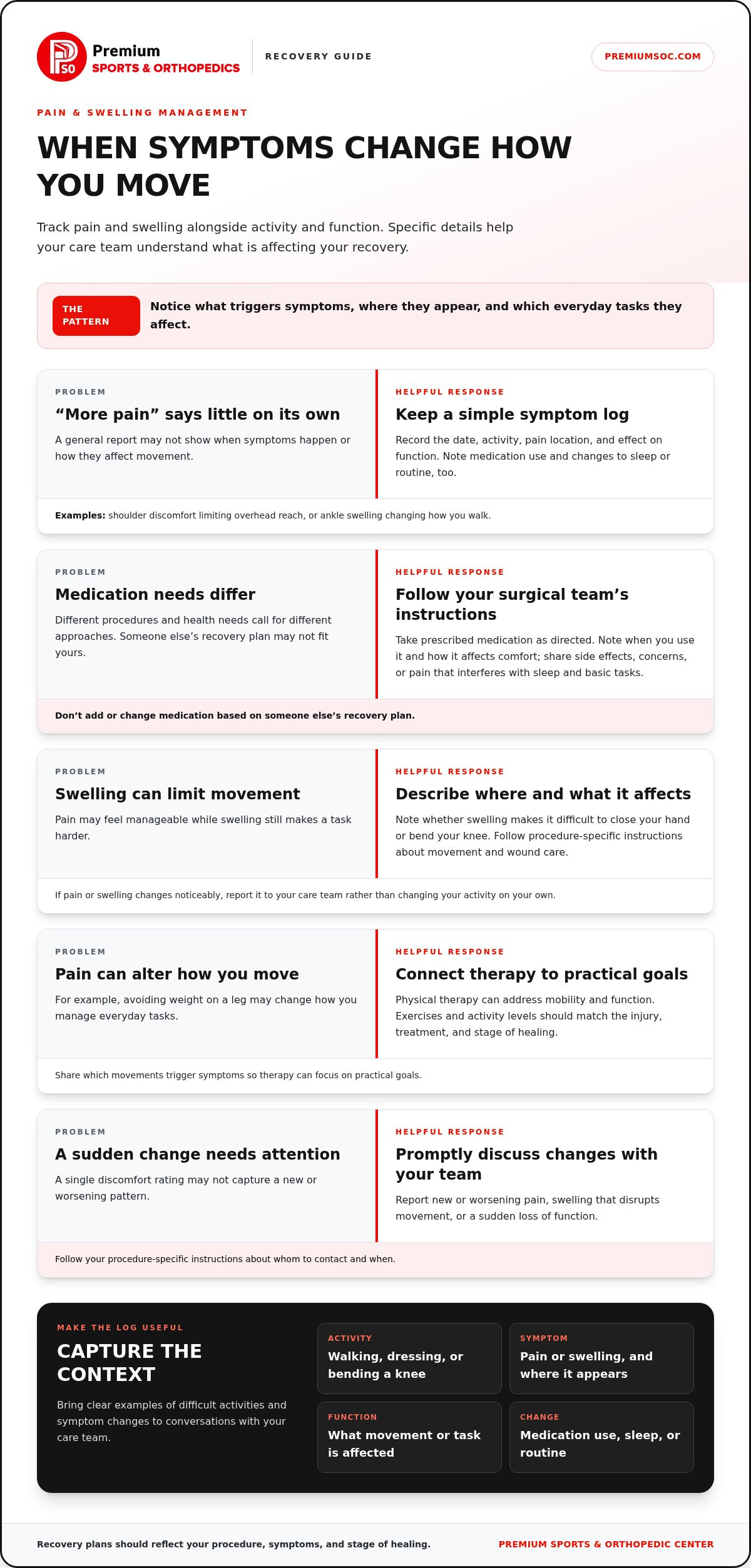
Pain and swelling can affect how comfortably you move after orthopedic treatment. Track both alongside specific activities, such as walking, dressing, or bending a knee. This record can show whether symptoms consistently affect function or occur mainly during particular movements. Share the details with your care team so the plan reflects your experience.
Medication decisions should follow your surgical team’s instructions. Take prescribed medication as directed, and note when you use it and how it affects your comfort. Tell your orthopedic care team about side effects, concerns, or pain that interferes with sleep and basic tasks. Don’t add or change medication based on someone else’s recovery plan. Different procedures and health needs call for different approaches.
Swelling can make a task harder even when pain feels manageable. Note where it appears and whether it limits movement, such as making it difficult to close your hand or bend your knee. Follow your procedure’s instructions, including guidance about movement and wound care. If swelling or pain changes noticeably, report it to your care team rather than changing your activity on your own.
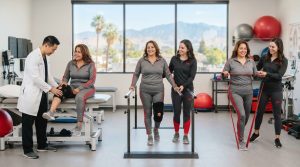
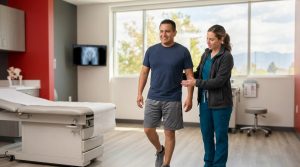
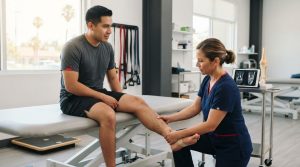
Recovery plans also consider how pain affects movement. For example, someone who avoids putting weight on a leg may move differently during daily tasks. Physical therapy can help address mobility and function as part of orthopedic care. Exercises and activity levels should match the injury, treatment, and stage of healing. Share which movements trigger symptoms so therapy can focus on practical goals.
Keep a simple symptom log with the date, activity, pain location, and effect on function. For example, note whether shoulder discomfort limits reaching overhead or ankle swelling changes how you walk. Specific details make conversations with your care team more useful than a general report of “more pain.” Include medication use and changes to sleep or routine to describe your recovery experience.
Pay attention to changes, not just a single discomfort rating. New or worsening pain, swelling that disrupts movement, or a sudden loss of function deserves prompt discussion with the surgical team. Follow any procedure-specific instructions about whom to contact and when. Clear reporting helps the team assess whether the recovery plan needs attention, instead of leaving patients to interpret symptoms alone.
For ongoing movement limits, physical therapy for orthopedic recovery can be part of a plan focused on restoring function. Bring your symptom notes and examples of difficult activities to the discussion. Those specifics help connect pain management with the physical goals that matter in daily life.
Rehabilitation after tendon and ligament repairs
Rehabilitation after tendon or ligament repair connects protection during healing with the movement and function needed for daily life. The plan depends on the repaired structure, the operation, and the activities you want to resume. ACL reconstruction and rotator cuff repair involve different joints and movement demands, so their rehabilitation plans aren’t interchangeable.
Start with instructions for your specific procedure. Clarify which movements to limit, how to manage prescribed supports, and when physical therapy begins. These details guide safe activity as the repaired area heals. Using an injured limb too early can cause further damage, another break, or misalignment, so follow the recovery guidance for your injury.
Physical therapy can address practical goals in stages. Early work may focus on movements and daily tasks allowed by the treatment plan. Later goals may include building strength, improving coordination, and preparing for activities such as reaching overhead or changing direction in sports. The sequence and pace should reflect the repaired tissue and your progress, not another patient’s experience.
Bring specific examples to therapy sessions. If a shoulder repair makes dressing difficult, describe which movement causes trouble. If a knee repair affects stairs, explain whether the challenge occurs while climbing, descending, or both. These details connect exercises with real-life function. Tell your therapist about symptom changes or difficulty completing an activity, and follow guidance before increasing effort.
Progress doesn’t mean testing the repair through unsupervised activity. Returning to lifting, running, or sport should align with the treatment plan and your demonstrated function. For example, someone hoping to return to court sports needs goals that address the movements involved, not simply comfort at rest. Discuss each activity before adding it back to your routine.
Useful questions for the orthopedic surgeon and therapist include:
- Which movements should I protect during this stage?
- What daily task should I work toward next?
- How should I respond if an exercise changes my symptoms?
- What functional goals guide progression toward work or sports?
Keep answers and exercise instructions together, and bring them to follow-up appointments. A consistent plan helps your care team coordinate rehabilitation around the same goals. Joint tissue repair therapy and physical therapy address different parts of orthopedic care; your treatment plan should clarify how each applies to your recovery needs.
Orthopedic surgeons may perform fracture fixation. Displaced or unstable fractures, complete ligament tears, mechanically unstable joints, and symptoms that persist after non-surgical treatment may prompt consideration of surgery.
Individualized treatment plans and recovery timelines
Age, the treatment, the injury, and existing health conditions all shape orthopedic recovery. Symptoms, the affected body part, and the function you need to regain also guide the plan. A timeline should reflect these factors rather than apply one schedule to every patient.
Start by describing how the problem began and what has changed. An accident, sports injury, or gradually increasing joint pain can lead to different treatment needs. Explain which movements trigger symptoms, which daily tasks have become harder, and whether pain or stiffness is changing. These details connect the treatment plan to your goals.
The procedure matters because different operations address different structures. ACL reconstruction, rotator cuff repair, and fracture fixation each involve distinct recovery demands. Minimally invasive methods may mean a shorter overall recovery, but the injury and healing progress remain important factors. Ask how the planned procedure affects movement limits, rehabilitation, and the activities you want to resume.
Age is part of the picture, not the whole plan. Orthopedic care serves patients from birth through old age, and recovery planning should account for individual function and treatment needs. Health conditions and current symptoms also matter. Share relevant medical history and explain how the injury affects work, sleep, mobility, or exercise.
For fractures, protecting the injured limb is especially important. Premium Sports & Orthopedic Center advises patients to work closely with a fracture specialist during recovery. Using an injured limb too early can cause further damage, another break, or misalignment. Follow the activity guidance provided for your fracture and bring new limitations or concerns into follow-up discussions.
Make the recovery plan practical by turning broad goals into clear steps. If you want to return to work, identify the tasks involved, such as standing, lifting, or reaching. If you hope to resume sports, describe the movements your activity requires. Then discuss how treatment and rehabilitation address those demands and which signs of progress matter.
At follow-up visits, report changes instead of relying on memory. Note whether symptoms have improved, stayed the same, or become more limiting during specific activities. Bring questions about your next activity level and any movement restrictions. This information helps your care team assess progress and adapt the plan to your treatment and function.
An orthopedic recovery timeline in Fresno should reflect the injury and the activities you hope to resume. Another patient with the same procedure may have different work demands, symptoms, or health considerations. The timeline is most useful when it connects your personal factors with treatment, follow-up, and practical goals for daily life.
What orthopedic surgeries and injuries have recovery timelines relevant to Fresno patients?
Orthopedic recovery depends on the condition and procedure. ACL reconstruction, rotator cuff repair, and fracture fixation address different injuries and functions. Recovery time after orthopedic surgery varies, so ask your orthopedic care team about the expected period for your specific procedure. That discussion can connect the treatment with your work, daily activities, and return-to-sport goals.
Some operations aim to restore a joint, repair a severe fracture, or replace a damaged disc. The affected structure helps determine what recovery involves. For example, a joint procedure focuses on restoring useful movement, while fracture repair must protect the injured bone as it heals. A damaged disc may call for a different recovery plan.
ACL reconstruction and rotator cuff repair are examples of procedures with distinct rehabilitation needs. An ACL injury affects the knee, while a rotator cuff injury affects the shoulder. The demands of walking, reaching, lifting, and sports differ across those areas. Your plan should account for the activity you want to regain and the movements your procedure needs to protect.
Fractures vary, too. A suspected fracture should be examined as soon as possible to assess bone damage and help prevent further injury. Some fractures may be treated with closed reduction, a nonsurgical procedure in which an orthopedist manipulates broken bones back into position for healing. Displaced or unstable fractures may warrant consideration of an orthopedic surgeon.
Not every orthopedic injury requires surgery. Osteoarthritis, scoliosis, herniated discs, compressed vertebrae, torn ligaments, and deformities can prompt an orthopedic consultation. Tendonitis, bursitis, mild-to-moderate ligament sprains, muscle strains, sacroiliac joint pain, and certain nerve pain conditions may be managed without an operation. Treatment can include physical therapy, prescription medication, or joint injections.
Use these examples to organize a discussion about your injury and next steps:
- Knee: Ask how ACL reconstruction relates to movement, strength, and sports goals.
- Shoulder: Discuss how rotator cuff repair affects reaching and lifting during recovery.
- Bone: Clarify how fracture stability shapes treatment and protection of the injured limb.
- Back: Describe symptoms linked to a herniated disc or compressed vertebra.
Minimally invasive methods may mean a shorter overall recovery after orthopedic surgery, but the procedure depends on the injury and treatment needs. Bring a clear account of your symptoms and activity limits to your evaluation. Ask what recovery involves for the proposed procedure, which activities need protection, and how follow-up will guide progress.
Premium Sports & Orthopedic Center: Knee Pain
Premium Sports & Orthopedic Center provides orthopedic care and sports medicine consultations for people managing knee pain or recovering from an injury. Consider an evaluation if discomfort, stiffness, or limited movement affects walking, work, exercise, or daily activities. Sharing what triggers symptoms and which movements have become difficult can help focus the discussion on your needs and next steps.
Recovery planning should reflect the injury, treatment, and function you hope to regain. Returning to recreational sports, for example, may require different goals than climbing stairs comfortably or completing a workday. Sports medicine consultations address injury-related concerns, while orthopedic care supports the evaluation of musculoskeletal problems.
For support with an orthopedic concern, contact Premium Sports & Orthopedic Center or visit premiumsoc.com.
Take the Next Step Toward Moving Forward
Start with one clear goal: identify the movement or activity you most want to regain. This gives recovery conversations a practical focus and helps you explain what matters in everyday life. Your orthopedic recovery timeline in Fresno is personal, and your priorities can help shape a meaningful path forward.
Persistent knee, back, or leg pain can make everyday routines harder. Premium Sports & Orthopedic Center provides orthopedic care for these concerns. Bring a concise account of what feels difficult, what you hope to do more comfortably, and how symptoms affect your day. This conversation can help you explore an appropriate next step.
When you’re ready to discuss your orthopedic concerns, contact Premium Sports & Orthopedic Center. Keep your goals in view as you move forward, and take recovery one purposeful step at a time.
Frequently Asked Questions
How long does recovery take after common orthopedic surgeries such as knee replacement, hip replacement, and rotator cuff repair?
Recovery after knee replacement, hip replacement, or rotator cuff repair depends on the procedure and the function being restored. These procedures affect different joints and daily movements, so one timeline doesn’t fit all. Ask your orthopedic care team to relate recovery expectations to your procedure, health, and goals, such as walking comfortably, reaching overhead, or returning to work. Physical therapy and activity restrictions also shape the plan.
What are typical recovery timelines for orthopedic injuries such as fractures, sprains, and ACL tears?
Recovery varies with the injury’s severity, the treatment, and progress toward restoring function. Fracture recovery depends partly on whether the bone is displaced or unstable. Mild-to-moderate ligament sprains may be managed without surgery, while ACL reconstruction involves a surgical rehabilitation plan. For a useful estimate, discuss the specific injury, treatment, and activity goals with an orthopedic professional rather than applying one schedule to every fracture, sprain, or ACL tear.
What milestones and activity restrictions should patients expect during orthopedic recovery?
Milestones should reflect the procedure and the activities you need to resume. A plan may address safe movement at home, progress with daily tasks, and readiness for work or sports. Restrictions can protect a healing joint, tendon, ligament, or bone. Record tasks that remain difficult, such as getting dressed or using stairs, and discuss them at follow-up before advancing activity.
What steps should Fresno patients take to plan orthopedic surgery, home care, and follow-up visits?
Start by clarifying the procedure, activity restrictions, rehabilitation plan, and follow-up arrangements. Before surgery, prepare your home for the movements recovery may require, such as clearing walking paths or arranging help with meals. In California, patients can schedule physical therapy without a doctor’s referral, though some insurance plans require one for coverage. Include your plan’s requirements when scheduling and preparing for care.