 16 Oct 2026
What determines a safe return-to-sport date: the calendar or how your bone is healing? If you’re eager to keep your fitness, team position, or training goal on track, uncertainty about what activity is safe can make a stress fracture especially frustrating. Stress fracture recovery for athletes depends on factors such as the fracture’s location and severity, so another athlete’s timeline may not fit yours.
Recovery is easier to navigate when you break it into stages. This guide explains what can shape bone healing, why rest and activity modification matter, and how to discuss fitness options without adding stress to the injury. You’ll also learn how to approach a gradual return to impact and sport-specific movement based on healing and function, rather than a date alone. A sports medicine consultation can help you discuss your injury and goals, while physical therapy can support guided rehabilitation as you work toward an active return with your care team.
Key Takeaways
- Stress fracture recovery for athletes varies with injury location, severity, symptoms, and overall health. A generic timeline may not fit your situation.
- Less pain doesn’t necessarily mean your bone is ready for full-impact sport.
- Activity modification, clinician-directed support, and rehabilitation serve different roles in recovery.
- A gradual return can progress from daily activity toward sport-specific movement as your care plan allows.
- Sports medicine consultations and physical therapy can help you discuss recovery goals and functional progress in Fresno.
Stress Fracture Recovery for Athletes: Recognize the Injury and Protect the Bone
A stress fracture develops when repeated loading causes small areas of bone damage faster than the body can repair them. Unlike a traumatic fracture caused by a sudden impact or force, this overuse injury builds over time. An athlete may still be able to move or train at first, even as pain in one specific area becomes more noticeable.
A stress fracture is bone damage from repeated stress, not a break caused by one sudden event. It can affect the tibia, the long bone in the lower leg, as well as the metatarsals and other foot bones. Location matters because different bones handle weight and impact differently. The overview of stress fractures also describes common causes, symptoms, and injury sites.
Notice how pain responds to loading. Repeating a painful run, jump, or practice can continue stressing the affected area and may worsen the injury or prolong recovery. Don’t treat pain that eases during warm-up as proof that the bone is ready for impact. Stop the activity that brings on focal pain and seek clinical guidance about what movement is appropriate while the injury is assessed.
Which symptoms should athletes take seriously?
Stress-fracture pain is often localized. It may start during activity, become more noticeable as training continues, and ease with rest. Tenderness when pressing a specific spot or mild swelling can also occur, but neither sign confirms a fracture. If pain keeps returning in the same area, worsens with impact, or begins to interfere with ordinary movement, pause training and arrange a professional assessment before resuming.
Why does early assessment matter?
Bone, tendon, and soft-tissue injuries can cause similar pain, so symptoms alone can’t reliably identify the cause. A clinician can review your symptoms and activity history, examine the area, and decide whether imaging is appropriate and which type to use. An early X-ray may not show every stress injury. If concern remains, the clinician may consider other imaging, such as MRI.
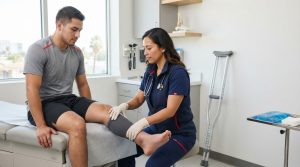
For athletes, assessment can turn uncertainty into a more informed next step. Be ready to describe where the pain occurs, which movements trigger it, when it began, and how it changes after activity. Avoid repeatedly testing the painful spot with a run or jump while waiting for guidance. A sports medicine consultation can help you discuss the injury and recovery goals with a care team, so training decisions take your symptoms and clinical evaluation into account. This is a practical first step in stress fracture recovery for athletes, especially when a goal or team schedule makes it tempting to push through pain.
What Shapes Stress Fracture Healing and Recovery Time?
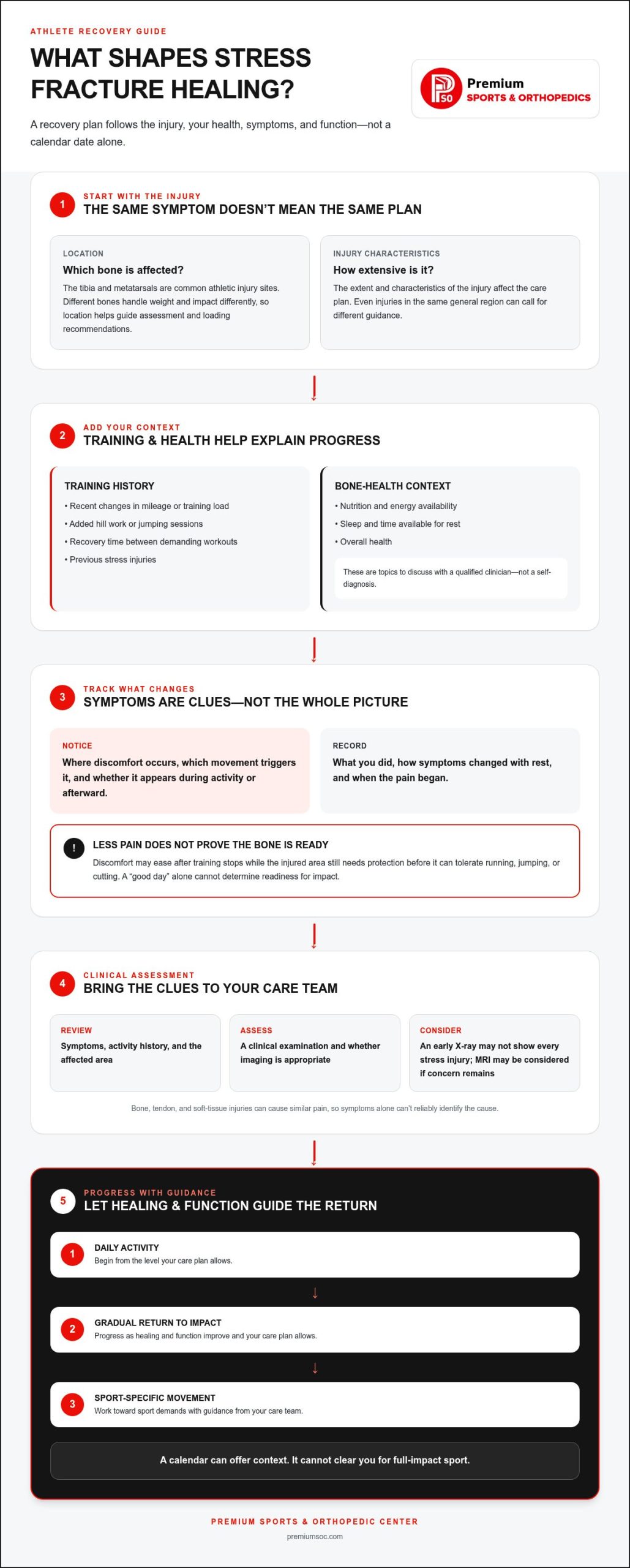
No single recovery timeline fits every stress fracture. The bone involved, the extent of the injury, your symptoms, and your overall health all help shape the plan. Two athletes with similar pain may need different guidance if their injuries affect different bones or respond differently to reduced activity. A calendar estimate can offer context, but it can’t determine whether you’re ready to resume impact.
Symptoms are one part of the picture, not a complete measure of bone healing. Pain may ease after you stop training, while the injured area still needs protection before it can tolerate running, jumping, or cutting. A clinician considers the injury and your progress together. Reduced discomfort alone does not automatically mean you’re cleared for full training. In stress fracture recovery for athletes, decisions are most useful when they reflect both bone-specific factors and how you’re functioning.
Why fracture location changes the recovery plan
The tibia and metatarsals are common athletic injury sites, but they don’t all carry the same healing considerations. Clinicians look at the specific bone and the injury’s characteristics to guide care. For example, pain along the tibia and pain in a metatarsal may call for different assessments and loading recommendations. Even injuries in the same general region can vary, so location is a reason to individualize the plan, not assume a standard schedule.
How health and training factors affect progress
Your recent training pattern helps put the injury in context. A sudden increase in mileage, added hill work, more jumping sessions, or too little recovery between demanding workouts may inform the clinician’s recommendations. Previous stress injuries are also relevant. Share what changed and when symptoms began, not just how many days you’ve rested.
Recovery also involves conditions that support bone health. Nutrition, sleep, and time available for rest are useful topics to discuss with a clinician. Low energy availability, when the body doesn’t receive enough energy to support both daily needs and training, may be relevant to bone health and injury risk. This isn’t a diagnosis athletes should make on their own. A qualified clinician can help decide whether it belongs in an individual assessment and what support may be appropriate.
Keep a simple record of symptoms and activity: what you did, whether discomfort appeared during or afterward, and how it changed with rest. This gives your care team more context than a single “good day” or “bad day.” At a sports medicine consultation, you can discuss how injury location, training history, and recovery goals inform next steps. Physical therapy may later support a guided progression as function improves. Fresno athletes can explore sports medicine consultations to discuss assessment and recovery goals with a care team.
Stress Fracture Treatment Options: Rest, Protected Activity, and Rehabilitation
Stress-fracture care balances two goals: protecting the injured bone and preserving as much safe function as possible. The right approach depends on the specific injury and clinical assessment, so a plan that works for one athlete may not suit another. Rest and activity modification are central. This usually means reducing or pausing the repetitive impact that stresses the bone, according to the care team’s instructions.
Bone protection sets the boundaries; approved conditioning works within them. Maintaining fitness is a reasonable goal, but it shouldn’t aggravate the injury. Before adding exercise, discuss your sport, training priorities, and safe options with your clinician. A sports medicine consultation can help you understand how assessment findings shape those decisions.
When may protected weight-bearing or support be considered?
Depending on the injury’s location, pain, and assessment findings, a clinician may recommend limiting weight-bearing or using support such as a boot or crutches. These options aren’t necessary or appropriate for every stress fracture, and using a device doesn’t determine when activity can increase. Follow your individual instructions for standing, walking, and daily movement. If a prescribed activity brings on pain, tell your care team rather than changing the plan on your own.
Activity modification involves more than swapping a run for another workout. It may mean changing the movements, duration, or load that triggers symptoms while keeping necessary bone protection in place. An exercise that feels easier at first isn’t automatically safe. Your care team can help distinguish acceptable movement from loading that conflicts with the recovery plan.
How can athletes maintain fitness without risking recovery?
Ask your treating clinician whether any low-impact options fit your injury and current restrictions. Cross-training may help maintain some conditioning, but the right choice depends on the affected bone, your symptoms, and the care plan. An exercise that avoids running can still involve force or movement that irritates the injured area. Stop and seek guidance if an approved activity causes symptoms or changes how you move.
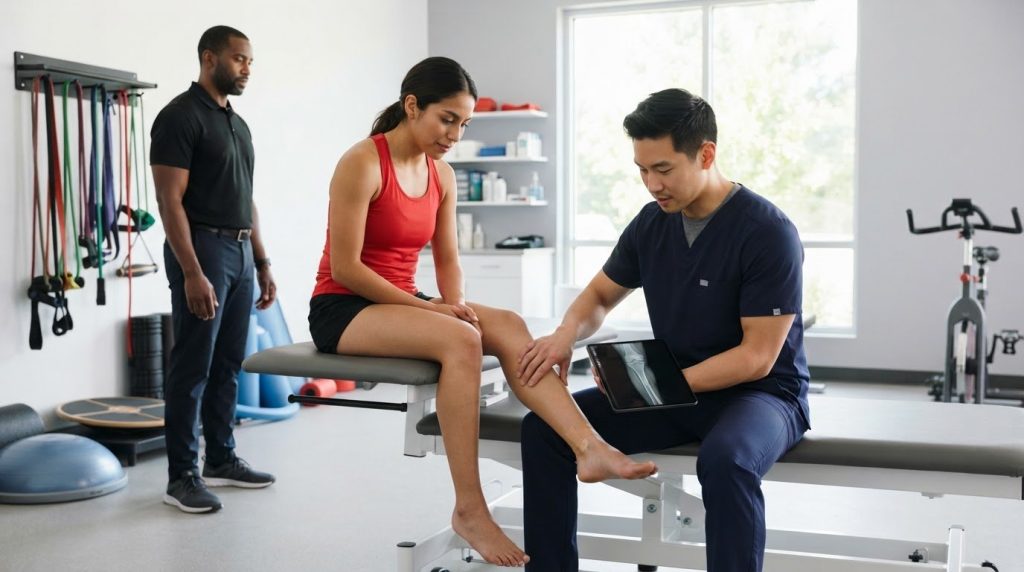
When your care team considers it appropriate, rehabilitation can support a gradual return to strength, movement, and sport-related function. Physical therapy provides guided rehabilitation, with activities tailored to your progress rather than a generic workout schedule. Share your conditioning goals, upcoming team commitments, and any changes in symptoms. That keeps performance needs in the conversation while the bone remains the priority.
For stress fracture recovery for athletes, patience doesn’t mean abandoning fitness goals. It means choosing activity that fits the current stage of care and adjusting as clinical guidance changes. In Fresno, physical therapy for athletes can support individualized rehabilitation and functional progress as part of a care plan.
How to Return to Sport After a Stress Fracture
Returning to sport is a progression, not a date circled on the calendar. Your care team can guide each step using the injury’s location, your symptoms, functional readiness, and clinical findings. Comfortable daily movement is encouraging, but it doesn’t prove by itself that the bone is ready for running, jumping, or competition. Let your care plan set the pace, even if your training schedule is pressing.
One general benchmark is to wait until daily activities have been pain-free for at least 10 to 14 days before starting a gradual return to impact. Treat this as a general consideration, not individual clearance. Your clinician may adjust the timing based on your injury and progress, and a pain-free stretch alone doesn’t override your specific care instructions.
What should athletes be able to do before progressing?
Your clinician may consider how you manage everyday walking, whether symptoms have settled, and how your function compares with the demands of your sport. They may also review relevant assessment findings before recommending more impact. No single hop, jog, or strength test provides universal clearance. Be candid about discomfort during activity and later that day, since symptoms can change after a session ends.
How should training intensity build back up?
With your care team’s approval, progression may move through stages such as:
- Comfortable everyday walking within your current care instructions.
- Planned, low-impact or introductory activity if approved for your injury.
- Gradual exposure to impact, followed by sport-specific drills.
- Full training and competition as your care plan permits.
This sequence is a framework, not a self-directed prescription. Your clinician or rehabilitation team can tailor the steps to your sport and function. Where the plan allows, increase one training demand at a time, such as duration before speed, or controlled drills before full practice. Changing several variables together can make it harder to understand how your body is responding.
If focal pain returns during or after a session, stop the provoking activity, record what happened, and report it to your care team. Don’t push through or repeat the same workout to test the bone. Recurring symptoms or stalled progress are reasons to reassess the plan before advancing.
Keep a brief training and symptom log: activity type, duration, intensity, when discomfort appeared, and how you felt afterward or the next day. These details help your care team make clearer decisions than memory alone. For stress fracture recovery for athletes, guided progression can connect healing with the practical demands of sport. Schedule a sports medicine consultation to discuss your assessment and return-to-sport goals with the care team.
Get Athlete-Focused Stress Fracture Recovery Support in Fresno
A stress fracture can leave athletes weighing two concerns: protecting the bone and staying connected to the sport they’ve worked toward. A sports medicine consultation is a place to discuss the injury, your training demands, and your recovery priorities. At Premium Sports & Orthopedic Center, Dr. Green and a team of licensed medical practitioners provide sports medicine consultations and physical therapy for athletes and residents in the Fresno area.
Bring details that help tell the full story: where symptoms occur, when they began, what movements affect them, any recent training changes, and how the injury affects daily activity or sport. Share your goals and concerns too, such as maintaining conditioning or planning around a season. A clinician can discuss assessment findings, relevant next steps, and an individualized approach, with progress reviewed as your needs change. Explore sports medicine care in Fresno or learn about sports medicine consultations in Clovis.
What to discuss during a sports medicine consultation
Think of the consultation as a shared conversation, not a test you need to pass. Be straightforward about activities that bring on discomfort, previous injuries, and questions about safe movement or returning to training. The clinician can use this context alongside the assessment to discuss recovery goals and possible next steps. Ask how progress will be reviewed and what changes should prompt follow-up, so you understand how the plan may adapt.
How rehabilitation can support an active return
As your care team determines what’s appropriate, physical therapy can provide guided support for rebuilding function and activity tolerance. Rehabilitation may address movement and sport-related demands progressively, with the pace reflecting clinical recommendations and your response. The aim is to help you work toward the activities that matter without treating a preset schedule as a guarantee of readiness.
Use appointments to report how daily activities and rehabilitation sessions feel, including symptoms that appear later rather than during exercise. That feedback can help the care team decide whether to continue, adjust, or reassess the next step. Your goals belong in the process, alongside the clinician’s assessment and your functional progress. This partnership can make stress fracture recovery for athletes more individualized and easier to navigate.
If you’re ready to discuss your injury, recovery goals, or rehabilitation needs, explore sports medicine and rehabilitation support at Premium Sports & Orthopedic Center. A focused conversation can help you identify a clear next step toward returning to active life.
Take Your Next Step Toward a Confident Return
Your return to sport doesn’t need to follow someone else’s timeline. Make your next step a clear conversation about what matters to you, what your recovery currently allows, and how progress can be reviewed along the way. A shared plan can help you focus on long-term function while working toward the activities you value.
For stress fracture recovery for athletes, individualized guidance can make the path back feel more manageable. Premium Sports & Orthopedic Center supports Fresno athletes and residents through sports medicine consultations and physical therapy, with care led by Dr. Green and a team of licensed medical practitioners. Discuss your goals and rehabilitation needs with the team.
Explore sports medicine care and take your next recovery step. Keep moving forward with patience, support, and a plan built around your progress.
Frequently Asked Questions
How long does stress fracture recovery take for athletes?
There isn’t one timeline that predicts when every athlete will be ready to train. Stress fracture recovery for athletes depends on the specific injury and the clinician’s assessment. Ask which signs or milestones will guide your next step rather than focusing only on a target date. If pain returns as you increase activity, pause that activity and tell your care team what changed.
Can I exercise with a stress fracture?
Possibly, but only if the activity fits your injury and your clinician’s instructions. Don’t assume cycling, swimming, or another workout is safe just because it avoids running; movement and loading can still affect your recovery plan. Describe the exercise you want to do, including its intensity and duration, and discuss whether it’s appropriate. If symptoms appear or worsen, stop and tell your care team.
What happens if I keep running with a suspected stress fracture?
Running through localized bone pain can aggravate an injury, so pain tolerance isn’t a reliable sign that training is safe. Pause impact activity and arrange a clinical assessment, particularly if the pain persists, worsens, or begins affecting everyday movement. Until you’ve received guidance, avoid testing the area with another run. Note what activity brings on the pain and how it changes afterward to help explain your symptoms.
How do doctors diagnose a stress fracture?
A clinician assesses your symptoms, activity history, and examination findings, then decides whether imaging is appropriate. An early X-ray may not show every stress injury, so a normal result may not answer every question about persistent symptoms. Follow the clinician’s advice about further evaluation and managing activity while awaiting it. For your appointment, note where discomfort occurs and which movements bring it on.
Do athletes need a walking boot for a stress fracture?
No, a boot isn’t needed for every stress fracture. A clinician may consider support or protected weight-bearing based on the injury’s location, symptoms, and assessment. If you’re given a device, follow the specific directions for using it and placing weight on the affected area. Don’t borrow equipment or copy a teammate’s plan; a similar-looking injury may require different guidance.
When can I return to sport after a stress fracture?
Return when your care team considers your recovery and function ready for progression, not simply because a certain number of weeks has passed. Your plan may move from ordinary daily activity toward sport-specific training in stages. Track how you feel during activity and afterward, and report recurring pain before increasing demands. If practice or competition is approaching, discuss those dates with your clinician so your goals can inform the plan without replacing it.
Can physical therapy help with stress fracture recovery?
Physical therapy may support individualized rehabilitation as you work toward function and greater activity tolerance. The exercises and timing should follow clinical guidance and shouldn’t replace instructions for protecting the bone. Tell your physical therapist what your sport requires, what training you hope to resume, and whether symptoms return during or after activity. Fresno athletes can discuss rehabilitation goals as part of a broader sports medicine and recovery plan.