
 0Comments
 18 Sep 2026
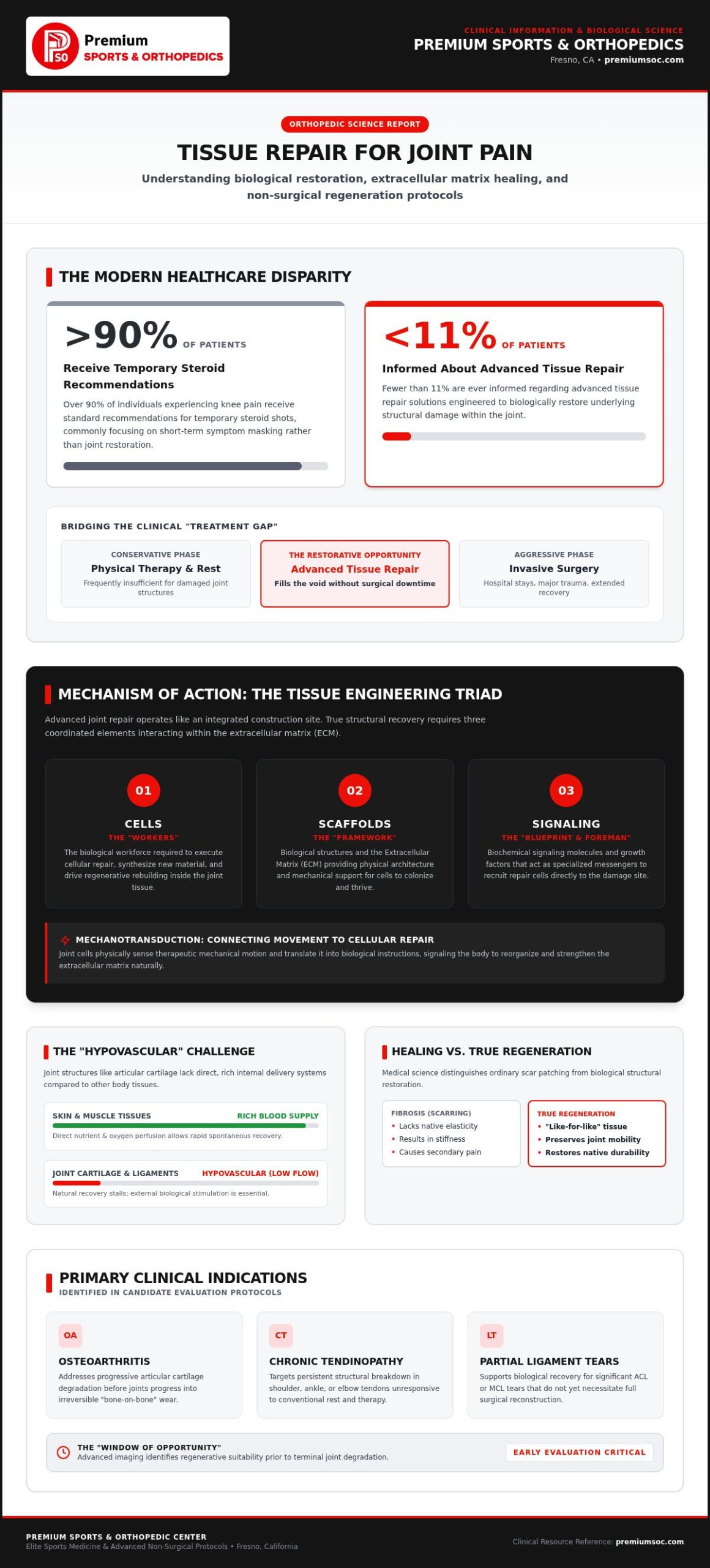
Did you know that while over 90% of patients with knee pain receive recommendations for temporary steroid shots, fewer than 11% are ever told about advanced tissue repair for joint pain that could actually help restore their underlying damage? It is a startling gap in modern healthcare that often leaves active individuals feeling like they are just managing a decline rather than seeking a cure.
It is frustrating to feel like your only choices are masking the discomfort with pills or facing a major surgical recovery that keeps you off the hiking trails for months. You have likely felt the sting of missing a Saturday morning game or a local tennis match because your knee or shoulder simply won’t cooperate. It is common to worry that surgery is the only “real” fix, yet the thought of a long, painful hospital stay is equally daunting. At Premium Sports & Orthopedics, we believe you deserve a path that prioritizes both your long-term health and your immediate quality of life.
This guide will show you how modern, non-surgical therapies can bridge that gap by leveraging your body’s own healing potential to restore mobility and reduce pain. We will dive deep into how these advanced clinical solutions work, from ultrasound-guided precision to the specific biological triggers that spark recovery. You will gain a clear roadmap for returning to the sports and hobbies you love without the invasive downtime you fear.
Key Takeaways
- Learn how the biological restoration of cartilage and ligaments provides a sustainable path for tissue repair for joint pain without the need for invasive procedures.
- Discover the “Tissue Engineering Triad” and how biological scaffolds create the necessary environment for your body to naturally rebuild damaged structures.
- Explore the “Treatment Gap” and why advanced repair therapies are often the ideal solution when physical therapy isn’t enough but surgery is too aggressive.
- Understand the critical “window of opportunity” for early intervention and how advanced imaging helps determine if you are a candidate for regenerative care.
- See how Premium Sports & Orthopedic Center in Fresno combines elite sports medicine expertise with personalized protocols to return you to your active lifestyle.
What is Tissue Repair for Joint Pain? Understanding the Biological Process
Your joints are marvels of biological engineering, but they aren’t invincible. When we talk about tissue repair for joint pain, we are referring to the active restoration of damaged cartilage, tendons, and ligaments. It’s a shift away from simply managing discomfort and toward rebuilding the structural integrity of the joint itself. This process relies heavily on the health of the extracellular matrix (ECM), a complex structural network that provides the physical support and biochemical signals necessary for your cells to thrive.
Healthy joints maintain a delicate balance between tissue breakdown and repair. However, the body’s natural healing process often slows down in joints because these areas have notoriously low blood flow. Unlike skin or muscle, which receive a rich supply of nutrients and oxygen from nearby vessels, joint tissues like cartilage are often “hypovascular.” This means that once an injury occurs, your body lacks the internal delivery system needed to spark a robust recovery on its own. Orthopedic tissue repair is a medical intervention designed to stimulate the body’s innate regenerative capabilities.
The Difference Between Healing and Regeneration
It’s important to understand that not all healing is created equal. When the body sustains an injury, it typically rushes to fill the gap with scar tissue, a process known as fibrosis. While scar tissue is better than an open wound, it lacks the elasticity and strength of the original material. In a joint, this leads to stiffness, reduced range of motion, and secondary pain as surrounding structures overcompensate. Modern articular cartilage repair procedures aim for true regeneration rather than just a quick patch. The goal is to restore “like-for-like” tissue properties, ensuring the new growth matches the durability and function of your native joint anatomy.
Common Joint Conditions That Benefit from Advanced Repair
Many patients find that advanced repair protocols offer a solution when traditional methods haven’t provided lasting relief. These therapies are particularly effective for several common orthopedic challenges:
- Osteoarthritis: Addressing the steady degradation of articular cartilage before it reaches a “bone-on-bone” state.
- Chronic Tendinopathy: Helping the shoulder, ankle, or elbow recover from persistent wear that hasn’t responded to rest.
- Partial Ligament Tears: Supporting the repair of ACL or MCL injuries that are significant but don’t yet require full surgical reconstruction.
By focusing on the biological root of the problem, we help you move past the limitations of an injury and toward a lifestyle defined by movement and vitality.
Mechanisms of Action: How Advanced Joint Repair Therapy Works
Understanding how your body rebuilds itself is the first step toward confidence in your recovery. Advanced tissue repair for joint pain relies on what experts call the “Tissue Engineering Triad”: cells, scaffolds, and signaling molecules. Think of it as a sophisticated construction site. You need the workers (cells), the structural framework (scaffolds), and the blueprint or foreman (signaling molecules) to ensure the repair is durable. Tissue repair for joint pain is not just about a single injection; it’s about creating a thriving ecosystem where your body can heal itself.
A critical but often overlooked part of this process is mechanotransduction. This is the way your cells sense physical movement and translate it into biological signals. When you engage in controlled, therapeutic exercise, you are literally telling your body to strengthen and reorganize the extracellular matrix. Growth factors act as biological messengers to recruit repair cells to the site of injury. This coordinated effort ensures that the new tissue is functional and resilient rather than just a temporary patch.
Biological Signaling and Growth Factors
Successful recovery starts with changing the “conversation” inside your joint. Chronic pain often stems from a persistent pro-inflammatory state where the body is stuck in a cycle of breakdown. Advanced therapy introduces concentrated biological signals to reset this environment. By reducing chronic inflammation, we clear the path for a pro-healing environment where repair can actually take place. This transition is essential for patients exploring cartilage restoration techniques to address long-term wear. Research indicates that between 60% and 75% of patients with mild-to-moderate knee osteoarthritis who receive targeted biological therapies successfully postpone or avoid major surgery for two to five years.
Scaffolding and Structural Augmentation
While cells do the building, they need a place to live while they work. Biological scaffolds provide a temporary home for new cells to grow. In non-surgical settings, these materials often take the form of injectable matrices or high-viscosity substances like hyaluronic acid. These materials offer immediate structural support and lubrication, mimicking the natural properties of your joint fluid. As your body replaces these scaffolds with natural, healthy tissue, the materials are safely absorbed. This bridge between injury and restoration is a hallmark of the care we provide at Premium Sports & Orthopedic Center. If you’re curious about how these mechanisms apply to your specific injury, a sports medicine consultation can provide the clarity you need.
Comparing Repair Modalities: Non-Surgical vs. Traditional Orthopedic Surgery
Many patients find themselves trapped in a “treatment gap.” This occurs when basic conservative measures like rest or physical therapy no longer provide relief, yet the condition isn’t severe enough to justify a total joint replacement. Traditional orthopedic surgery, while effective for end-stage joint disease, is an aggressive intervention. It often involves long rehabilitation periods and the risk of developing arthrofibrosis, or internal scar tissue, which can permanently limit your range of motion. Modern tissue repair for joint pain offers a different path by focusing on biological restoration rather than mechanical replacement.
Choosing tissue repair for joint pain allows you to address structural damage while preserving your natural anatomy. Data shows that between 60% and 75% of patients with mild-to-moderate knee osteoarthritis who receive targeted biological therapies successfully avoid joint replacement for two to five years. For those seeking knee pain relief without surgery, these advanced modalities provide a middle ground that targets the source of pain without the systemic stress of a hospital stay. Unlike total joint replacements that have a 15-year survival rate of approximately 90%, biological repairs aim to keep your original joint functional and intact.
Non-Invasive and Minimally Invasive Regenerative Options
We’ve seen a significant rise in outpatient orthopedic care across Fresno and Clovis. Modern delivery systems use high-resolution ultrasound to guide needle-based treatments directly to the site of injury. This is a sharp contrast to large surgical incisions that require stitches and weeks of immobilization. Most patients undergoing non-surgical tissue repair can return to light daily activities within days, rather than the months often required for surgical recovery. It’s a faster, more efficient way to get back to the lifestyle you love.
Surgical Augmentation: When Repair Needs Extra Support
In some cases, structural damage is too extensive for a needle-based approach alone. However, surgery doesn’t have to be a mechanical-only solution. We often use biological augmentation during necessary procedures like ACL reconstructions or rotator cuff repairs. By integrating articular cartilage restoration procedures into a surgical plan, we can improve the quality of the healing tissue and potentially speed up the recovery timeline. At Premium Sports & Orthopedic Center, our priority is always the least invasive effective option. We believe in providing the most sophisticated care available to ensure you get back to your active lifestyle with confidence.
Is Tissue Repair Right for You? Key Indicators and Evaluation
Identifying the right moment for intervention is as crucial as the therapy itself. Tissue repair for joint pain works best when there is still a biological foundation to build upon. We look for specific indicators during your evaluation to ensure we are setting you up for success. While these treatments are powerful, they aren’t a “one-size-fits-all” solution. Your candidacy depends on the structural state of your joint, your personal goals, and your overall health profile.
Timing matters significantly in regenerative biology. We often talk about a “window of opportunity” for non-surgical repair. Clinical data indicates that success rates for biological tissue therapies drop below 20% to 30% in Kellgren-Lawrence Grade 4 osteoarthritis, which is often described as “bone-on-bone” contact. This is because these therapies require surviving articular chondrocytes to achieve a functional benefit. If you act while your damage is in the mild-to-moderate stage, your body has the raw materials needed to respond to advanced signaling and structural support.
We also consider your lifestyle. Are you a local athlete looking to return to competitive sports, or a resident wanting to enjoy pain-free walks through Woodward Park? While younger patients often have a more robust cellular response, older individuals with healthy lifestyles can still see remarkable improvements. Your metabolic health and activity level play a larger role in your body’s ability to repair itself than your age alone.
Diagnostic Excellence: Beyond the Basic X-Ray
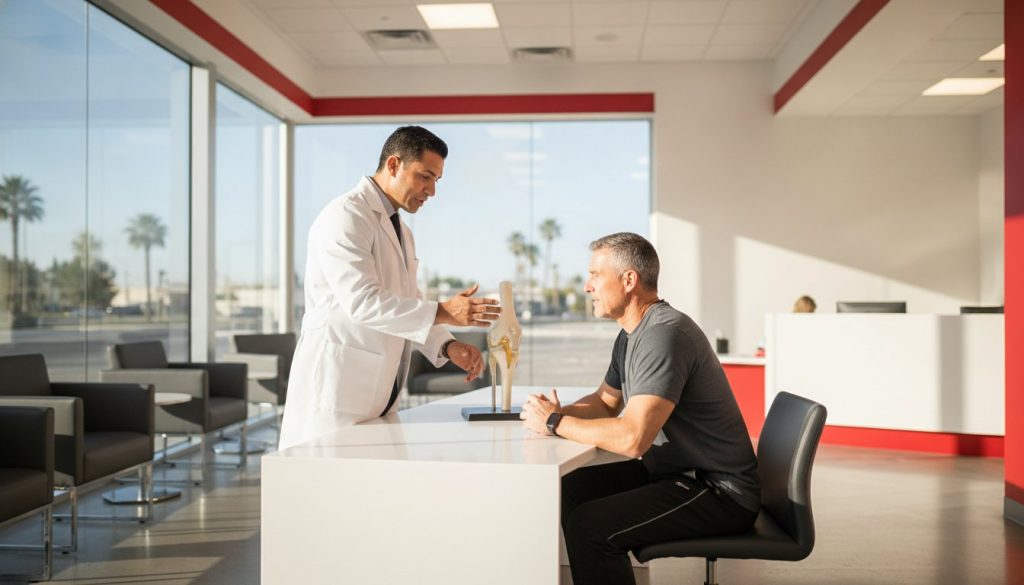
Standard X-rays are excellent for spotting broken bones, but they often miss the soft tissue damage that is the true source of chronic pain. We utilize high-resolution musculoskeletal ultrasound and MRI to see the “invisible” tears in tendons and thinning of cartilage. In our Fresno and Clovis clinics, we pair this imaging with functional movement assessments. We don’t just look at a static picture; we observe how your joint performs under stress to identify the root cause of your discomfort before selecting a repair therapy.
Patient Candidacy Checklist
Determining if you’re a fit for advanced recovery involves a few key criteria. You might be an ideal candidate if you meet the following:
- Persistent Pain: You’ve dealt with joint discomfort for 3 months or longer.
- Failed Conservative Care: Physical therapy, rest, and anti-inflammatories haven’t provided lasting relief.
- Surgical Avoidance: You have a strong desire to avoid the risks of invasive surgery or long-term opioid use.
- Viable Tissue: Imaging confirms you haven’t reached end-stage “bone-on-bone” deformity.
It’s just as important to know when these therapies aren’t the best choice. Active infections or systemic autoimmune conditions may require a different clinical path. If you’re dealing with specific joint issues, consulting a knee injury specialist Clovis can provide a personalized assessment of your candidacy. Ready to see if you qualify? Schedule a consultation today to begin your recovery journey.
Advanced Tissue Repair in Fresno: The Premium Sports & Orthopedic Approach
Premium Sports & Orthopedic Center represents the evolution of advanced care in our community, building on the foundation established when we were formerly known as Green Sports Medicine. Dr. Green and our team of licensed practitioners don’t believe in “one-size-fits-all” orthopedic care. We personalize every protocol for tissue repair for joint pain to match your specific anatomy and lifestyle goals. Whether you are a competitive athlete or a Fresno resident simply wanting to enjoy a pain-free walk, our commitment to non-surgical and outpatient solutions ensures you receive elite care without the stress of a hospital stay.
We bridge the gap between high-level athletic performance and everyday health by integrating sports medicine Fresno expertise into our standard patient care. This “Friendly Expert” model means you get the same sophisticated technology used by professional athletes, delivered with the personal touch of a neighbor. We are your partners in health, focused on restoring your vitality through modern regenerative biology and conservative orthopedic care. We prioritize long-term relationships and the overall quality of life for every individual we serve.
Integrated Physical Therapy and Muscle Recovery
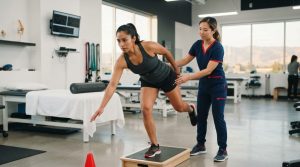
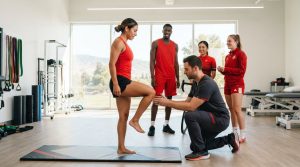
Biological tissue repair for joint pain is only half of the equation for success. For new tissue to become functional and resilient, it must be guided by specialized physical therapy. Our Clovis physical therapy hub focuses on the science of physical loading, ensuring your body knows exactly how to organize new collagen fibers for maximum strength. We pair these programs with muscle recovery treatments to address the secondary weaknesses that often develop alongside chronic joint issues. This holistic approach ensures your entire limb is strong enough to support your restored joint, leading to better long-term wellness and a faster return to your favorite hobbies.
Your Journey to Recovery: What to Expect at Premium SOC
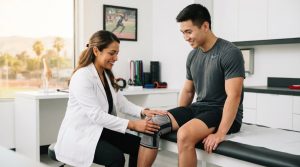
Your path to an active lifestyle begins with a comprehensive consultation where we utilize high-resolution diagnostic tools to map your injury. We don’t just treat symptoms; we track your progress through every functional milestone, from your first pain-free movement to your return to full activity. We adjust your therapy based on your real-world performance, ensuring your recovery is steady and methodical. This creates a narrative of continuous progress and reliable support. If you’re ready to explore a future without chronic pain, schedule your tissue repair consultation at Premium SOC today and take the first step toward reclaiming your mobility.
Reclaim Your Movement and Vitality
Choosing the right path for your joint health is a decision that impacts your quality of life for years to come. You’ve learned that modern tissue repair for joint pain isn’t just about managing symptoms; it’s about utilizing the body’s own biological blueprints to restore function. By focusing on non-surgical solutions that preserve your natural anatomy, you can avoid the risks of invasive procedures while achieving durable results. Whether you’re addressing early-stage wear or chronic injuries, the window for effective intervention is open now.
At Premium Sports & Orthopedic Center, we’re dedicated to providing the Fresno and Clovis communities with world-class care that feels personal. Led by Dr. Green, our team specializes in non-surgical orthopedic care that integrates advanced signaling therapies with precision physical therapy. We’re proud to be your local partner in health, offering convenient locations and a commitment to your long-term success. Restore your mobility with Fresno’s leaders in tissue repair. Book your consultation today. We look forward to helping you get back to the hiking trails, the sports courts, and the daily activities you love with newfound confidence.
Frequently Asked Questions
Is tissue repair for joint pain considered a permanent solution?
Tissue repair for joint pain is designed to provide long-term structural restoration by rebuilding damaged cartilage and ligaments. While no medical procedure can stop the natural aging process, these therapies aim to create functional, resilient tissue that lasts for years. Your results often depend on maintaining a healthy lifestyle and following a specialized physical therapy program. We focus on providing a sustainable alternative to the cycle of temporary pain management.
How long does it take to see results from joint tissue repair therapy?
Most patients begin to notice improvements in comfort and mobility within four to six weeks as inflammation subsides. However, the biological process of rebuilding tissue is steady and methodical. Significant structural repair typically occurs over three to six months as your body organizes new collagen fibers. We track your progress through functional milestones to ensure your recovery stays on schedule and aligns with your personal activity goals.
Can tissue repair therapy help with advanced “bone-on-bone” osteoarthritis?
Advanced “bone-on-bone” osteoarthritis, or Kellgren-Lawrence Grade 4, is generally not the ideal candidate for these therapies. Tissue repair requires a foundation of surviving articular chondrocytes to spark regeneration. Statistics show that success rates drop below 30% once cartilage is completely lost. We use high-resolution ultrasound and MRI to evaluate your joint’s current state and determine if you have enough viable tissue to benefit from non-surgical restoration.
What is the recovery time after a non-surgical tissue repair procedure?
Recovery from a non-surgical procedure is significantly faster than traditional orthopedic surgery. You can typically return to light daily activities and work within 24 to 48 hours. While you won’t need weeks of immobilization, we do implement a protected phase where you avoid high-impact stress for several weeks. This allows the newly introduced biological signals and scaffolds to begin the repair process without being disrupted by excessive force.
Are these advanced joint repair therapies covered by major insurance providers in Fresno?
Most major insurance providers and Medicare currently classify advanced biological tissue repairs as elective or investigational, meaning they are typically not covered. These are usually cash-pay services. However, our team provides a clear breakdown of costs during your consultation so you can make an informed decision. We focus on the long-term value of avoiding invasive surgery and the associated hospital costs, which can often be much higher even with insurance coverage.
What is the difference between tissue repair and a cortisone shot?
A cortisone shot is a powerful anti-inflammatory designed to mask pain temporarily, but it doesn’t fix the underlying structural damage. In fact, repeated steroid injections can actually accelerate cartilage breakdown over time. In contrast, tissue repair for joint pain focuses on biological restoration. It uses signaling molecules and scaffolds to rebuild the joint’s integrity, aiming for a permanent improvement in function rather than a short-term reduction in symptoms.
How many treatments are typically required for chronic joint pain?
Many patients achieve their recovery goals with a single, comprehensive procedure paired with integrated physical therapy. For more complex or chronic conditions, a series of two or three treatments spaced several weeks apart might be recommended to maximize the biological response. We personalize your plan based on the severity of your tissue damage and how your body responds to the initial therapy, ensuring you receive the exact support you need.
Is Dr. Green the specialist who performs these procedures at the Fresno clinic?
Yes, Dr. Green leads our team of licensed medical practitioners at our Fresno and Clovis locations. He personally oversees the diagnostic evaluations and performs the advanced tissue repair procedures using high-resolution ultrasound guidance. Our Friendly Expert model ensures you receive elite-level care from a specialist who is deeply rooted in the local community and committed to your long-term success and the overall quality of life for the people we serve.