 29 Jun 2026
Whether you’re getting ready for the Two Cities Marathon, training for next year’s California Classic Weekend, or joining your friends for a friendly tennis match, sports injuries drag you down.
While hiking in the forest with your friends, you rolled your ankle. You were riding your bike, hit loose gravel, and fell. In the fall, you put out your wrist to catch your fall, causing pain, bruising, and swelling.
For decades, the common treatment plan involved RICE (Rest, Ice, Compression, and Elevation). Times have changed. Whether you’ve sprained your wrist, pulled a calf muscle, or tweaked your back, rest isn’t enough.
Sports medicine is changing. Clinical research is proving that sitting at home with your feet up, ice pack in hand, and over-the-counter NSAIDs aren’t as effective as people think. Rest, especially, is one of the worst things to do when you have a sports injury. Your muscles weaken as your joints stiffen, increasing the risk of further injury.
How Your Body Heals Following a Sports Injury
You’re injured. Your body’s initial response is to protect the injury. Healing happens in several stages.
- Inflammatory Response: Inflammatory cells flood the injured tissue, causing swelling, redness, and pain. Collagen synthesis decreases for now.
- Fibroblastic Repair: Production of collagen fibers increases as inflammatory cells decrease.
- Maturation/Remodeling: Collagen fibers form a tight bond, increasing tissue strength.
Ice helps reduce pain and swelling, but it also narrows your blood vessels. It keeps the inflammatory cells from reaching their destination.
When you become sedentary after an injury, you interfere with the healing process. Total rest slows blood flow, delaying the nutrients needed for the repair process. Healthy muscle begins to weaken, leading to a loss of ligament flexibility.
As medical researchers recognized the limitations of ice and rest, new strategies for recovery have come to light. RICE is now shifting to PEACE and LOVE.
Moving From RICE to PEACE and LOVE
The best practices for managing soft tissue injuries have become a two-stage protocol known as PEACE and LOVE. It was published in the British Journal of Sports Medicine in 2020.
This two-stage protocol covers acute healing (the first three days) and subacute healing (day 4 onward). Acute healing is the body’s initial response, and subacute healing occurs after the immediate pain and swelling.
Acute Healing: PEACE
Immediately after an injury occurs, protection is your immediate focus. You do not want to worsen the injury.
- P – Protect: Restrict movement for the first three days. This avoids worsening the tear. Listen to your body and move around as much as is comfortable, but don’t avoid moving around.
- E – Elevate: Raise the injured limb higher than your heart. This helps force fluid away from the area, reducing excessive swelling.
- A – Avoid Anti-Inflammatories: Old advice was to use high doses of NSAID medications like ibuprofen. While they do ease pain and inflammation, they also slow the body’s inflammation process, which is essential for healing.
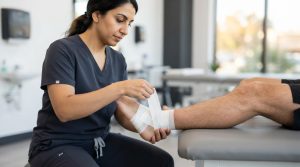
- C – Compress: Use a flexible wrap or compression sleeve to limit internal bleeding and swelling while you continue to move around as much as you can tolerate.
- E – Educate: Understand how the healing process works. Allow your body to heal while helping strengthen the healing process through active movement.
Subacute Healing: LOVE
After three days, your soft tissue is well into the healing process. It’s time to switch gears and enter the subacute healing phase, where you gain strength and range of motion.
- L – Load: Once the pain subsides, it’s time to start working out. Light load-bearing and gentle movements help your body form strong collagen fiber bonds and restore strength.
- O – Optimism: A positive mindset has been shown to improve recovery. Stay positive and help your body heal.
- V – Vascularization: As you heal, choose cardio activities that don’t cause pain. Walking and time spent on equipment like an exercise bike are good for increasing your heart rate and blood flow without straining injured areas. Blood flow brings oxygen to the healing injury.
- E – Exercise: With each passing day, your tissue grows stronger. Start incorporating exercises into programs that focus on balance, mobility, and strength. It helps prepare joints for regular sports movements and protects against re-injury.
Specific Recovery Demands in the Central Valley
PEACE and LOVE are becoming the best approach to healing, but it’s not as easy as you might expect. This is due to two hurdles that Fresno-area athletes face. You can overcome these challenges if you account for them as you regain strength and mobility.
Fresno Heat
Summers in the San Joaquin Valley often climb past 100°F. A sports injury that requires you to slow down and heal using older RICE strategies also impacts your heat tolerance.
When you return to Fresno sports after not conditioning in the heat, your heart works much harder to circulate blood to the skin for cooling while also ensuring your muscles get the nutrients and oxygen they need. Active recovery ensures your heat tolerance doesn’t diminish.
The Valley Air Quality
The other aspect is the air quality. When cooler mountain air traps particulate matter from agricultural dust, pollen, and car exhaust, the air quality worsens. RICE has you sitting around, which may reduce lung capacity.
Low-impact exercises help maintain your lung function, reducing the risk that poor air quality affects your respiratory health. When you return to your prior activities, your lungs are still ready to handle them.
Tips for Safe Transitions From Injury to Full Activity
The last thing you want is to worsen your injury. How can you tell when the movements or exercises you do are causing harm? The answer lies in a system called “Optimal Loading.”
Optimal Loading is the process of pushing your body to its current limits without causing additional injury. Using the Traffic Light Pain System helps you know when you’ve reached your current limit.
Use the Traffic Light Pain System
- Green Light (Pain is 0 to 3 out of 10): You feel a dull ache, mild discomfort, or tightness. Keep going.
- Yellow Light (4 to 5 out of 10): Pain is noticeable and makes you adjust your movement. Keep going, but watch it closely. If pain increases, stop doing what you’re doing and rest before continuing.
- Red Light (6 to 10 out of 10): Pain is sharp, shooting, or stabbing and causes you to limit pressure or motion. Stop, rest, and revert to less intense activities.
Watch Your Body for 24 Hours
Once you’re done, you work out. Pay attention to your body for the next 24 hours. If there’s pain or swelling, you did too much. Reduce your activities by up to 50% for the next day or two.
It’s a good time to consider getting help with your recovery strategy. A sports and orthopedics specialist can help you determine the right strategy for managing pain while also supporting active recovery.
Work With a Sports and Orthopedics Specialist for Optimal Recovery
Rushing the healing process isn’t the answer, but sitting around for months is just as damaging. Instead, work with an expert in sports injury recovery.
Premium Sports & Orthopedics offers a selection of tried and tested services that help you heal while avoiding the risk of reinjury. Your recovery plan could include any of these:
- EMS Training: Let the power of electrical pulses help strengthen muscles more efficiently.
- FDA-Approved Treatments and Therapies: Let the power of your own platelet-rich plasma and stem cells aid healing.
- Weight Loss and Fitness: Even 10 pounds of excess weight puts additional strain on your joints. Work with a doctor to develop an effective weight-loss and fitness program.
Schedule an appointment online. During the initial consultation, we’ll assess your injury and the activities you love, and create a solid recovery plan that also helps strengthen your joints before you return to the sport you love.