 31 Oct 2026
A sudden pop, swelling, bruising, or a feeling that your ankle may give way can be signs of a torn ligament in the ankle. A tear may be partial or complete, and symptoms alone cannot show the extent of the damage. Ongoing weakness or difficulty bearing weight can also indicate a problem with ankle stability.
It’s understandable to wonder whether a painful, swollen ankle is simply sprained or whether a ligament is torn. The distinction matters because ligament damage can affect how securely the ankle supports movement, especially if instability persists.
This guide explains what an ankle ligament tear is, the movements and conditions that commonly cause one, and what a physical examination may assess, including the anterior drawer test. You’ll also learn how ligament damage can affect ankle stability and why persistent symptoms deserve attention, so you can better understand what may be happening and what to discuss during an evaluation.
Key Takeaways
- Learn how ankle ligaments connect bones and support joint stability, including the three ligaments commonly affected on the outer ankle.
- Recognize how twisting movements, uneven ground, and previous ankle injuries can raise the risk of ligament damage.
- Understand how a physical exam, including the anterior drawer test, helps assess ankle movement and ligament stability.
- See why repeated sprains or returning to activity too soon can contribute to ongoing weakness and instability.
What is an Ankle Ligament Tear?
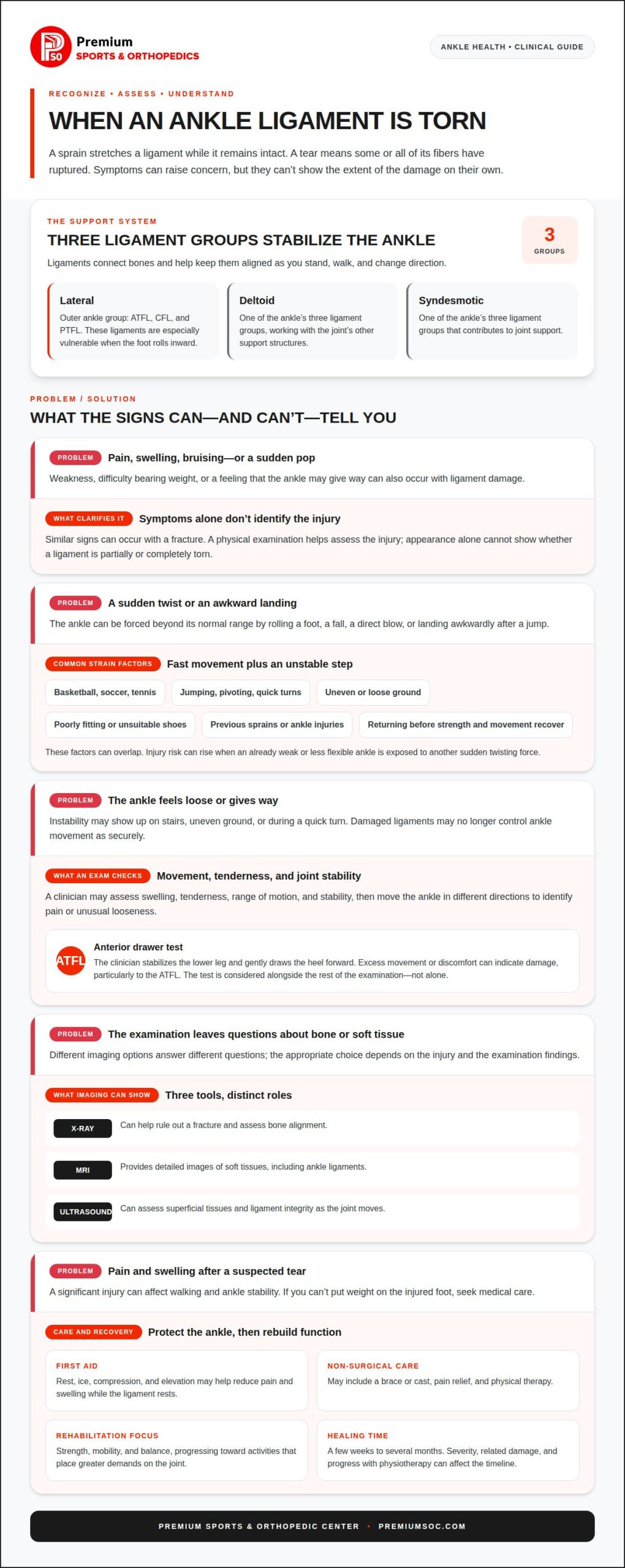
Ankle ligaments are strong, elastic bands of tissue that connect bones and help stabilize the joint. The ankle has three ligament groups: lateral, deltoid, and syndesmotic. The lateral group includes the anterior talofibular ligament (ATFL), calcaneofibular ligament (CFL), and posterior talofibular ligament (PTFL). Together, these structures help keep the ankle bones aligned as you stand, walk, and change direction.
A ligament injury happens when force stretches or damages this supportive tissue. A sprain may stretch ligaments while they remain intact; a tear means some or all of the fibers have ruptured. Signs of a torn ligament in the ankle can include pain, swelling, bruising, weakness, or a sense that the joint may give way. These symptoms can also occur with a fracture, so appearance alone cannot identify the injury.
The outer ankle ligaments are especially vulnerable when the foot rolls inward. Landing awkwardly after a jump, for example, can put sudden strain on the ATFL. If the force continues, it may also affect the CFL or PTFL. Severity depends on the condition of the damaged ligament and how many ligaments are involved.
Healthy ligaments limit excessive movement while allowing the ankle to flex and rotate during everyday activities. When stretched or torn, they may leave the joint feeling less steady on uneven ground or during a quick turn. Swelling and stiffness can also make walking uncomfortable. Ankle stability depends on the ligaments working together with surrounding muscles and the joint’s natural structure.
Seek medical care if you can’t put weight on the injured foot. Significant pain or swelling can accompany a torn ligament or a broken bone, so a prompt assessment helps clarify what happened. An examination can distinguish ligament damage from other injuries and guide the next steps for protecting ankle function.
Common causes of ankle ligament tears
A sudden change in ankle position can stretch ligament tissue beyond its normal range. The force may come from a twist, fall, direct blow, or another abnormal movement. For example, stepping off a curb and rolling your foot can sharply strain the outer ankle. A severe force can partially or completely tear a ligament.
Sports can put similar stress on the ankle through repeated, fast movements. Basketball, soccer, and tennis involve jumping, landing, pivoting, and quick changes of direction. Landing on another player’s foot or turning while your foot stays planted can force the ankle to rotate unexpectedly. Injury is more likely when a quick movement catches the joint in a vulnerable position.
Uneven ground or poor playing surfaces can disrupt a stable step. Your foot may land on a slope, loose surface, or irregular patch, causing the ankle to roll. Footwear matters too: high heels, poorly fitting shoes, or shoes unsuited to an activity can reduce support. A shoe that shifts during a run, for example, may make the ankle less steady.
Previous sprains or other ankle injuries can increase the likelihood of another injury. If the ankle remains weak or its flexibility is limited, sudden movement during activity may place greater strain on the supporting tissue. Returning to sport before strength and movement are restored can expose the joint to the same twisting forces again.
These causes can overlap. A player with a previous sprain might land awkwardly on an uneven field while wearing shoes that provide little support. The resulting pain, swelling, or trouble bearing weight can’t identify the exact injury by itself. A clinical diagnosis considers how the injury happened alongside an examination. If ankle pain follows a twist or fall, ankle pain care can help you understand the next step.
Physical examination and anterior drawer test
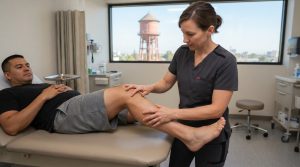
A physical examination helps connect your symptoms with how the ankle moves and feels. The clinician may check swelling, tenderness, range of motion, and joint stability. They may move your ankle in different directions to see which movements cause pain or unusual looseness. These findings help assess the likely extent of ligament injury.
The anterior drawer test focuses on forward movement at the ankle. With your foot positioned for the test, the clinician stabilizes your lower leg and gently draws your heel forward. Excess movement or discomfort can indicate ligament damage, particularly involving the ATFL. The result is considered alongside other examination findings, not used alone to diagnose a tear.
Imaging can help clarify findings from the examination. An X-ray can help rule out a fracture and assess bone alignment. MRI provides detailed images of soft tissues, including ankle ligaments, while ultrasound can assess superficial tissues and ligament integrity as the joint moves. The appropriate imaging depends on the injury and the questions raised during examination.
For first aid after a suspected tear, rest the ankle, apply ice, use compression, and elevate your foot. These steps may help reduce pain and swelling while the injured ligament rests.
Non-surgical care may include a brace or cast, pain relief, and physical therapy. Rehabilitation can address ankle strength, mobility, and balance, then progress toward activities that place greater demands on the joint. A therapist can adapt exercises as your movement and function improve.
Healing may take a few weeks to several months. A milder injury may recover sooner, while a complete tear, related damage, or slower progress with physiotherapy can extend recovery. The injury’s severity and your ankle’s response to rehabilitation shape the timeline.
Ankle ligament injury and instability
An ankle ligament tear can reduce the joint’s ability to control movement. When damaged tissue no longer provides enough support, your ankle may feel weak or give way during ordinary steps. You might notice this on stairs, uneven ground, or when turning quickly. Difficulty bearing weight can also limit everyday movement.
Instability can become a cycle. If your ankle gives way, another roll or sprain may follow, adding stress to already injured tissue. Repeated sprains can contribute to ongoing pain, weakness, and stiffness. Over time, an ankle joint that remains unstable may develop arthritis. Returning to sport before balance and strength recover can increase the chance of another injury.
What can happen if a torn ankle ligament isn’t treated? Possible complications include repeated sprains, persistent pain, chronic instability, and ankle arthritis. The risk is especially relevant when your ankle continues to give way or symptoms interfere with walking and other daily activities.
Rehabilitation helps address the movement control that supports stability. Physical therapy may build strength around the ankle and restore mobility. A rehabilitation plan may also include balance exercises, such as standing on the injured leg when appropriate. These exercises challenge the joint’s control during movement, rather than focusing only on pain. Progression should match your ankle’s function, including its ability to support weight and move with control.
Some people with severe sprains or chronic instability may need surgery to repair or reconstruct damaged ligaments. Surgery is one possible approach, not the automatic next step for every tear. Pay attention to episodes of giving way and recurring ankle injuries, as they can signal that stability remains impaired.
If ankle pain or repeated giving way is affecting your movement, seek ankle pain care to discuss assessment and treatment options.
Premium Sports & Orthopedic Center: Knee Pain
Premium Sports & Orthopedic Center offers sports medicine consultations and orthopedic care for people in the Fresno area dealing with ankle pain that affects movement or daily activities. If discomfort or instability continues after an ankle injury, an evaluation can help clarify what may be contributing to your symptoms and guide care planning. The assessment can consider how your ankle moves and how pain affects function, helping connect your concerns with appropriate next steps.
Persistent ankle symptoms deserve attention, especially when they interfere with walking, exercise, or a return to sport. If your injury prevents you from bearing weight, seek urgent medical care. For ongoing ankle concerns, contact Premium Sports & Orthopedic Center to discuss an appointment.
Move toward confident ankle care
Use what you’ve noticed to make a focused plan for returning to comfortable movement. Consider how your ankle responds during ordinary tasks, which activities remain difficult, and whether your confidence changes as you move. These details can make a future conversation more useful than describing pain alone. If signs of a torn ligament in the ankle are affecting your routine, raise those concerns rather than letting uncertainty dictate your activity choices.
Recovery isn’t just a date on the calendar. It also means rebuilding trust in your ankle through informed decisions and a progression that reflects your function. Ask how an assessment can clarify the injury, which goals should guide care, and how you’ll recognize progress. A thoughtful plan can make the path back to daily life feel more manageable.
For a next step, reach out about your ankle concerns. With guidance suited to your needs, you can move toward greater confidence in the activities that matter to you.
Frequently Asked Questions
What are the common signs and symptoms of a torn ankle ligament?
Common symptoms include ankle pain, rapid swelling, bruising, weakness, and difficulty bearing weight. Some people feel a pop or snap when the injury happens, then notice that the ankle feels unreliable during movement. Symptoms can vary depending on the ligament and extent of damage. Because a fracture can also cause pain and swelling, symptoms alone cannot confirm a tear.
How can you tell an ankle ligament tear from a sprain, fracture, or tendon injury?
A sprain describes stretched or damaged ankle ligaments, while a tear means some or all ligament fibers have ruptured. A fracture involves bone, and a tendon injury affects tissue connecting muscle to bone. Pain and swelling can occur with each, so you can’t reliably distinguish them at home. A physical examination and, when needed, imaging can help clarify the injury.
What are the signs of a severe or complete ankle ligament tear?
A severe injury may involve pronounced swelling or discoloration, a popping sensation at the time of injury, marked weakness, and difficulty supporting your weight. A complete tear can also leave the ankle feeling unstable during ordinary movement. These signs can overlap with other injuries, including fractures. Seek urgent assessment if you can’t put weight on the injured foot.
How is a torn ankle ligament diagnosed, and when are X-rays or an MRI needed?
Diagnosis starts with a physical examination of ankle tenderness, movement, and stability. An X-ray helps rule out a fracture and assess bone alignment, while an MRI provides detailed images of ligaments and other soft tissues. A clinician may use imaging when examination findings raise questions about bone injury or the extent of soft-tissue damage.
What is the Ottawa Ankle Rule for deciding whether an ankle X-ray is needed?
The Ottawa Ankle Rule is a clinical aid for deciding whether an ankle X-ray is appropriate after an injury. The assessment considers clinical findings, including your ability to bear weight. X-rays can help rule out fractures and assess bone alignment, but they don’t show ligament damage in as much detail as an MRI. A clinician applies the rule during an evaluation.
What treatments are used for a torn ankle ligament, and when is surgery needed?
Treatment can include rest, ice, compression, elevation, pain relief, bracing, and physical therapy to restore strength and mobility. A full tear may require immobilization in an Aircast boot for three weeks. Surgery may repair or reconstruct damaged ligaments, often for severe sprains or chronic instability. The injury’s severity and ongoing joint function help guide treatment choices.