 29 Oct 2026
Your physical therapy timeline depends on more than a diagnosis. A physical therapy clinic in Fresno, CA can estimate how long care may take after assessing your symptoms, movement, goals, and response to treatment. There is no standard duration: your plan may change as pain eases, strength and mobility improve, and everyday activities become easier.
It’s understandable to want a clear finish line, especially when pain or surgery recovery disrupts your routine. This guide explains what influences treatment length, what happens at a first visit, and how care may support recovery from back or neck pain and after surgery. You’ll also learn how treatment plans adapt as progress is assessed, and what factors shape the pace of recovery. At the first appointment, a conversation about symptoms and goals, a movement assessment, and a tailored plan help establish practical next steps. The article also covers how guided exercise, hands-on care, and education can contribute to restoring function.
Key Takeaways
- Treatment length depends on your condition, goals, and progress, so your plan can evolve as movement and daily function improve.
- Rehabilitation before or after surgery can focus on rebuilding strength, mobility, and confidence with everyday activities.
- Your first visit helps establish a starting point through a conversation about your symptoms and a movement assessment.
- Back, neck, knee, and other pain concerns can guide the next step toward care tailored to your needs.
Pre- and post-surgical rehabilitation
Rehabilitation can begin before surgery and continue afterward, with each stage focused on function. Before an operation, a therapist may assess mobility, strength, and the movements required for daily tasks. This baseline can help identify where support may be useful and prepare you for postoperative practice. For example, someone preparing for joint replacement can discuss how walking, standing, or using stairs affects them.
After surgery, care typically follows the surgeon’s instructions and your recovery needs. A physical therapist can guide movement and exercises, then adapt the plan as your function changes. The practical goal is to work toward activities such as getting out of a chair or walking more comfortably. The procedure, symptoms, and progress shape which movements are appropriate at each stage.
Joint replacement rehabilitation is tailored to the replaced joint and your priorities. A plan may address mobility, strength, balance, and everyday tasks. After a knee replacement, for example, a therapist may work on bending and straightening the knee while building confidence with walking. Clinic exercises can be paired with guidance on practicing daily routines at home.
Falls can also lead to injuries and rehabilitation needs. According to the Centers for Disease Control and Prevention, older people’s falls cause about 4.5 million emergency department visits per year, resulting in 3.1 million treated and released and 1.4 million hospitalizations. Those figures underline why recovery plans may need to address both movement and the activities an individual wants to resume.
Which Fresno clinics offer orthopedic, sports, neurological, or pelvic floor physical therapy? For orthopedic or sports care, look for outpatient clinics that explicitly list those specialties. Neurological and pelvic floor therapy are distinct areas, so match the clinic’s stated focus to the rehabilitation you need.
Outpatient rehabilitation in Fresno lets you attend therapy while continuing your routines at home. Before starting, bring relevant surgical instructions and describe specific goals, such as returning to stairs or preparing meals while standing. These details help shape a focused plan and connect progress with everyday function.
How Long Will My Physical Therapy Treatment Take?
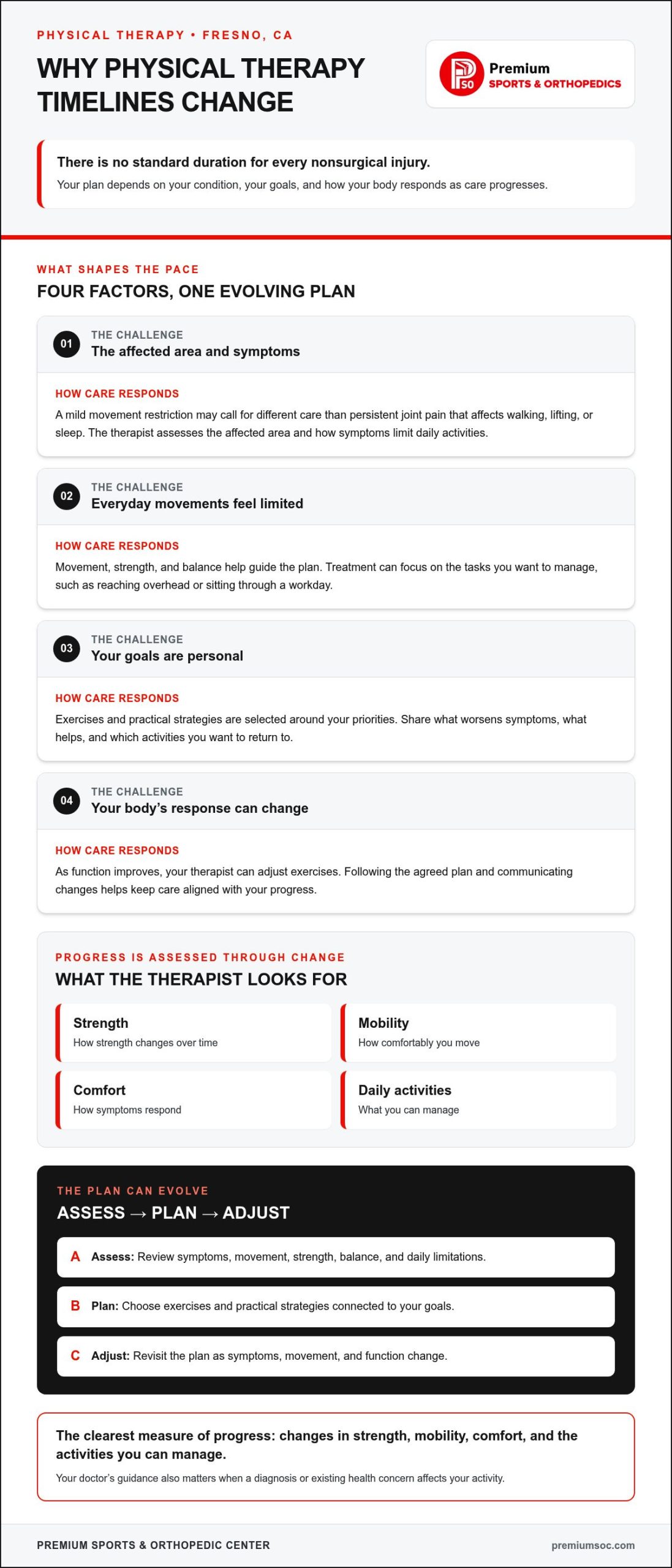
There’s no single treatment duration for every nonsurgical injury. Your plan depends on the affected area, how symptoms limit daily activities, your goals, and how your body responds. A mild movement restriction may call for different care than persistent joint pain that affects walking, lifting, or sleep. Progress is assessed through changes in strength, mobility, comfort, and the activities you can manage.
For knee, shoulder, ankle, or other joint and limb problems, a therapist may assess movement, strength, and balance, then select exercises and practical strategies. Back and neck treatment can focus on movements that trigger symptoms and tasks you want to resume. Each exercise should connect to a goal, such as reaching overhead or sitting through a workday. Learning to pace activity and adjust movement can also help you manage daily demands.
Personalized care starts with your injury and priorities. Share what worsens your symptoms, what helps, and which activities you want to return to. Following the agreed plan and communicating changes helps your therapist adjust exercises as your function improves. Your doctor’s guidance is also relevant if a diagnosis or existing health concern affects your activity.
What are the best-rated physical therapy clinics in Fresno, and how do reviews compare? Ratings vary by platform and can change, so compare recent comments about communication, treatment explanations, and care for conditions like yours. Specific examples in reviews may be more useful than a rating alone.
How do I choose a licensed physical therapist in California? Ask whether the treating professional holds an active California physical therapist license, then verify it through the state’s official lookup. Also consider whether their clinical focus fits your needs.
Which Fresno physical therapy clinics accept my insurance? Coverage depends on your plan and network, so use your insurer’s provider directory and review your physical therapy benefits. Ask whether your plan requires a referral for coverage.
Are there risks or reasons to consult a doctor before starting physical therapy? Yes. Discuss recent surgery, a new diagnosis, or worsening symptoms with your doctor before beginning exercises. This helps align activity with your medical care.
For care focused on movement and function, explore physical therapy treatment as a possible next step.
Back and neck pain
Back or neck pain can affect how you sit, turn, lift, or sleep. At an appointment, describe the movements that bring on symptoms, such as looking over your shoulder while driving or bending to pick up a bag. These examples help a therapist understand how discomfort affects your routine and which goals matter most.
An assessment may look at posture, movement, strength, and how symptoms respond to specific tasks. A therapist might observe how you reach overhead or rise from a chair. This information helps shape an exercise plan around your needs, rather than treating every sore back or stiff neck the same way.
Back and neck concerns can involve different areas, including the sacroiliac region, where the pelvis meets the lower spine. Tell the therapist where you feel discomfort and whether it changes with walking, sitting, or bending. Clear details can help identify which activities to address and how to adapt them during rehabilitation.
Exercise can build strength and improve control during everyday movements. A plan might begin with a comfortable range of motion, then progress toward tasks such as carrying groceries or returning to sports. Follow your therapist’s instructions and share how each exercise feels so the next session can take your response into account.
Fresno residents with recurring symptoms can prepare for care by noting triggers and activities they want to resume. Track whether a long drive, desk work, or a particular sports motion changes your symptoms, and bring those examples to your appointment. They give the therapist practical context for setting goals and measuring changes in function.
For a focused first discussion, bring questions about movement limits, exercise choices, and returning to work or sports. A sports medicine consultation can help active individuals discuss movement goals alongside pain concerns. Clear examples make it easier to connect treatment decisions with daily life.
What Should I Expect During My First Visit?
Your first appointment typically combines a discussion of your concerns with an assessment of movement and mobility. Be ready to describe your goals, such as returning to a work task or moving more comfortably.
Forms and Visit Preparation
Complete the clinic’s patient forms before your appointment if they’re available, and bring your questions about symptoms, daily activities, and recovery goals. If completing forms at the clinic, arrive 10-15 minutes before your appointment. Use that time to finish paperwork without rushing. Read the privacy policy so you understand how the clinic explains its handling of personal information. Clear examples, such as which movement causes discomfort, help make the first conversation more focused.
Scheduling and Clinic Policies
When scheduling, share the reason for your visit and the activities you want to improve. Ask about appointment timing, paperwork, and any instructions for your first visit. At the clinic, expect to discuss your concerns and have relevant movement assessed. Your therapist can use those details to talk through goals and next steps. Patients and therapists work as partners: describe how an exercise or position feels, and speak up if you need clarification. Your feedback helps guide the visit and recovery plan.
Referral Requirements
California allows patients to schedule physical therapy without a referral, although some insurance plans may require one for coverage. Before your appointment, review your plan’s referral rules and benefits so you understand what paperwork it expects. If your doctor has provided instructions or records related to your concern, bring them to help explain your situation. During the visit, ask how the recommended steps connect with your mobility goals and injury prevention priorities. Plan your first visit with clear goals and questions to make the conversation productive.
Premium Sports & Orthopedic Center: Knee Pain
Premium Sports & Orthopedic Center provides orthopedic care for knee pain that interferes with movement or everyday activities, as well as back, leg, and hand pain. If knee discomfort makes walking, bending, or returning to an activity difficult, a sports medicine consultation can help frame your concern and discuss possible next steps. Share which movements affect you and what you hope to do more comfortably. Care focuses on pain and orthopedic concerns; it is not a substitute for emergency services or general primary care. Contact Premium Sports & Orthopedic Center to discuss your knee pain.
Take the Next Step Toward Easier Movement
Your next step can be simple: identify the movement or daily task you want to make easier, then bring that goal to a care conversation. This focus helps turn treatment into practical progress, whether you’re working toward more comfortable walking, lifting, or returning to an activity you enjoy. A physical therapy clinic in Fresno, CA can connect your symptoms with movement goals and a plan shaped around your needs.
Premium Sports & Orthopedic Center offers care for knee, back, and leg pain. If one of these concerns is limiting your routine, a conversation about your symptoms and priorities can help you consider a direction for care. You don’t need to have every answer before taking that step. Start with what feels difficult now and what you’d like to do more comfortably.
Contact Premium Sports & Orthopedic Center to discuss your care needs and take a positive step toward moving with greater confidence.
Frequently Asked Questions
Do You Treat Work-Related and Auto Accident Injuries?
Physical therapy can address pain and movement difficulties after an injury. If a work incident or auto accident leaves you with knee, back, leg, hand, shoulder, or ankle pain, describe your symptoms and affected activities during your care discussion. Bring relevant medical records and any instructions from your treating clinician. These details help connect your concerns with appropriate orthopedic care.
What Should I Bring to My Appointment?
Bring any completed patient forms, relevant medical records, and questions about activities you want to manage more comfortably. A written note describing when symptoms began and what aggravates them can help you explain your situation clearly. Wear comfortable clothing that allows easy movement, such as a short-sleeved shirt for discussing shoulder mobility. If completing forms at the clinic, arrive 10-15 minutes early.
What Physical Therapy Clinics Are in Fresno, CA?
Premium Sports & Orthopedic Center serves the Fresno area and offers physical therapy and orthopedic care for concerns including knee, back, leg, and hand pain. When comparing local care options, consider whether the clinic’s focus fits your symptoms and goals. For example, someone whose knee pain limits walking can look for care that addresses that concern.
Which Fresno Physical Therapy Clinics Have Evening or Weekend Hours?
Evening and weekend schedules vary among Fresno clinics. Use published hours or appointment calendars to identify options that fit your routine, and allow time for travel and paperwork. If daytime appointments are difficult, note the days and time windows you can attend before scheduling. This makes it easier to weigh appointment options against work, family, and recovery commitments.
What Should I Expect at a First Physical Therapy Appointment?
Expect to discuss your symptoms, daily activities, and what you hope to do more comfortably. The therapist may ask how a specific task affects you, such as reaching overhead or standing from a chair. Bring questions about exercises, visit preparation, or how care relates to your goals. Comfortable clothing can make movement easier during the appointment and conversation about your needs.
What are the best-rated physical therapy clinics in Fresno, and how do reviews compare?
Ratings vary by platform and can change. Compare recent comments about communication, treatment explanations, and care for conditions like yours. Specific examples may be more useful than a rating alone.