 30 Oct 2026
Bone-on-bone knee arthritis doesn’t always mean immediate knee replacement. Non-surgical knee pain relief in Fresno may help manage pain, support movement, and maintain quality of life, even with advanced joint changes. The right approach depends on what’s causing your symptoms and how they affect everyday activities.
It’s understandable to worry that worsening knee pain leaves surgery as the only option. Conservative care may include physical therapy, lifestyle changes, and injection-based or other joint therapies intended to ease symptoms and improve function. These approaches don’t cure arthritis, but they may help you move more comfortably and confidently.
This guide explains common causes of knee pain, how clinicians assess knee arthritis, and who may benefit from non-surgical care. You’ll also learn about conservative and regenerative therapy options available in Fresno, what they aim to address, and how an individualized care plan can support your goals.
Key Takeaways
- Learn how knee pain causes and risk factors can shape the care approach, and what details to note about your symptoms.
- Understand how clinicians assess whether conservative treatment may suit your symptoms, joint changes, and activity goals.
- Explore how rehabilitation and joint therapies may support mobility and help manage discomfort without surgery.
- See how an individualized knee pain evaluation can help identify practical next steps toward moving more comfortably.
Regenerative and conservative joint therapies
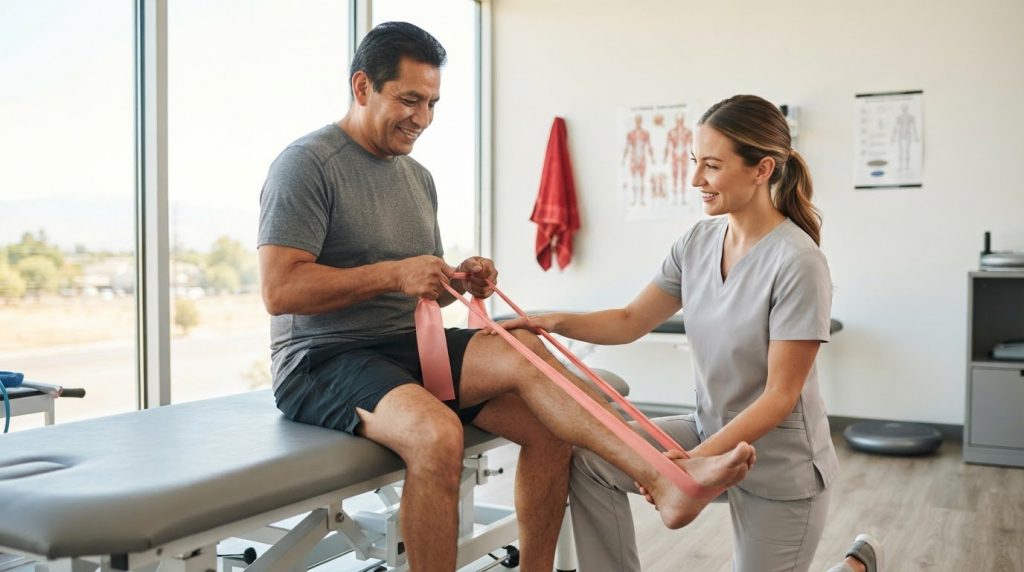
Bone-on-bone arthritis doesn’t automatically mean immediate knee replacement. Non-surgical care may manage pain, preserve function, and support daily activities. Physical therapy can address muscle imbalances, knee mobility, and how the joint handles load. For example, a therapist may adapt movement exercises to reduce strain during walking or standing.
Injection-based treatments may aim to reduce inflammation, improve joint function, and relieve pain. Other conservative joint therapies are designed to support the body’s natural repair processes and improve joint mechanics. Joint tissue repair therapy is one option in this broader category. These approaches focus on symptom management and movement, rather than replacing damaged joint surfaces.
A practical plan can combine therapies with everyday steps to protect the knee:
- Adjust activity: Choose moderate exercise and build movement around what your knee tolerates.
- Use heat or cold: Apply either as part of a comfort routine for knee arthritis symptoms.
- Protect the joint: Braces or splints can provide support during activities that aggravate discomfort.
Rest, a balanced diet, and weight loss may also form part of lifestyle changes for knee arthritis. Physical therapy can pair mobility work with guidance on safer loading, helping make activities such as climbing stairs more manageable. The right combination depends on your symptoms, movement limits, and daily demands.
Knee replacement may become an option when severe arthritis continues to limit function despite conservative care. Still, advanced degeneration doesn’t automatically require immediate surgery. Non-surgical therapies may help some people manage pain, maintain mobility, and improve quality of life before replacement. A treatment plan can address current symptoms while tracking how well you can walk, bend, and manage routine tasks. If these functions continue to decline, discuss whether surgery better fits your needs.
Candidates for non-surgical treatment
Non-surgical care may suit people whose knee symptoms can be addressed without immediate surgery. The decision starts with a clear picture of your pain, movement, and daily needs. Someone who struggles with stairs, for example, has different goals from an athlete seeking to return to training. Treatment choices should address those specific limits and support practical function.
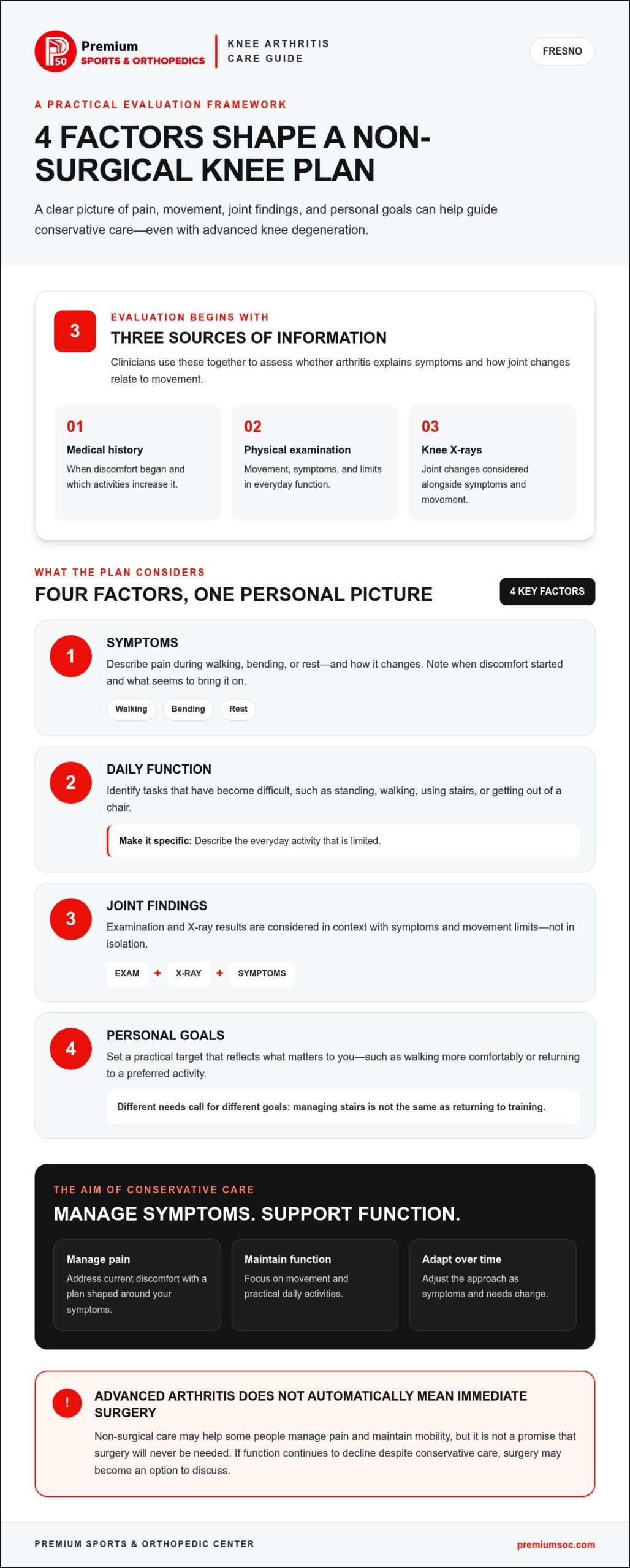
Knee arthritis assessment includes a medical history, physical examination, and X-rays of the affected joint. These steps help identify whether arthritis explains your symptoms and how joint changes relate to movement. Share when the discomfort began, which activities increase it, and whether stiffness affects standing or walking. These details give the evaluation a useful, real-life context.
Clinicians can consider several factors when shaping a conservative plan:
- Symptoms: Note pain during walking, bending, or rest, and describe how it changes.
- Daily function: Identify tasks that have become difficult, such as getting out of a chair.
- Joint findings: Connect examination and X-ray results with the symptoms and movement limits.
- Personal goals: Set a clear target, such as walking comfortably or resuming a preferred activity.
People with advanced knee degeneration can still consider non-surgical care. These options focus on managing pain, maintaining function, and supporting quality of life. Knee arthritis has no known cure, but treatment and lifestyle changes can ease symptoms. A plan can also adapt to changing needs, such as modifying activity when a familiar route becomes difficult.
Conservative treatment is not a promise that surgery will never be needed. Instead, it offers a way to address current symptoms and function before making larger decisions. If knee pain is limiting your routine, a focused knee pain evaluation can help connect your symptoms with an appropriate care plan.
Causes and risk factors
Knee pain can have different causes, so its pattern matters. Arthritis may cause ongoing discomfort, while a strain or sudden twist may bring pain after a specific activity. Repeated loading can also irritate the knee. To explore non-surgical knee pain relief in Fresno, note when your symptoms began and what seems to trigger them.
How your knee moves can affect how it feels under load. Muscle imbalances may affect support around the joint, while limited mobility can make bending or walking less comfortable. A change in activity, such as returning to longer walks after a quiet period, can also reveal which movements aggravate symptoms. Record the activity and how your knee responds.
Risk factors are useful clues, not a diagnosis. Consider recent changes in exercise, work tasks, or time spent standing. A previous knee injury may also be relevant, especially if pain returns during a familiar movement. These details can help distinguish a new irritation from a recurring problem.
- Track the trigger: Note whether pain follows stairs, squatting, walking, or a twist.
- Describe the pattern: Record whether discomfort appears with movement, after activity, or during rest.
- Notice function: Identify changes such as difficulty bending, standing, or walking your usual route.
- Review recent changes: Compare symptoms with shifts in exercise, work demands, or daily movement.
Share these observations during an evaluation. A useful account links the symptom to an example, such as pain after carrying groceries or stiffness after sitting. That context helps connect symptoms with joint loading and mobility. An evaluation in Fresno can help you discuss non-surgical knee pain relief options in relation to your daily activities and movement goals. If pain follows a sudden injury or substantially limits ordinary movement, seek a timely clinical assessment rather than relying only on activity changes.
Conservative knee pain care in Fresno
Conservative care can combine movement-based rehabilitation, symptom relief, and daily activity adjustments. The right mix depends on your goals, symptoms, and the care involved.
Treatment Costs in Fresno
Costs depend on the treatment plan, including whether it involves physical therapy, imaging, or injections. The type and amount of care needed also affect the total. For a specific service, the price depends on the case and is provided after a quote request. Compare what a proposed plan includes, not just its individual services.
Medications, Topicals, and Risks
Medication and topical products may help manage knee discomfort, but suitability depends on your health and other medicines. Follow product directions and discuss possible side effects or interactions with a qualified clinician, especially if you have existing health concerns. Avoid combining products without guidance. A clinician can help weigh symptom relief against potential risks and consider how medication fits alongside movement-based care.
Physical therapy and exercise can address mobility, muscle imbalances, and how the knee handles joint loading. Rehabilitation combined with other conservative care may help you move more confidently and comfortably. Progress depends on matching activities to your symptoms and adjusting exercises as your function changes.
Insurance and Medicare coverage for therapy, imaging, or injections varies by plan and service. Review benefits, network rules, and any approval requirements for the specific care you’re considering. A reputable knee specialist or physical therapist should assess your symptoms, movement, and goals, then explain how the proposed care addresses them. Ask for a clear plan tied to practical activities, such as walking or climbing stairs.
Seek urgent medical care for a visibly deformed knee, inability to bear weight after an injury, or a hot, red knee with fever. These symptoms need prompt assessment rather than routine exercise adjustments.
If knee pain is limiting your daily movement, discuss knee pain care options and the next steps for a personalized plan.
Premium Sports & Orthopedic Center: Knee Pain
Premium Sports & Orthopedic Center provides knee pain care, orthopedic care, and sports medicine consultations for people in the Fresno area whose symptoms affect daily movement or athletic activity. A consultation can help connect your pain and movement concerns with appropriate care options. Bring a clear example of what feels difficult, such as walking, bending, or returning to exercise, so the discussion can focus on your needs and goals.
Consider reaching out when knee discomfort persists, limits your usual activities, or returns during sports and exercise. Premium Sports & Orthopedic Center also treats back, leg, and hand pain, which may be relevant when several areas affect your movement. Contact the center or visit PremiumSOC.com to discuss knee pain care.
Choose a Practical Next Step Toward Easier Movement
A useful next step is to name the activity you most want to make easier. Perhaps you want to walk through your neighborhood, return to a sport, or manage daily tasks with less disruption. That goal can focus a conversation about care on what matters in your life, not just on your knee.
For people exploring non-surgical knee pain relief in Fresno, Premium Sports & Orthopedic Center offers care for knee pain, back pain, and leg pain. A consultation can help you discuss your symptoms, movement priorities, and possible next steps through orthopedic care or sports medicine. Bring a clear example of what you hope to do more comfortably and use it to guide the discussion.
Contact Premium Sports & Orthopedic Center to take the next step toward a care plan shaped around your needs. Small, informed steps can help you move forward with greater confidence.
Frequently Asked Questions
Can Non-Surgical Care Help Bone-on-Bone Knee Pain?
Yes. Bone-on-bone findings don’t automatically mean immediate knee replacement. Conservative care can help manage pain and maintain function, including for people with advanced knee degeneration. Consider how symptoms affect specific activities, such as standing from a chair or walking through a store. These functional changes help frame care goals alongside imaging findings and guide decisions about whether to continue non-surgical treatment.
What is Knee Arthritis?
Knee arthritis is a joint condition associated with knee pain and other symptoms. It has no known cure, but treatment and lifestyle changes can ease symptoms. Assessment includes discussing your medical history, examining the joint, and taking X-rays of the affected knee. Bringing notes about when symptoms occur, such as during bending or walking, can connect the evaluation to your everyday experience.
What causes knee pain and when should you see a doctor?
Knee pain can relate to arthritis, joint loading, muscle imbalances, or limited mobility. A clinician can assess the cause by considering your symptom history, examining the knee, and using imaging when needed. Arrange an evaluation if discomfort persists, worsens, or makes ordinary tasks difficult. For instance, pain that repeatedly interrupts walking deserves attention, especially when it changes how you move.
What non-surgical treatments relieve knee pain?
Options include physical therapy, exercise, lifestyle changes, and injection-based or joint tissue therapies. The plan can center on a practical goal, such as getting through a workday with fewer movement interruptions. Track how daily tasks feel as care progresses. That record helps show whether an approach supports the activity you want to maintain, rather than focusing only on pain at rest.
Do knee injections such as corticosteroids or hyaluronic acid help, and how much do they cost?
Some injection-based treatments are intended to reduce inflammation, improve joint function, and relieve pain. Whether an injection fits depends on the symptoms and treatment goals being addressed. The price depends on the case and is given after a quote request; the specific treatment and care plan affect the cost. Discuss the intended goal and how it fits into your broader approach to knee care.
Are braces, walking aids, or home remedies useful for knee pain?
Braces, splints, and walking aids can offer support during activities that challenge the knee. Heat or cold treatments may also be part of a home comfort routine. Pay attention to which activity you use a support for and whether it makes that task easier. For example, note how your knee feels during a usual household task with and without a brace.