 25 Apr 2025
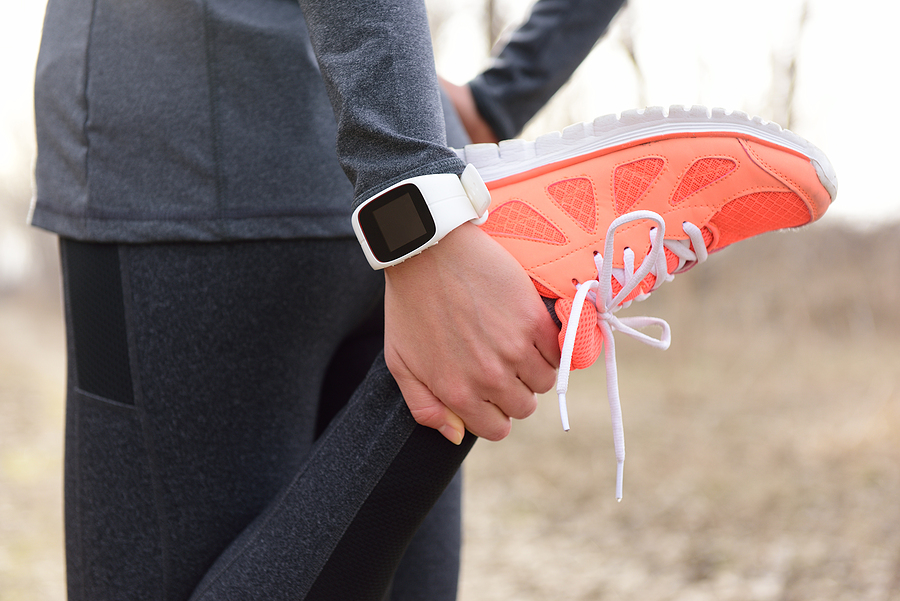
Do you have a wearable device? It might save you from a serious injury. Smartwatches do more than you might imagine, and injury prevention is one of the beneficial features.
Forbes ranks the Garmin Venu 3 as the best overall fitness tracker in 2025. It’s a smartwatch that monitors your energy levels and sleep quality and even provides guidance for indoor and outdoor workouts. It’s one of many wearable devices available on the market. In addition to helping you track your health and fitness, wearable devices are also beneficial in preventing spring sports injuries. Other recommended wearable devices include:
- Apple Watch Series 9 (Best for guided workouts and recovery analytics)
- Garmin Forerunner 965 (Best for real-time stamina tracking)
- Whoop 4.0 (Best for data regarding sleep, strain during training or games, and recovery)
Wearable devices do more than track your steps, heart rate, and sleep quality. They detect when you’ve fallen, when your heart’s rhythm falls outside your norm, and your stress levels. All of this is real-time data that helps mitigate the potential for injuries and alert you to the need to see a doctor about changes that impact your physical and mental health. Premium Sports and Orthopedics explores the different ways a smartwatch helps with injury prevention.
Analyze Your Movements
Today’s wearable devices do more than activity tracking. Some of the more advanced options track your movement patterns. They alert you when a movement isn’t accurate, which can help prevent an injury from improper stance, landing, or turns.
One example isn’t even a smartwatch. It’s a smart insole that you place inside your soccer cleats. It analyzes your movements and provides feedback on where you could benefit from some adjustments. Moov Now is another option that helps people improve their stance and movements in boxing, cycling, and running.
Devices like these use motion sensors to track your motions and analyze the data they collect. That data helps the device understand when there is excessive stress being placed on certain joints or when movement isn’t accurate for the sport at hand. With small corrections, the right stance, swing, or rotation is taught to help you avoid injuries from joint and muscle strain.
Helps with Falls
No one wants to fall and injure themselves while training for spring sports, but it happens. If you’re training by yourself, fall detection is an additional benefit. Some smartwatches are programmed to call 911 if they detect a fall and you fail to tap the watch to let it know you’re okay.
A runner in Norway was completing his usual route that took him on forest trails. He was trying to improve his time and slipped on the terrain and went chest-first into a wall. He broke ribs and one lung collapsed. He couldn’t move to call for help, but his Apple Watch had fall detection. That’s just one of many stories where a smartwatch has saved the day.
Offers Personalized Injury Prevention Features
The data collected by wearable devices makes it easy to develop an injury prevention plan, especially when a wearable device is synced to an AI program that uses advanced learning and physics to assess a person’s whole-body motions.
When the software can assess how the entire body is moving together, it can adjust how intense a training session is, which muscles are not getting enough of a workout, and how often the person should train in order to reach optimal performance. When you’re working out effectively, you don’t strain joints and muscles and increase the risk of spring sports injuries.
Prevents Overtraining
Daily workouts may seem ideal, but there is the risk of overtraining and causing injuries, and AI and wearable devices help assess when injuries are a risk because of overtraining. Wearable devices excel at tracking metrics related to your training, such as:
- Distance covered through GPS tracking.
- Intensity of the workout through your heart rate increases, and even blood pressure readings if your device is equipped with that feature.
- The number of sets or repetitions you do with certain activities.
- How much time are you giving your body to recover? (Tracked through sleep data and heart rate variability.)
If a runner isn’t resting enough between training sessions and races, an injury is more likely to occur. Stopping bad habits and overtraining is essential. With these deep insights into the body’s mechanics, heart rate variability, sleep quality, and training data, overtraining is avoided.
Provides Real-time Feedback to Help You Improve Your Form
Some wearable devices offer real-time feedback regarding your form when you’re training or in a game. Using electromyography (EMG) sensors, muscle activity is monitored and analyzed to alert when muscle fatigue is a risk. With this immediate feedback, you can study what you did right and where there’s room for improvement.
The EMG sensors that help with muscle fatigue, but they can also be paired with alignment sensors that analyze your posture, impact sensors that analyze how hard you’re landing as you jump, run, and step to the side suddenly.
Immediate feedback is essential for making real-time changes as you practice or play to ensure you avoid injury while performing optimally. Look for devices that provide a vibration or audible sound to alert you when you’re not in the right posture, and you can adjust your technique and avoid damage to your bones, muscles, tendons, and ligaments.
Advancing Technology in Wearable Devices
Smart rings, watches, insoles, and other wearable devices have come a long way. As the technology advances, what can players expect from future devices?
One aspect is that the sensors that track biometrics are going to get even better. They’ll be able to track hydration levels in your skin cells to determine if you’re staying hydrated while practicing or in a game. Water is important in keeping oxygen flowing around the body, so having this immediate feedback will be a big step towards preventing dehydration.
The use of additional ultrasound technology makes it easy to treat tension and muscle pain as soon as issues are detected. It aids with healing by alerting the wearer to sports injuries and initiating treatment ASAP. Other companies are testing electrostimulation and vibration therapies in wearable devices with the same goal of reducing tension, pain, and stiffness in joints, muscles, tendons, and ligaments.
Wearable Devices Are Not a Substitute for Medical Care
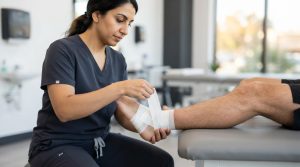
Despite all that technology can do, it’s still important to seek medical care if you suspect you have an injury. Wearable devices are not without their flaws, and they don’t have the medical training of a sports and orthopedics specialist.
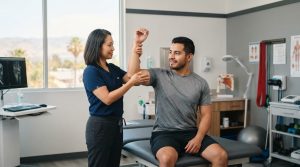
If you’re out of shape, recovering from a sports injury, or overweight and looking to improve your fitness, Premium Sports and Orthopedics is here for you. Our team helps you maximize your workouts while preventing overtraining and potential injury. Reach us online to schedule an appointment.