 07 Nov 2026
Gentle movement may ease a back pain flare more than staying in bed. If you’re searching for how to get rid of back pain fast in Fresno, start with comfortable, low-impact activity and consider heat, gentle stretches, or over-the-counter pain relief. Back pain may feel like a steady ache or sudden sharp pain, and it can spread into the arms or legs.
It’s understandable to want quick relief so you can get back to daily routines. This guide explains common causes of back pain and how home care may help, while showing when it’s sensible to seek a professional evaluation. You’ll learn how walking and other low-impact activity can fit into recovery, along with practical ways to use heat, stretches, and medication safely.
Key Takeaways
- Recognize how everyday strain, sports demands, or disc problems can contribute to back pain, and how acute pain differs from persistent pain.
- Learn how heat and over-the-counter anti-inflammatory medication may ease discomfort, and how to use home treatments thoughtfully.
- Explore why gentle, low-impact movement and short activity breaks can support mobility when your back hurts.
- Choose comfortable stretches and strengthening exercises, and contact a healthcare provider if pain is severe or hasn’t improved after three days, as advised by the National Library of Medicine.
Causes of acute and persistent back pain
Back pain can begin after a sudden strain or develop gradually. At least eight out of 10 people experience low back pain at some point in life, and nearly 90% of cases are temporary. Acute pain usually lasts from a few days to a few weeks. Persistent pain has different causes and may need a more individualized treatment approach.
Common causes include muscle or ligament strains and a herniated disc pressing on a spinal nerve. Awkward lifting, repeated bending, or twisting can strain the soft tissues around the spine. A disc problem may cause pain that travels into an arm or leg, sometimes with numbness, tingling, or weakness. These symptoms can make sitting, walking, and everyday tasks harder.
Sports can also put stress on the spine. Impact, twisting, turning, and heavy pressure may increase an athlete’s risk of back pain. Musculoligamentous strain, which affects the soft tissues around the spine, is described as the most common sports injury. Symptoms may begin after a sudden increase in training or a forceful movement. Gentle activity may help maintain mobility, but pause movements that make the pain worse.
Chronic back pain lasts more than three months. It may feel like a constant dull ache or sudden sharp pain, and can radiate into the arms, hands, legs, or feet. The pattern, location, and triggers can help guide an assessment, but pain alone doesn’t identify its cause.
If back pain hasn’t improved after several weeks, a healthcare professional can review your history, symptoms, and spine. The National Library of Medicine advises contacting a healthcare provider if pain is severe or doesn’t improve after three days.
For same-day back pain care in Fresno, seek an in-person assessment from a healthcare professional. Severe symptoms need prompt medical attention. The appropriate care setting depends on the symptoms and their intensity.
Heat and over-the-counter pain medication
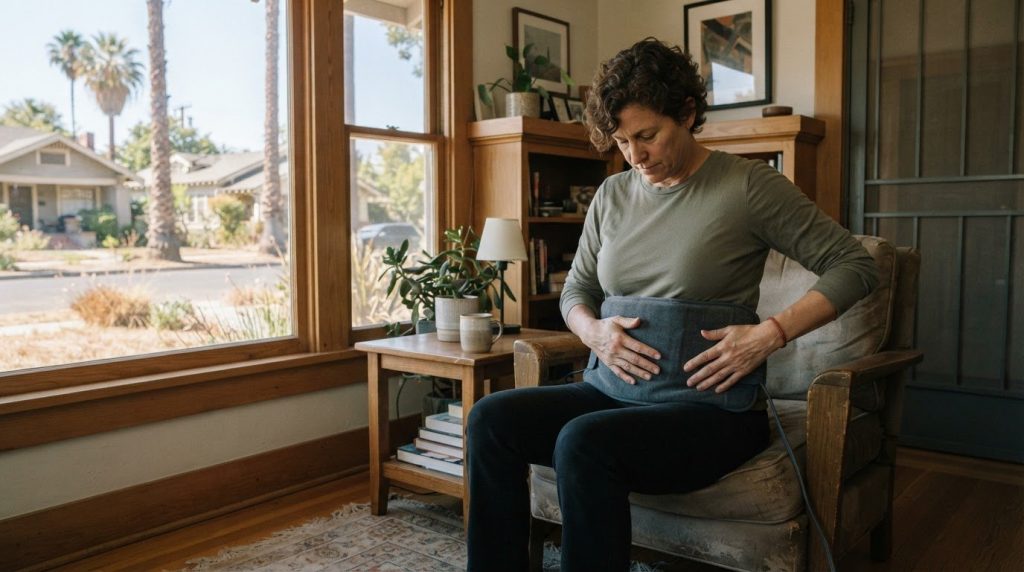
Cold and warmth may ease lower back pain, stiffness, and discomfort around joints. A cold pack can soothe a recent injury, while heat may relax tight muscles and make standing or gentle movement more comfortable. Place a cloth between your skin and the pack to reduce direct exposure. Keep any ice pack or heating pad in place for no more than 20 minutes at a time.
One suggested approach is to apply ice for about 10 minutes, then wait two to three hours before applying heat for 10-15 minutes. This sequence may be repeated up to four times a day. Use whichever temperature feels helpful, and stop if it increases pain or irritates your skin. Don’t apply ice or heat over creams or ointments on your back.
Over-the-counter anti-inflammatory medicines, including NSAIDs, may help relieve back pain. Follow the product label, and ask a pharmacist or healthcare professional about safe use if you take other medicines or have health concerns. Medication may reduce discomfort, but it won’t identify the cause or replace an assessment if symptoms persist.
Back pain accompanied by weakness, numbness, or tingling in the arms or legs needs urgent medical assessment, as these symptoms can be associated with spinal cord damage. Seek emergency care for severe symptoms that feel urgent or worsen rapidly.
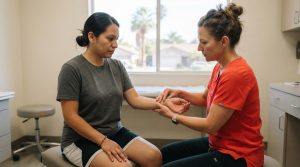
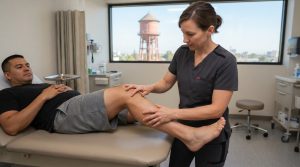
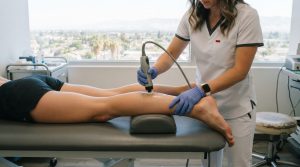
In Fresno, physical therapy is an option for addressing back pain and supporting mobility. A physical therapy assessment can help match movement and recovery strategies to your symptoms; physical therapy for back pain may be a useful next step.
A Fresno doctor can assess acute back pain and decide whether prescription medicine, such as a muscle relaxant, is appropriate. Over-the-counter NSAIDs are a separate option, and should be used according to the product label.
Low-impact physical activity for back pain
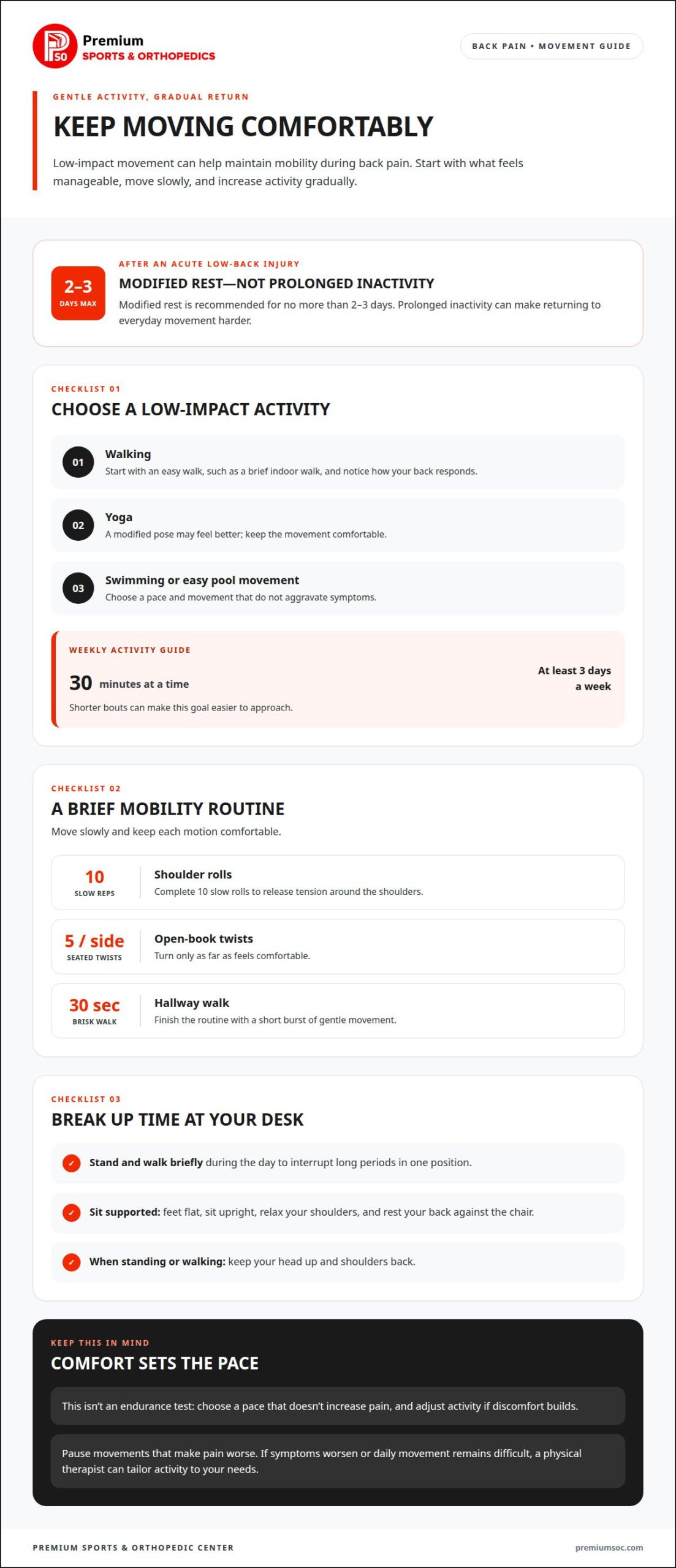
For people wondering how to get rid of back pain fast in Fresno, gentle activity can be a practical starting point. After an acute low-back injury, modified rest is recommended for no more than 2-3 days. Prolonged inactivity can make returning to everyday movement harder. Build activity around what feels manageable, then increase it gradually. Walking, yoga, and swimming are low-impact options; aim for 30 minutes at a time, at least three days a week. Shorter bouts can make that goal easier to approach.
A brief mobility routine can break up long periods of sitting. If you’re exploring how to get rid of back pain fast in Fresno, these gentle movements offer a manageable way to get moving again. Move slowly and keep each motion comfortable:
- Complete 10 slow shoulder rolls to release tension around the shoulders.
- Do 5 seated open-book twists per side, turning only as far as feels comfortable.
- Finish with a 30-second brisk hallway walk to bring gentle movement into the routine.
If you work at a desk, stand and walk around briefly during the day. When sitting, place both feet flat on the floor, sit upright, relax your shoulders, and rest your back against the chair. When standing or walking, keep your head up and shoulders back. These small changes interrupt long periods in one position without requiring a full workout.
Consistent, comfortable movement may help maintain mobility as back symptoms settle. This isn’t an endurance test: choose a pace that doesn’t increase pain, and adjust your activity if discomfort builds. A gentle walk may suit you, while easy pool movement or a modified yoga pose may feel better. Choose an activity you can repeat without aggravating symptoms.
Back pain can temporarily limit activity, but avoiding all movement isn’t the only option. Start with something easy, such as a brief indoor walk, and notice how your back responds afterward. If symptoms worsen or daily movement remains difficult, a physical therapist can tailor activity to your needs and help you return to your routine gradually.
Which stretches or exercises help acute back pain, and which should be avoided?
With acute back pain, choose comfortable movements instead of forcing a stretch. Exercises to strengthen the trunk and back muscles may be recommended, but the right choice depends on how each movement affects your symptoms. Stop any exercise that sharply increases pain or sends it farther into an arm or leg. Start with calm, controlled motion rather than pushing through discomfort.
Try these simple strengthening examples only within a comfortable range:
- Bridge: Lie on your back with knees bent and feet supported. Lift your hips gently, then hold for three seconds before lowering.
- Shoulder blade squeeze: Sit or stand tall, draw your shoulder blades together without arching your back, and hold for five seconds.
- Plank: Use a position you can maintain with steady breathing. Hold for 10-20 seconds, then stop if your back pain increases.
- Single leg lift: Keep your leg extended and lift it about 6 inches. Hold for 10 seconds, then repeat 10 times on each side.
These examples use brief holds, not fast or forceful movements. Breathe steadily, and avoid arching your back excessively in a bridge or letting it sag during a plank. If a single-leg lift pulls painfully on your back, stop rather than trying to reach the listed height or hold.
Avoid exercises that reliably worsen your pain, especially forceful twisting, bouncing stretches, or heavy lifting during a flare. The goal isn’t to complete every exercise, but to find a tolerable movement and build from there. If back pain comes with weakness, numbness, or tingling, seek medical assessment rather than relying on exercise alone.
If back pain makes these movements difficult, get support for painful movement and discuss an appropriate approach to recovery.
Premium Sports & Orthopedic Center: Back Pain
Premium Sports & Orthopedic Center provides back pain care for people whose symptoms persist, return, or interfere with everyday movement. Sports medicine consultations and orthopedic care can help assess ongoing pain and guide appropriate next steps. This may be useful when home measures haven’t restored comfortable activity or when pain keeps limiting work, exercise, or daily routines.
Back pain may occur alongside knee, leg, or hand pain. Sharing how your symptoms affect movement and which activities aggravate them can help inform your care. For severe or urgent symptoms, seek emergency medical attention rather than waiting for a routine appointment.
Contact Premium Sports & Orthopedic Center to discuss your back pain and care options.
Take the Next Step Toward Comfortable Movement
When considering how to get rid of back pain fast in Fresno, think beyond immediate relief. Note which everyday activities you want to return to, such as getting through work comfortably, enjoying a walk, or moving with confidence at home. These goals can help focus a conversation about your care and recovery priorities.
If back discomfort continues to disrupt your routine, Premium Sports & Orthopedic Center provides back pain care, orthopedic care, and sports medicine consultations. The center also treats knee and leg pain, which may be relevant when discomfort affects movement in more than one area. A focused discussion can help identify a practical next step based on your symptoms and activity goals.
Ready to talk about care for your back pain? Contact Premium Sports & Orthopedic Center to discuss your next step. Keep moving toward the daily comfort and active life you want.
Frequently Asked Questions
What is Back Pain?
Back pain is discomfort anywhere along the back, from a dull ache to a sudden sharp sensation. It may stay in one area or spread into an arm, hand, leg, or foot. A strained muscle and a disc pressing on a spinal nerve are two possible causes. The pattern and location of symptoms can help guide an assessment.
What can relieve lower back pain quickly at home?
For a practical comfort adjustment, try changing your sleeping position: place a pillow between your knees when lying on your side, or under your knees when lying on your back. During the day, avoid staying in one position for long periods. A short, easy walk around your home can keep movement in your routine without requiring a full workout.
Should I use ice or heat for sudden back pain, and for how long?
Either may ease discomfort, so use the one that feels more soothing. Keep an ice pack or heating pad against your lower back for no more than 20 minutes per session, with a cloth between the pack and your skin. Don’t use ice or heat over creams or ointments. Stop if your skin becomes irritated or your symptoms worsen.
What over-the-counter medicines help back pain, and what are the risks and doses?
Nonsteroidal anti-inflammatory drugs, or NSAIDs, are an over-the-counter option for back pain. The appropriate dose depends on the specific medicine and product, so follow its label rather than combining products or taking extra doses. NSAIDs aren’t suitable for everyone, and other medicines or health conditions may affect safe use. Ask a pharmacist or healthcare professional about the risks for your situation.